
A global study of over 66,000 people reveals that susceptibility to misinformation varies across age, gender, education, and political ideology.
How People Weave Online Information Into Pseudoknowledge
Misinformation has found a new natural habitat in the digital age. Thousands of forums, blogs, and alternative news sources amplify fake news and inaccurate information to such a degree that it impacts our collective intelligence. Researchers and policy makers are troubled by misinformation because it is presumed to energize or even carry false narratives that can motivate poor decision-making and dangerous behaviors. Yet, while a growing body of research has focused on how viral misinformation spreads, little work has examined how false narratives are in fact constructed. In this study, we move beyond contagion inspired approaches to examine how people construct a false narrative. We apply prior work in cognitive science on narrative understanding to illustrate how the narrative changes over time and in response to social dynamics, and examine how forum participants draw upon a diverse set of online sources to substantiate the narrative. We find that the narrative is based primarily on reinterpretations of conventional and scholarly sources, and then used to provide an alternate account of unfolding events. We conclude that the link between misinformation, conventional knowledge, and false narratives is more complex than is often presumed, and advocate for a more direct study of this relationship.

Capturing our Attention
What are the harms of misinformation? It’s widely believed that it causes false belief, including false beliefs in quite bizarre claims. I argue that this threat is greatly exaggerated: while plaus...

Facts and Myths about Misperceptions
Misperceptions threaten to warp mass opinion and public policy on controversial issues in politics, science, and health. What explains the prevalence and persistence of these false and unsupported beliefs, which seem to be genuinely held by many people? Though limits on cognitive resources and attention play an important role, many of the most destructive misperceptions arise in domains where individuals have weak incentives to hold accurate beliefs and strong directional motivations to endorse beliefs that are consistent with a group identity such as partisanship. These tendencies are often exploited by elites who frequently create and amplify misperceptions to influence elections and public policy. Though evidence is lacking for claims of a “post-truth” era, changes in the speed with which false information travels and the extent to which it can find receptive audiences require new approaches to counter misinformation. Reducing the propagation and influence of false claims will require further efforts to inoculate people in advance of exposure (for example, media literacy), debunk false claims that are already salient or widespread (for example, fact-checking), reduce the prevalence of low-quality information (for example, changing social media algorithms), and discourage elites from promoting false information (for example, strengthening reputational sanctions).
Fakebook: Using Data Science to Spot Fake News
As fake news permeates throughout social media outlets (like Facebook), it's more important than ever to identify what is fact vs. fiction. This is especially true in the age of COVID where the spread of misinformation can impact the spread of the virus. Data scientists are emerging on the front lines of this fight, using programs to help them identify fake news sources. Led by Dr. Teon Brooks, Josh Modeste, and Steven Azeka from the Gotham Data Clinic (fka CiELabs), this workshop will explore the “life cycle” of scientific research and how scientists come to consensus about how we interpret data. We’ll examine what to look for in credible news sources, and the consequences of leaning on not-so-trusty pseudoscientific sources. Then you’ll put that knowledge to work by developing a rubric for identifying fake news. No experience necessary! https://www.eventbrite.com/e/fakebook-using-data-science-to-spot-fake-news-tickets-137833492687
Fake news spreads like an epidemic. Here’s how to stop it.
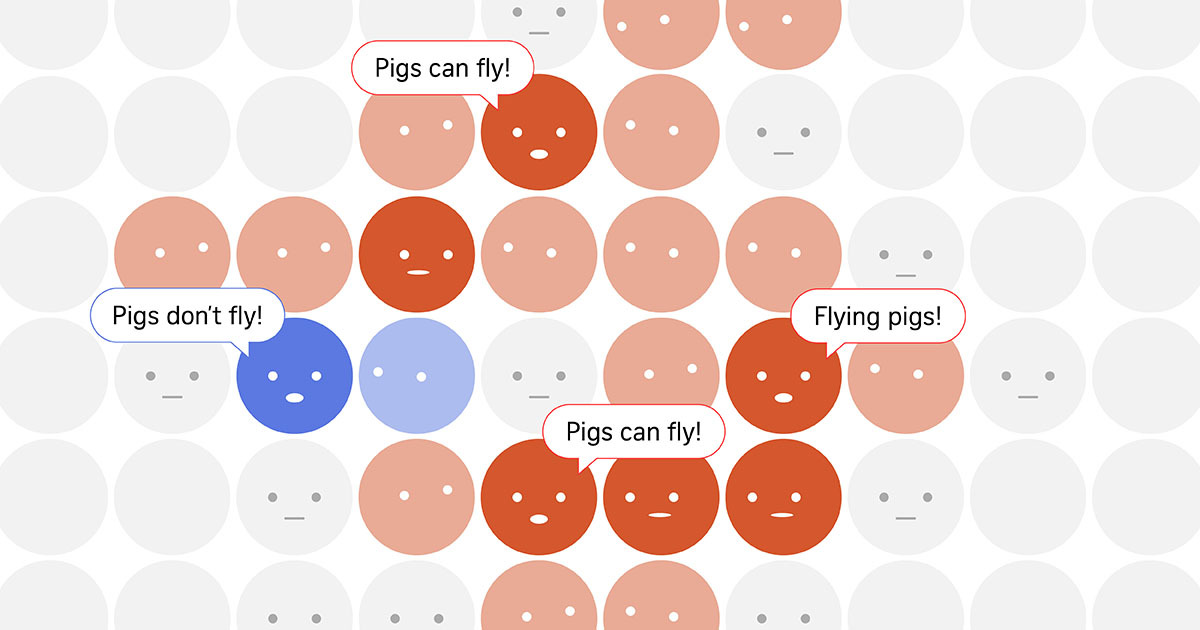
Researchers study fake news the same way they study the spread of disease. When misinformation “goes viral”, it is not just a metaphor. It is what’s actually happening. via @straits_times str.sg/viz-misinformation
Fakebook: Using Data Science to Spot Fake News
The Liar’s Dividend: Can Politicians Claim Misinformation to Evade Accountability?
This study addresses the phenomenon of misinformation about misinformation, or politicians "crying wolf"' over fake news. Strategic and false claims that stories are fake news or deepfakes may benefit politicians by helping them maintain support after a scandal. We posit that this benefit, known as the "liar's dividend," may be achieved through two politician strategies: by invoking informational uncertainty or by encouraging oppositional rallying of core supporters. We administer five survey experiments to over 15,000 American adults detailing hypothetical politician responses to stories describing real politician scandals. We find that claims of misinformation representing both strategies raise politician support across partisan subgroups. These strategies are effective against text-based reports of scandals, but are largely ineffective against video evidence and do not reduce general trust in media. Finally, these false claims produce greater dividends for politicians than alternative responses to scandal, such as remaining silent or apologizing.
How Social Media Rewards Misinformation
A majority of false stories are spread by a small number of frequent users, suggests a new study co-authored by Yale SOM’s Gizem Ceylan. But they can be taught to change their ways.

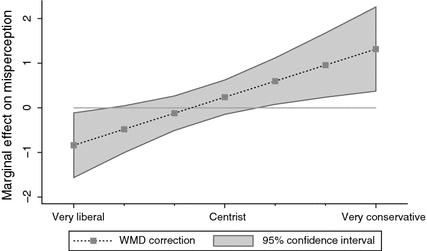
Why the backfire effect does not explain the durability of political misperceptions
Previous research indicated that corrective information can sometimes provoke a so-called “backfire effect” in which respondents more strongly endorsed a misperception about a controversial political or scientific issue when their beliefs or predispositions were challenged. I show how subsequent research and media coverage seized on this finding, distorting its generality and exaggerating its role relative to other factors in explaining the durability of political misperceptions. To the contrary, an emerging research consensus finds that corrective information is typically at least somewhat effective at increasing belief accuracy when received by respondents. However, the research that I review suggests that the accuracy-increasing effects of corrective information like fact checks often do not last or accumulate; instead, they frequently seem to decay or be overwhelmed by cues from elites and the media promoting more congenial but less accurate claims. As a result, misperceptions typically persist in public opinion for years after they have been debunked. Given these realities, the primary challenge for scientific communication is not to prevent backfire effects but instead, to understand how to target corrective information better and to make it more effective. Ultimately, however, the best approach is to disrupt the formation of linkages between group identities and false claims and to reduce the flow of cues reinforcing those claims from elites and the media. Doing so will require a shift from a strategy focused on providing information to the public to one that considers the roles of intermediaries in forming and maintaining belief systems.
Google research shows the fast rise of AI-generated misinformation | CBC News
From fake images of war to celebrity hoaxes, AI technology has spawned new forms of reality-warping misinformation online. New analysis co-authored by Google researchers shows just how quickly the problem has grown.

The five biggest challenges facing misinformation researchers
When Corrections Fail: The Persistence of Political Misperceptions
An extensive literature addresses citizen ignorance, but very little research focuses on misperceptions. Can these false or unsubstantiated beliefs about politics be corrected? Previous studies have not tested the efficacy of corrections in a realistic format. We conducted four experiments in which subjects read mock news articles that included either a misleading claim from a politician, or a misleading claim and a correction. Results indicate that corrections frequently fail to reduce misperceptions among the targeted ideological group. We also document several instances of a “backfire effect” in which corrections actually increase misperceptions among the group in question.
Key misinformation “superspreaders” on Twitter: Older women
Some of our fellow citizens seem to voluntarily do the work of spreading fake news.

Political disinformation concentrates in repeated claims across media
The prevalence and dynamics of disinformation remain contentious, partly because measures have relied on posts containing URLs from untrustworthy sources. We move beyond this by detecting disinformation in text and across posts. Using retrieval-augmented generation, we match six million Facebook, Instagram, and X posts by politicians from the United States, United Kingdom, and Germany, and two million articles from news outlets to fact-checked claims. We show that disinformation is concentrated in a small number of combinations of policy issues and parties and that just over hundred distinct claims account for around half of all disinformation across the three countries. They often appear first on a single platform, later on multiple, and subsequently in news coverage before being fact-checked. These findings suggest that disinformation is concentrated in a narrow segment of political communication, potentially creating repeated exposure that may shape the terms of public debate through both social and news media.
When Do Parties Lie? Misinformation and Radical-Right Populism Across 26 Countries
The spread of misinformation has emerged as a global concern. Academic attention has recently shifted to emphasize the role of political elites as drivers of misinformation. Yet, little is known of the relationship between party politics and the spread of misinformation—in part due to a dearth of cross-national empirical data needed for comparative study. This article examines which parties are more likely to spread misinformation, by drawing on a comprehensive database of 32M tweets from parliamentarians in 26 countries, spanning 6 years and several election periods. The dataset is combined with external databases such as Parlgov and V-Dem, linking the spread of misinformation to detailed information about political parties and cabinets, thus enabling a comparative politics approach to misinformation. Using multilevel analysis with random country intercepts, we find that radical-right populism is the strongest determinant for the propensity to spread misinformation. Populism, left-wing populism, and right-wing politics are not linked to the spread of misinformation. These results suggest that political misinformation should be understood as part and parcel of the current wave of radical right populism, and its opposition to liberal democratic institution.