


Study reveals how miniature release events help to keep neurons intact and preserve motor neuron function in aging insects.
Scientists combine evolution, physics, and robotics to decode insect flight
Some insects' wings flap without brain input. Robots help us understand how.

Neuroscientists Say They've Found An Entirely New Form of Neural Communication - Slashdot
Scientists think they've identified a previously unknown form of neural communication that self-propagates across brain tissue, and can leap wirelessly from neurons in one section of brain tissue to another -- even if they've been surgically severed. The discovery offers some radical new insights ab...

The understanding that even bees have feelings is changing our view of consciousness | New Scientist
From jays that seem to say "sorry" to insects that play, signs of emotional inner life across the animal kingdom are giving us new perspectives on what consciousness is, and how we might pin it down

‘Neurograins’ Could Record Brain Activity From Thousands of Locations
Each of the tiny neurograins features electrodes to pick up electrical signals from brain tissue and circuitry to amplify the signal.

The Brain ‘Rotates’ Memories to Save Them From New Sensations | Quanta Magazine
Some populations of neurons simultaneously process sensations and memories. New work shows how the brain rotates those representations to prevent interference.
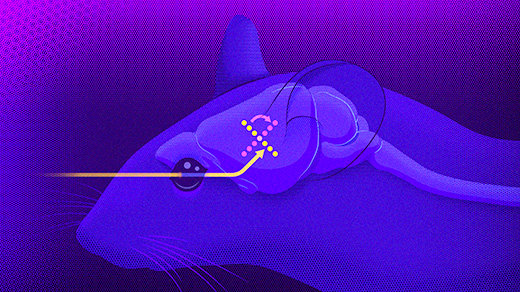
Superagers' 'Secret Ingredient' May Be the Growth of New Brain Cells - Slashdot
alternative_right shares a report from ScienceAlert: According to a study of 38 adult human brains donated to science, superagers -- people who retain exceptional memory as they age -- have roughly twice as many immature neurons as their peers who age more typically. Moreover, people with Alzheimer'...

Aging Out of Fucks: The Neuroscience of Why You Suddenly Can’t Pretend Anymore
Your brain's middle finger to people-pleasing

Random noise promotes slow heterogeneous synaptic dynamics important for robust working memory computation
Recurrent neural networks (RNNs) based on model neurons that communicate via continuous signals have been widely used to study how cortical neural circuits perform cognitive tasks. Training such networks to perform tasks that require information maintenance over a brief period (i.e., working memory tasks) remains a challenge. Inspired by the robust information maintenance observed in higher cortical areas such as the prefrontal cortex, despite substantial inherent noise, we investigated the effects of random noise on RNNs across different cognitive functions, including working memory. Our findings reveal that random noise not only speeds up training but also enhances the stability and performance of RNNs on working memory tasks. Importantly, this robust working memory performance induced by random noise during training is attributed to an increase in synaptic decay time constants of inhibitory units, resulting in slower decay of stimulus-specific activity critical for memory maintenance. Our study reveals the critical role of noise in shaping neural dynamics and cognitive functions, suggesting that inherent variability may be a fundamental feature driving the specialization of inhibitory neurons to support stable information processing in higher cortical regions.

Memory trace and timing mechanism localized to cerebellar Purkinje cells
The standard view of neural signaling is that a neuron can influence its target cell by exciting or inhibiting it. An important aspect of the standard view is that learning consists of changing the efficacy of synapses, either strengthening (long-term potentiation) or weakening (long-term depression) them. In studying how cerebellar Purkinje cells change their responsiveness to a stimulus during learning of conditioned responses, we have found that these cells can learn the temporal relationship between two paired stimuli. The cells learn to respond at a particular time that reflects the time between the stimuli. This finding radically changes current views of both neural signaling and learning., The standard view of the mechanisms underlying learning is that they involve strengthening or weakening synaptic connections. Learned response timing is thought to combine such plasticity with temporally patterned inputs to the neuron. We show here that a cerebellar Purkinje cell in a ferret can learn to respond to a specific input with a temporal pattern of activity consisting of temporally specific increases and decreases in firing over hundreds of milliseconds without a temporally patterned input. Training Purkinje cells with direct stimulation of immediate afferents, the parallel fibers, and pharmacological blocking of interneurons shows that the timing mechanism is intrinsic to the cell itself. Purkinje cells can learn to respond not only with increased or decreased firing but also with an adaptively timed activity pattern.

Arbor Neuroscience
Arbor Neuroscience is building the instruments, data, and models to make neuromodulation predictable – brain-circuit treatment targeted to the individual patient.
Child Prodigy Discovers Butterflies Remember Caterpillar Life, And Pass Down Memories To Offspring
Jo Nagai conducted an experiment on butterflies that would surprise scientists around the world. Are memories passed down?

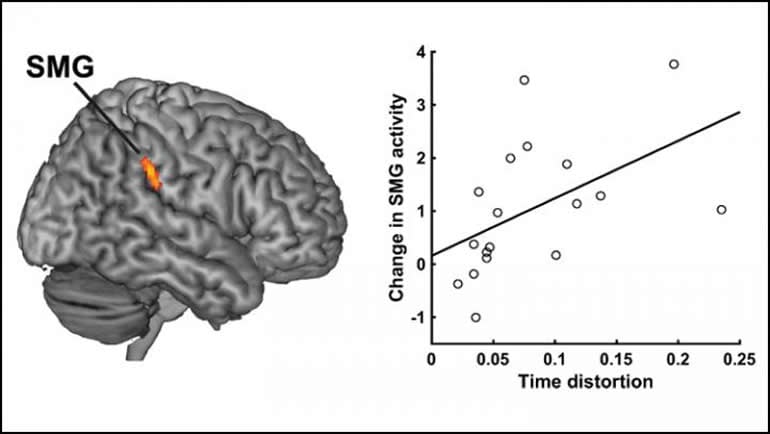
How the Brain Creates the Experience of Time - Neuroscience News
Time-sensitive neuron fatigue in the supramarginal gyrus skew how we perceive time.
Giant “Super Neurons” Discovered in SuperAger Brains
Post-mortem brains of SuperAgers reveal significantly larger neurons in memory region.

Learning Outside the Brain: Integrating Cognitive Science and Systems Biology
Learning is commonplace in organisms such as ourselves and even in organisms as far distant as the bee and the octopus. Such learning is implemented by brains, or neuronal networks, and has been extensively studied within ethology, psychology, cognitive science, and neuroscience. Whether learning also takes place in nonneuronal settings has remained a matter of sustained controversy, too often dominated by ideological views. In this survey, I will explain how learning can be rigorously interpreted as a form of information processing and then explore the evidence for whether learning also takes place in organismal contexts outside the brain, such as physiology, development, and individual cells. I will try to explain why it is important to build bridges in this way between cognitive science and systems biology, why concepts and methods from various branches of engineering may be helpful in this task, and what the eventual impact may be on how we think about the organism.
The Link Between Bioelectricity and Consciousness - Nautilus
“It’s really hard to define what’s special about neurons,” says Tufts molecular biologist Michael Levin. “Almost all cells do the things neurons do, just more slowly.”Illustration by jijomathaidesigners / Shutterstock Life seems to be tied to bioelectricity at every level. The late electrophysiologist and surgeon Robert Becker spent decades researching the role of the body’s…
Harnessing Chaos: How the Brain Turns Randomness into Robust Memory | Columbia Engineering
AI systems reveal how random fluctuations in brain activity may help stabilize memories