A new study reveals that the thalamus, long overshadowed by the cortex and hippocampus, plays a crucial role in shaping and updating brain connections.
Thalamic nuclei observed driving conscious perception
Beijing Normal University-led researchers have identified specific high-order thalamic nuclei that drive human conscious perception by activating the prefrontal cortex. Their findings enhance understanding ...

The Brain ‘Rotates’ Memories to Save Them From New Sensations | Quanta Magazine
Some populations of neurons simultaneously process sensations and memories. New work shows how the brain rotates those representations to prevent interference.
Overtaxed Working Memory Knocks the Brain Out of Sync | Quanta Magazine
Researchers find that when working memory gets overburdened, dialogue between three brain regions breaks down. The discovery provides new support for a larger concept about how the brain works.

To Remember, the Brain Must Actively Forget | Quanta Magazine
Researchers find evidence that neural systems actively remove memories, suggesting that forgetting may be the default mode of the brain.
Memory trace and timing mechanism localized to cerebellar Purkinje cells
The standard view of neural signaling is that a neuron can influence its target cell by exciting or inhibiting it. An important aspect of the standard view is that learning consists of changing the efficacy of synapses, either strengthening (long-term potentiation) or weakening (long-term depression) them. In studying how cerebellar Purkinje cells change their responsiveness to a stimulus during learning of conditioned responses, we have found that these cells can learn the temporal relationship between two paired stimuli. The cells learn to respond at a particular time that reflects the time between the stimuli. This finding radically changes current views of both neural signaling and learning., The standard view of the mechanisms underlying learning is that they involve strengthening or weakening synaptic connections. Learned response timing is thought to combine such plasticity with temporally patterned inputs to the neuron. We show here that a cerebellar Purkinje cell in a ferret can learn to respond to a specific input with a temporal pattern of activity consisting of temporally specific increases and decreases in firing over hundreds of milliseconds without a temporally patterned input. Training Purkinje cells with direct stimulation of immediate afferents, the parallel fibers, and pharmacological blocking of interneurons shows that the timing mechanism is intrinsic to the cell itself. Purkinje cells can learn to respond not only with increased or decreased firing but also with an adaptively timed activity pattern.

Switching Off One Crucial Protein Appears to Reverse Brain Aging in Mice - Slashdot
A research team just discovered older mice have more of the protein FTL1 in their hippocampus, reports ScienceAlert. The hippocampus is the region of the brain involved in memory and learning. And the researchers' paper says their new data raises "the exciting possibility that the beneficial effec...
Open-source software reveals complete 3D architecture of brain cells
The neurons in our brain that underlie thought connect to each other using tiny branch-like structures on their surfaces known as dendritic spines. Now scientists at Columbia's Zuckerman Institute and ...

Study illuminates the structural features of memory formation at cellular and subcellular levels
NIH-funded study uses cutting-edge imaging techniques to reconstruct features underlying learning and memory in the mouse brain.

Neuralink and the Brain's Magical Future — Wait But Why
I knew the future would be shocking but this is a whole other level.

Psilocybin induces rapid and persistent growth of neural connections in the brain's frontal cortex, study finds
Yale scientists have found that a single dose of psilocybin given to mice induces a rapid and long-lasting increase in connections between pyramidal
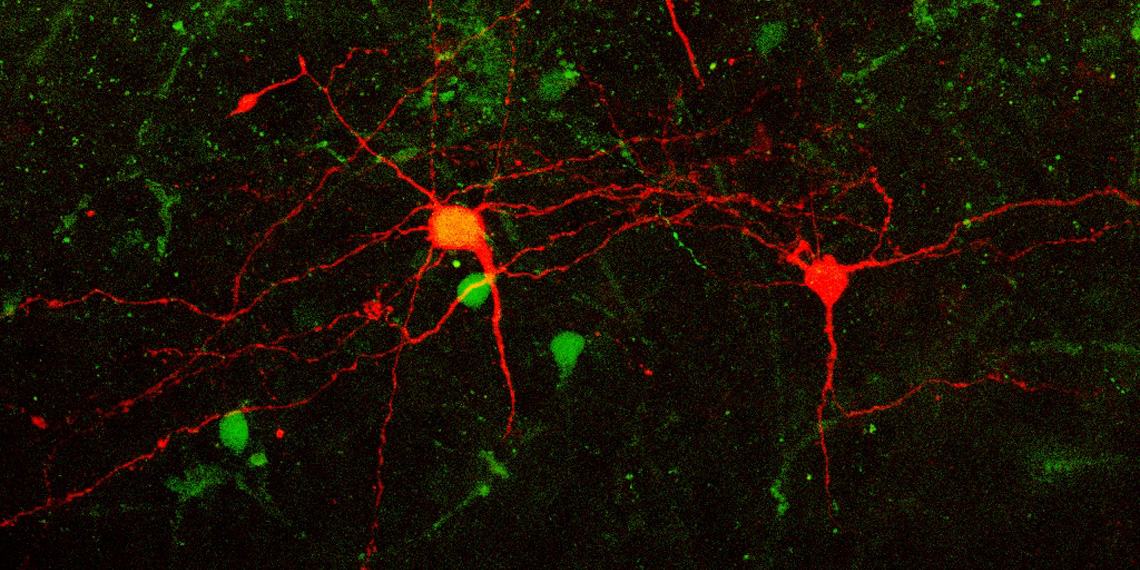
Neuroscientists Say They've Found An Entirely New Form of Neural Communication - Slashdot
Scientists think they've identified a previously unknown form of neural communication that self-propagates across brain tissue, and can leap wirelessly from neurons in one section of brain tissue to another -- even if they've been surgically severed. The discovery offers some radical new insights ab...

How your morning coffee is changing the structure of your brain
A novel placebo-controlled study has found daily caffeine consumption can significantly reduce the volume of gray matter in the human brain. These findings do not immediately suggest caffeine negatively impacts the brain but instead points to how the drug may induce a temporary neural plasticity that researchers think warrants further investigation.
Inventing the future: A neuroscience research roadmap
The past decade of transformative advances in neurotechnology portends an exciting future for neuroscience. This NeuroView charts a strategic path to accelerate and integrate research discovery and speed the development of new cures for human brain disorders.

The brain's 7D sandcastles could be the key to consciousness | New Scientist
We’ve glimpsed mind-bending geometric structures that fleetingly encode our thoughts, memories and feelings – and could solve the greatest mystery of all

The Terrorist in the Brain
What can Robin Williams and Bruce Willis teach us about dementia? This article explores the complex biological realities of brain diseases, controversies in Alzheimer's research, the risks of new drugs, and the multi-billion-dollar industry exploiting our fear of cognitive decline.

The Entangled Brain: How Perception, Cognition, and Emotion Are Woven Together
A new vision of the brain as a fully integrated, networked organ.Popular neuroscience accounts often focus on specific mind-brain aspects like addiction, c