

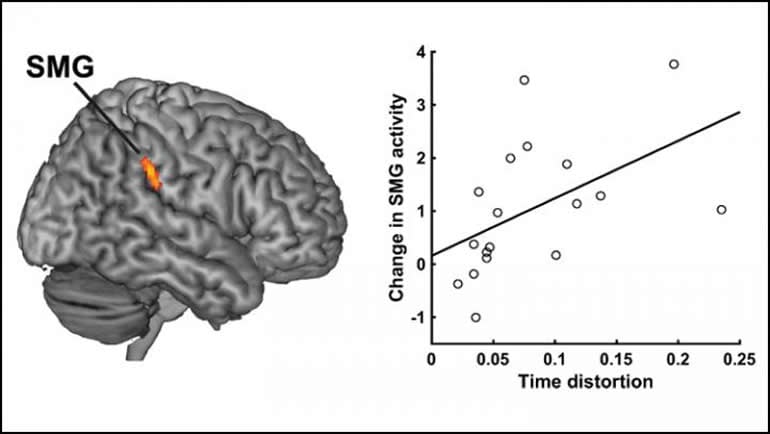
Time-sensitive neuron fatigue in the supramarginal gyrus skew how we perceive time.
A brain injury removed my ability to perceive time
The brain’s perception of time is abstract. Here's what happens when it gets seriously distorted

Scientists found brain’s internal clock that influences how we perceive time
A chocoholic rat named Marco helped scientists find special brain cell network.

Does Your Brain Think Accurately About Time?
Chicago Booth’s Kristin Donnelly talks about her research on time-duration asymmetry.

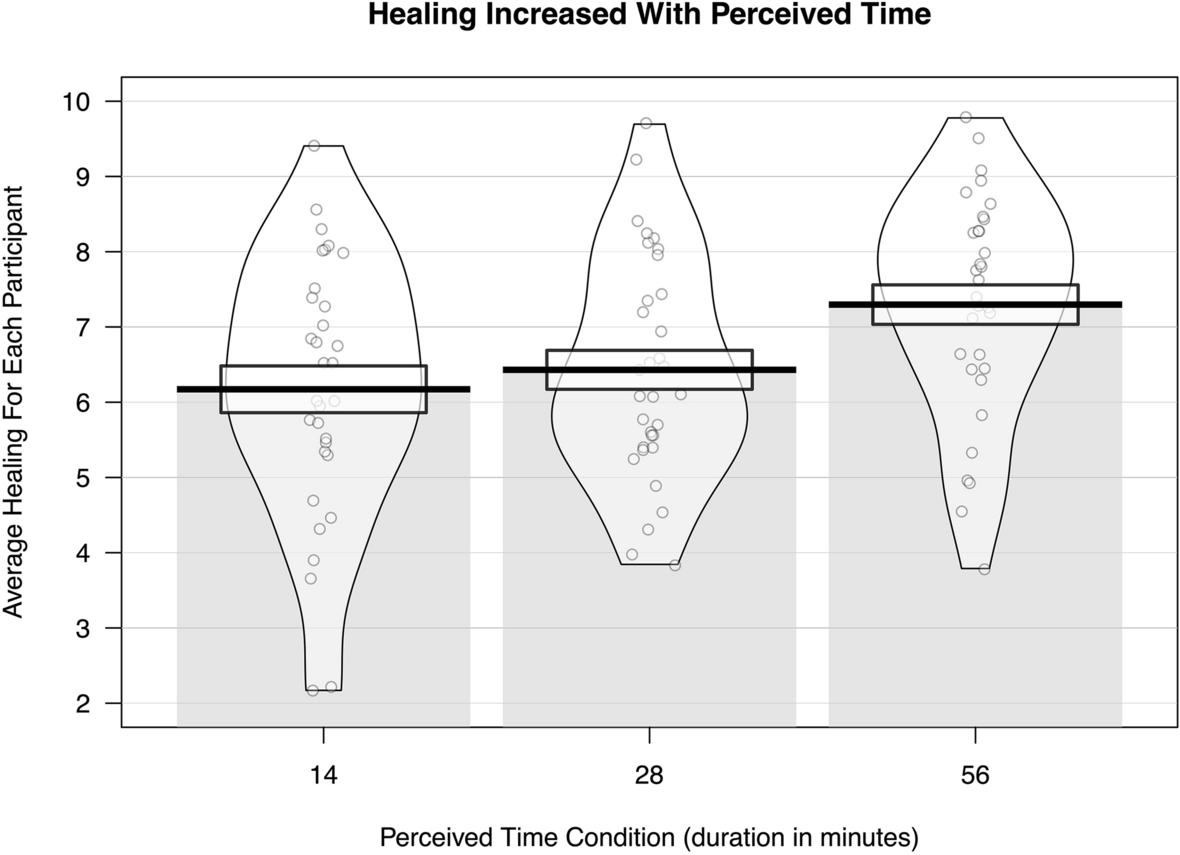
Physical healing as a function of perceived time
In this study we wounded study participants following a standardized procedure and manipulated perceived time to test whether perceived time affected the rate of healing. We measured the amount of healing that occurred across three conditions using a within-subjects design: Slow Time (half as fast as clock time), Normal Time (clock time), and Fast Time (twice as fast as clock time). Based on the theory of mind–body unity—which posits simultaneous and bidirectional influences of mind on body and body on mind—we hypothesized that wounds would heal faster or slower when perceived time was manipulated to be experienced as longer or shorter respectively. Although the actual elapsed time was 28 min in all three conditions, significantly more healing was observed in the Normal Time condition compared to the Slow Time condition, in the Fast Time condition compared to the Normal Time condition, and in the Fast Time condition compared to the Slow Time condition. These results support the hypothesis that the effect of time on physical healing is directly affected by one’s psychological experience of time, independent of the actual elapsed time.
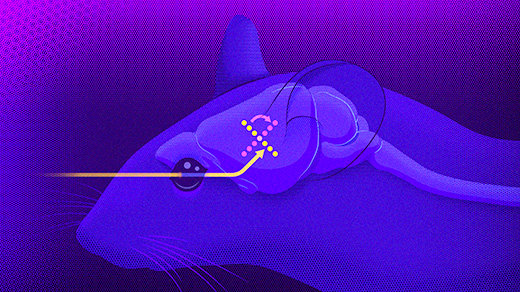
The Brain ‘Rotates’ Memories to Save Them From New Sensations | Quanta Magazine
Some populations of neurons simultaneously process sensations and memories. New work shows how the brain rotates those representations to prevent interference.
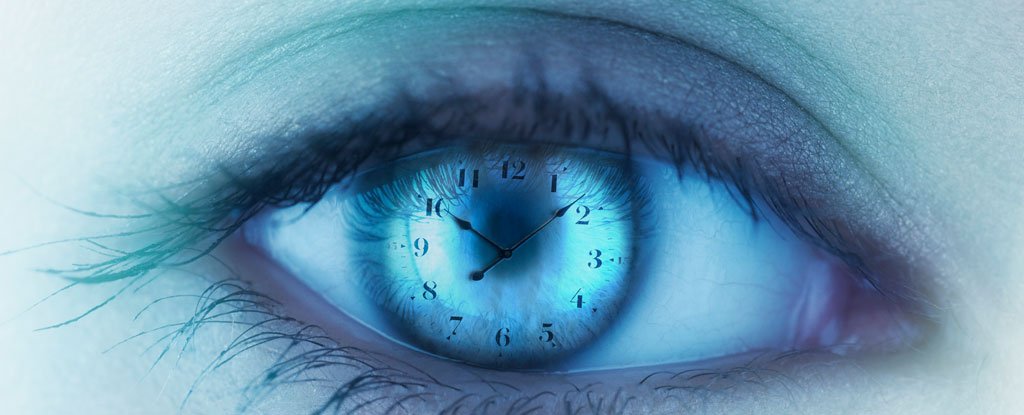
Our Brains Keep Us 15 Seconds 'in The Past' to Help Us See a Stable World, Says Study
The past is present.
Neuralink and the Brain's Magical Future — Wait But Why
I knew the future would be shocking but this is a whole other level.

Stimming as Temporal Awareness
Why Autistics Aren't Odd, Just More Attuned to the Human System Clock

James Gleick on How Our Cultural Fascination with Time Travel Illuminates Memory, the Nature of Time, and the Central Mystery of Human Consciousness
“Every moment alters what came before. We reach across layers of time for the memories of our memories.”

Memory trace and timing mechanism localized to cerebellar Purkinje cells
The standard view of neural signaling is that a neuron can influence its target cell by exciting or inhibiting it. An important aspect of the standard view is that learning consists of changing the efficacy of synapses, either strengthening (long-term potentiation) or weakening (long-term depression) them. In studying how cerebellar Purkinje cells change their responsiveness to a stimulus during learning of conditioned responses, we have found that these cells can learn the temporal relationship between two paired stimuli. The cells learn to respond at a particular time that reflects the time between the stimuli. This finding radically changes current views of both neural signaling and learning., The standard view of the mechanisms underlying learning is that they involve strengthening or weakening synaptic connections. Learned response timing is thought to combine such plasticity with temporally patterned inputs to the neuron. We show here that a cerebellar Purkinje cell in a ferret can learn to respond to a specific input with a temporal pattern of activity consisting of temporally specific increases and decreases in firing over hundreds of milliseconds without a temporally patterned input. Training Purkinje cells with direct stimulation of immediate afferents, the parallel fibers, and pharmacological blocking of interneurons shows that the timing mechanism is intrinsic to the cell itself. Purkinje cells can learn to respond not only with increased or decreased firing but also with an adaptively timed activity pattern.

What stress does to the brain - Neuroscience News
A new study sheds light on how the brain changes as a result of chronic stress. Selective noradrenaline release rewires connectivity patterns between different brain regions. Activity in the amygdala and networks that process sensory stimuli increased.

Scientists Say A Mind-Bending Rhythm In The Brain Can Act Like Ketamine
Researchers were able to mimic the mind-altering effects of the drug ketamine by inducing a particular rhythm in one area of the brain.

Overtaxed Working Memory Knocks the Brain Out of Sync | Quanta Magazine
Researchers find that when working memory gets overburdened, dialogue between three brain regions breaks down. The discovery provides new support for a larger concept about how the brain works.

How AI coding is reshaping theoretical neuroscience
Agentic coding makes it possible to specify a neuroscience model in hours instead of months. Neuroscientists weigh in on that tectonic change.

Figuring out why a nap might help people see things in new ways
An EEG signal of sleep is associated with better performance on a mental task.

I jolt awake. "It's time," says a voice. Gemini. "How long?" I croak, my muscles atrophied from the coma. I can hardly breathe unassisted. "92 years." "Was it a good life?" "Productivity was in the 97th percentile." Smiling, I close my eyes for the last time.

Grace
Why visit the website at all? Just let Gemini prompt itself, then you can go for a walk or write some poetry or whatever you like to do
