Narcissistic abuse is most often discussed in interpersonal relationships, especially when it comes to romantic relationships. However, I would venture that narcissistic abuse is not just contained to romantic relationships, but that narcissists find their platonic targets in social and group environments. Within progressive social movements, this is unfortunately true. Our current activist narratives about charismatic leadership and heroism attract individuals who see social movements as another way of satisfying their need for attention and power.
Reality Roundtable #19 — Dark Triad Personality Traits: How Psychopathy, Narcissism, and Machiavellianism Impact Our Cultures & Social Systems - The Great Simplification
Psychopathy is often portrayed as a rare and distant phenomenon – something confined to movie villains or prison cells. Yet when psychopathy is combined with narcissism and Machiavellianism to form what psychologists call the Dark Triad, its impact becomes far more immediate. Individuals with these traits can wield disproportionate influence over our culture, institutions, and daily lives. What goes on inside their minds, and how do they shape the world around us?

Members of right-leaning parties prefer leaders with ‘dark triad’ personality traits
The ‘dark triad’ is made up of narcissism, Machiavellianism and psychopathy.

Geeks, MOPs, and sociopaths in subculture evolution (2015) | Hacker News
Any marginally successful group attracts sociopaths. The more power available to someone installing themselves at the centre of an elite clique that runs the organisation, the more attractive it is. No-one ever sees it fully until they get on the wrong end of one of these toxic power dynamics, there is so much subtle BS working against anyone trying to face this stuff down that it's almost pointless wasting your life trying.
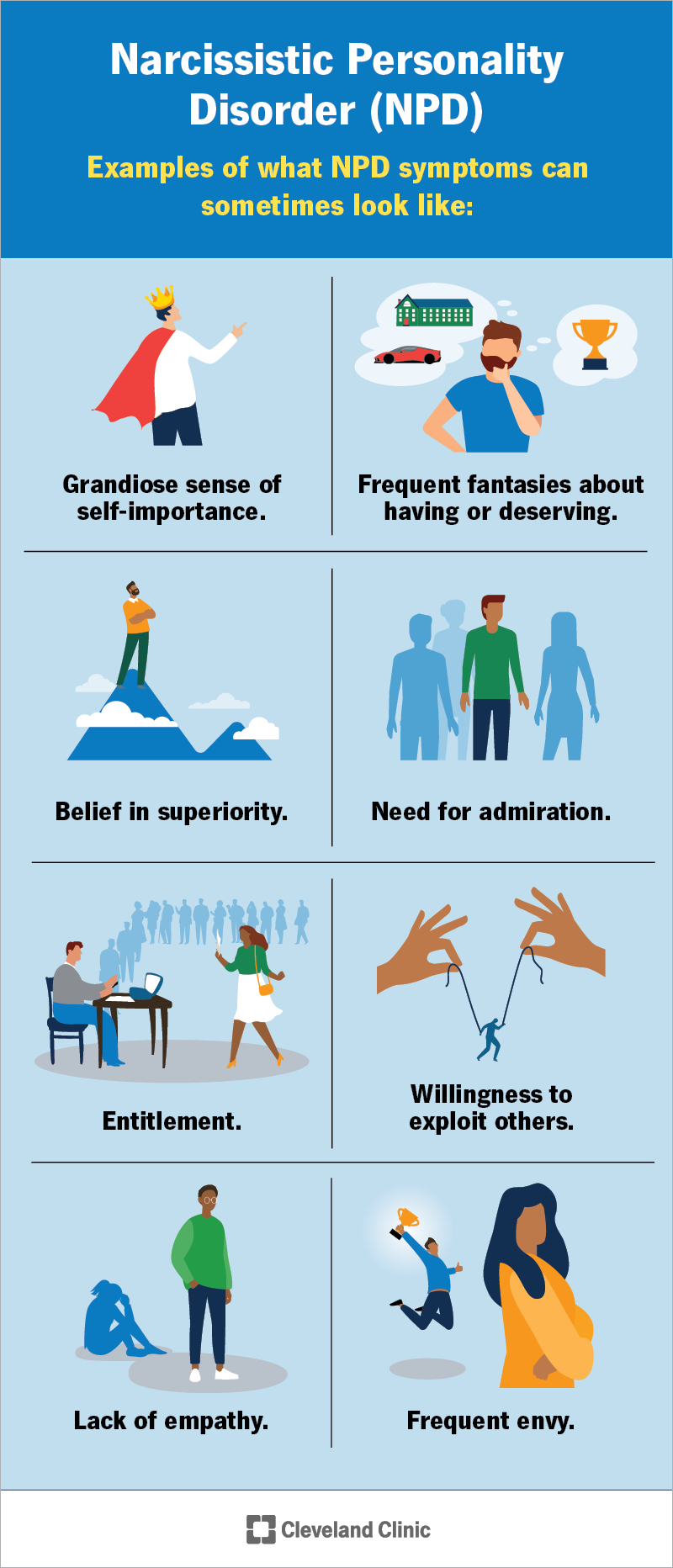
Turning Your Attention to Narcissistic Personality Disorder
Narcissistic personality disorder is more than self-centered behavior. Learn how to recognize this mental health condition.
Against the Couple-Form | LIES Journal
Libidinal flows cut through the social world. Amorous and sexual relations do not exist in some domain safely taped off from the rest of society. Rather they are constituent elements of nearly every aspect of social life. Desire flows and circulates amongst places of employment, intellectual debates, political organizing, artistic circles, playgrounds, and cemeteries. The elderly patient grabs at the breast of a nurse hunched over him. A governmental official strips his newly hired intern down to her leopard print thong during an important briefing in his office. The incarcerated man holds his hand up to the glass of the visiting booth, attempting to touch his wife after twenty years of their bodily separation. These flows of libidinal desire operate within and amongst broader social mechanisms, such that they help animate the dynamics of economic and political life. Often a locus of politics, desire permeates the so-called ‘public’ terrain.
Geeks, MOPs, and sociopaths in subculture evolution | Meaningness
How muggles and sociopaths invade and undermine creative subcultures; and how to stop them.

Dark personalities in the digital arena: how psychopathy and narcissism shape online political participation
This cross-national study investigates how psychopathy, narcissism, and fear of missing out (FoMO) influence online political participation, and how cognitive ability moderates these associations. Drawing on data from the United States and seven Asian countries, the findings reveal that individuals high in psychopathy and FoMO are consistently more likely to engage in online political activity. While narcissism is also linked to participation, this relationship emerges in only three of the eight countries. Conversely, higher cognitive ability is uniformly associated with lower levels of online political participation. Notably, the relationship between psychopathy and participation is stronger among individuals with lower cognitive ability in five countries, suggesting that those with both high psychopathy and low cognitive ability are the most actively involved in online political engagement. These findings underscore the nuanced interaction between dark personality traits, FoMO, and cognitive functioning in shaping digital political engagement across diverse socio-political contexts.

Effective Altruism Has a Hostile Culture for Women, Critics Say
Seven women connected to effective altruism tell TIME they experienced harassment and worse within the community
The sad decline of effective altruism
A once wholesome and inspiring movement has become entangled with cults and has lost years chasing dead-end ideas
Confessions of an Instagram Influencer
“Whatever you do in life, it helps to have a following.”
How the Far Right Feeds on Male Insecurity
A new book explores the strange ways young men get sucked into toxic ideologies like the alt-right. But according to the author, "many of the guys who get out quietly slip back into society."

La banalité du mal : ce que dit la recherche en psychologie sociale
La violence dans les hiérarchies sociales est exercée par des individus qui se distinguent des autres par leur orientation autoritaire.

A Typology of Insecurities in Non-monogamy
Because “jealousy” and “envy” aren’t all there is.