

An extraordinarily promising new technique using ultrasound to clear the toxic protein clumps thought to cause dementia and Alzheimer's disease is moving to the first phase of human trials next year. The innovative treatment has proven successful across several animal tests and presents an exciting, drug-free way to potentially battle dementia.
Small Trial Reverses a Year of Alzheimer's Cognitive Decline in Just Two Months
The next step is a clinical trial with 150 people.

Study Reveals a Surprising Cause of Cognitive Decline—and the Key to Reversing It
Researchers pinpoint a lone protein that speeds up the dysfunction of an aging brain. Eliminating it, they claim, can reverse the damage. But there are big hurdles before a treatment is approved.

A cure for Alzheimer’s? Yes, a cure for Alzheimer’s!
This is the most important column I’ve ever written. The message is quite complex--dozens of new health parameters to test for and to optimize, all of them interacting in ways that will require new training for MDs.
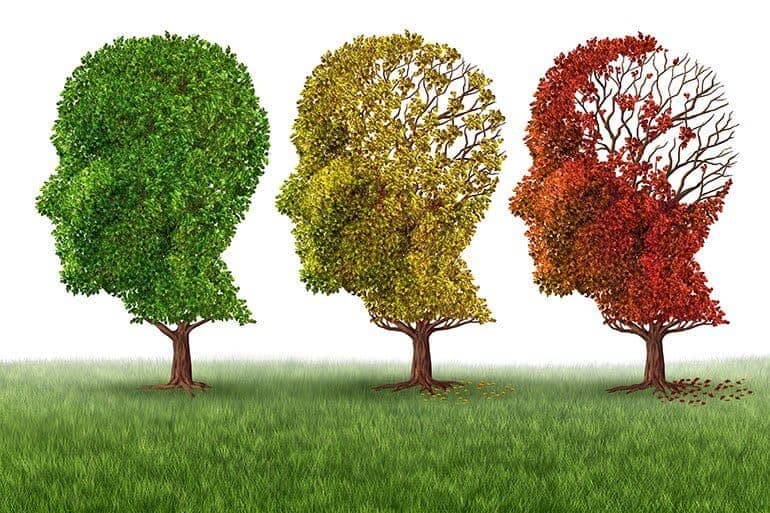
Can Alzheimer’s really be reversed, as a new documentary claims?
A CNN documentary follows two people with Alzheimer’s who took part in a study to determine if lifestyle changes can reverse symptoms.
Unconventional But Effective Therapy for Alzheimer's Treatment: Dr. Mary T. Newport at TEDxUSF
How Exercise Might "Clean" the Alzheimer's Brain
Hints at potential treatments for age-related dementia and memory loss

The Terrorist in the Brain
What can Robin Williams and Bruce Willis teach us about dementia? This article explores the complex biological realities of brain diseases, controversies in Alzheimer's research, the risks of new drugs, and the multi-billion-dollar industry exploiting our fear of cognitive decline.

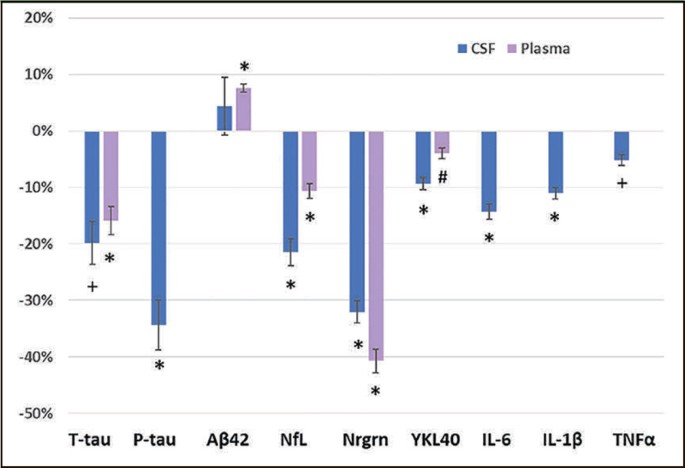
PTI-125 Reduces Biomarkers of Alzheimer’s Disease in Patients
The most common dementia worldwide, Alzheimer’s disease is often diagnosed via biomarkers in cerebrospinal fluid, including reduced levels of Aβ1-42, and increases in total tau and phosphorylated tau-181. Here we describe results of a Phase 2a study of a promising new drug candidate that significantly reversed all measured biomarkers of Alzheimer’s disease, neurodegeneration and neuroinflammation. PTI-125 is an oral small molecule drug candidate that binds and reverses an altered conformation of the scaffolding protein filamin A found in Alzheimer’s disease brain. Altered filamin A links to the α7-nicotinic acetylcholine receptor to allow Aβ42’s toxic signaling through this receptor to hyperphosphorylate tau. Altered filamin A also links to toll-like receptor 4 to enable Aβ-induced persistent activation of this receptor and inflammatory cytokine release. Restoring the native shape of filamin A prevents or reverses filamin A’s linkages to the α7-nicotinic acetylcholine receptor and tolllike receptor 4, thereby blocking Aβ42’s activation of these receptors. The result is reduced tau hyperphosphorylation and neuroinflammation, with multiple functional improvements demonstrated in transgenic mice and postmortem Alzheimer’s disease brain.
We Are Entering the Age of Alzheimer's
We will all be touched by the disease. How are we going to get through this?

Long-winded speech could be early sign of Alzheimer's disease, says study
Research finds distinctive language deficits in people with mild cognitive impairment, a precursor to dementia

Foundation Model Predicts Brain Responses to Visual and Auditory Stimuli | Elisa Cascardi posted on the topic | LinkedIn
Thrilled to share this work with the world! Today, we're releasing a foundation model that predicts how the human brain responds to almost any sight or sound -- and replace the need for human scans to significantly fast-track neuroscience and clinical research. 🧠 With this model, we can simulate brain responses to advance our understanding of the brain -- without the need for costly human brain scans 🌐 By using improved understanding of how efficient our brains perceive the world around us, we can guide the development of more advanced AI systems 👩⚕️ With computer-simulated experimentation, we can now speedup clinical research to diagnose neurological diseases and find treatments faster We've open sourced the model and code for researchers to use and build on, and an interactive demo for you to learn more -- see below! 📄 Paper: https://lnkd.in/e7cbunJp 💻 Code: https://lnkd.in/ebwBVuJp ▶️ Demo: https://lnkd.in/eEUVxP4S 🤗 Model: https://lnkd.in/e2T8nPJP So thrilled to be a part of this team with Stéphane d'Ascoli Jean-Rémi King Jérémy RAPIN Yohann Benchetrit Teon Brooks Katelyn Begany Joséphine Raugel Hubert Banville and for the great teamwork with Diego Marcos Dominic Giardini bringing this research to life! #neuroscience #AI #aiforscience #opensource #neuroAI
Switching Off One Crucial Protein Appears to Reverse Brain Aging in Mice - Slashdot
A research team just discovered older mice have more of the protein FTL1 in their hippocampus, reports ScienceAlert. The hippocampus is the region of the brain involved in memory and learning. And the researchers' paper says their new data raises "the exciting possibility that the beneficial effec...
Odor biomarker for Alzheimer's disease
A new study from the Monell Center, the U.S. Department of Agriculture (USDA), and collaborating institutions reports a uniquely identifiable odor signature from mouse models of Alzheimer's disease. The ...

Ramez Naam on Twitter / X
There was a site years ago called CureTogether where patients could share information in a structured way on their disease, regimen, and progress, working towards a sort of bottoms-up clinical trial. 23andMe acquired them and it seems to be mostly dead.— Ramez Naam (@ramez) September 14, 2025
Learning What Substance Is Suspected of Causing Alzheimer’s May Throw You Into an Existential Crisis
A surprisingly common substance was found to have a causal relationship with the kind of brain damage associated with Alzheimer's disease.

Seeing the "shingles vaccine protects from dementia" claim going around again. Unfortunately the main study it's based on is just not convincing. @epiellie.bsky.social has written a great post about why:
Shingles vaccine & dementia prevention: too good to be true?
medium.com