


How art and culture became captured by the logic of the consumer market
The Real Reason Fans Hate the Last Season of Game of Thrones
It’s not just bad storytelling—it’s because the storytelling style changed from sociological to psychological

The Player and the Played
In an age when capitalism feels like an unwinnable game, extreme reactionary ideas and politics are on the rise. The Hunger Games, Game of Thrones, Squid Gam...

Arts and culture for the enjoyment of all – Victorian Socialists
Art should belong to everyone, not just the rich. We’re fighting for stronger support for emerging artists, museums, galleries, theatres and live music.
Leading the Herd Astray: An Experimental Study of Self-fulfilling Prophecies in an Artificial Cultural Market
Individuals influence each others' decisions about cultural products such as songs, books, and movies; but to what extent can the perception of success become a “self-fulfilling prophecy”? We have explored this question experimentally by artificially inverting the true popularity of songs in an online “music market,” in which 12,207 participants listened to and downloaded songs by unknown bands. We found that most songs experienced self-ful- filling prophecies, in which perceived—but initially false—popularity became real over time. We also found, however, that the inversion was not self-fulfilling for the market as a whole, in part because the very best songs recovered their popularity in the long run. Moreover, the distortion of market information reduced the correlation between appeal and popularity, and led to fewer overall downloads. These results, although partial and speculative, suggest a new approach to the study of cultural markets, and indicate the potential of web-based experiments to explore the social psychological origin of other macrosocio- logical phenomena.

Everyone is a Strategist and No One is a Writer
From politics to culture, we face a crisis of cleverness and a society addicted to marketing
Everyone is a Strategist and No One is a Writer
From politics to culture, we face a crisis of cleverness and a society addicted to marketing
How Fanatics cornered the sports collectibles market
As FIFA's exclusive collectibles licensee, Fanatics is set to tap a rapidly growing market in the world's largest sport, but longstanding criticisms follow.

A Day in the Life of an Ensh*ttificator
Restoring Consumer Sovereignty
For decades, there has been broad consensus within antitrust, intellectual property, and consumer law scholarship that consumers make decisions in their own best interests by consciously weighting the market’s relative prices, quantities, and qualities against each other. That consensus is unraveling in light of novel findings from cognitive and social psychology that explain how individuals’ concepts of what they prefer drive the global economy. At the same time, producers nowadays no longer merely satisfy consumers’ needs but also communicate their values, identities, and aspirations through the sale and marketing of products. As part of the growing interest in observations such as these, a wealth of psychological studies challenge the fundamental teaching of economics that the interplay of demand and supply of goods in a free market economy provides us with material wealth. This book provides a normative defense of that assumption and a theoretical framework for understanding its contradictions. It argues that the erosion of consumer sovereignty through the ability of product manufacturers and sellers to systematically take advantage of individuals’ psychological weaknesses demands a twenty-first-century reconceptualization of the consumer and a modern account of how the law should regulate the digital economy. Such an account is justified to ensure a diverse marketplace in which consumers can influence how our societies are structured and arranged. By examining the role that market manipulation plays, it offers ingredients for a realistic descriptive and normative market regulatory theory that is aware of its political economy, its behavioral suppositions, and its distributional consequences.

TV Tropes
TV Tropes, the all-devouring pop-culture wiki, catalogs and cross-references recurrent plot devices, archetypes, and tropes in all forms of media.

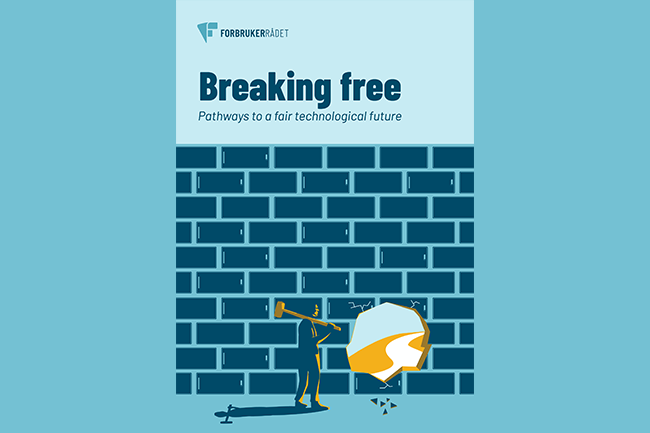
Digital products and services are getting worse – but the trend can be reversed
A new report from the Norwegian Consumer Council shows how enshittification affects both consumers and society at large. Luckily, it‘s possible to turn the tide.
Welcome to the next Renaissance
"We'd love a byline in Big Media. But we'll also be everything from baristas, booksellers, Etsy artists, and TikTok news creators to dog walkers, ice cream scoopers, copywriters, and marketers."

Why restaurants are facing backlash for fake food pictures | CNN
Generative AI is being used to advertise food around the world to the disdain of many beholders. But there are real reasons why consumers are repelled by the sometimes bizarre-looking meals.

Hallucinating sense in the era of infinity-content
Collectible but Not Consumeristic

I do think this is a kind of novel problem with our current media environment - Serious people aren't good at making content, they have other things to do, but content is what drives attention. Tastemakers used to highlight the serious people but they're gone, replaced by content creators.
