


His new book diagnoses a society obsessed with property rights.
Thomas Piketty's Capital: everything you need to know about the surprise bestseller
The radical economist's book Capital in the Twenty-First century has angered the right with its powerful argument about wealth, democracy and why capitalism will always create inequality, says Paul Mason
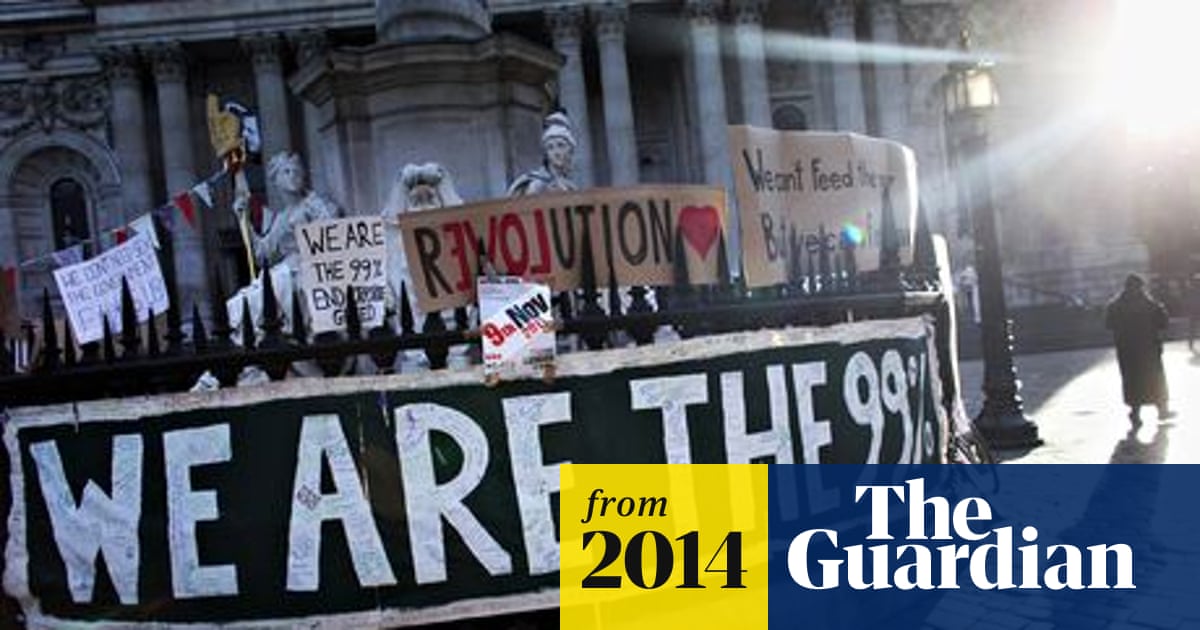
Thomas Piketty’s “Capital”, summarised in four paragraphs
A very brief summary of "Capital in the Twenty-First Century"

Thomas Piketty Knew This Was Coming
The scholar of inequality warned us that our economic systems couldn’t withstand a global catastrophe.

Thomas Piketty : « Le rapport Draghi a l’immense mérite de tordre le cou au dogme de l’austérité budgétaire »
CHRONIQUE. Le rapport sur la compétitivité et l’avenir de l’Europe, remis à la Commission européenne par l’ancien président de la BCE, va dans la bonne direction, analyse l’économiste dans sa chronique.
Pluralistic: America and “national capitalism” (18 Feb 2025) – Pluralistic: Daily links from Cory Doctorow
Thomas Piketty's 2013 unexpected bestseller (a 750 page economics book translated from French!) Capital in the 21st Century, offers a very convincing explanation of our political decay, and it continues to serve this purpose as the decay undergoes alarming acceleration:
Monsieur Piketty et les classiques
Traduction française du billet de blog "Mr. Piketty and the classics" de Branko Milanovic

Global Inequality — Harvard University Press
Winner of the Bruno Kreisky Prize, Karl Renner InstitutA Financial Times Best Economics Book of the Year An Economist Best Book of the Year A Livemint Best Book of the YearOne of the world’s leading economists of inequality, Branko Milanovic presents a bold new account of the dynamics that drive inequality on a global scale. Drawing on vast data sets and cutting-edge research, he explains the benign and malign forces that make inequality rise and fall within and among nations. He also reveals who has been helped the most by globalization, who has been held back, and what policies might tilt the balance toward economic justice.“The data [Milanovic] provides offer a clearer picture of great economic puzzles, and his bold theorizing chips away at tired economic orthodoxies.”—The Economist“Milanovic has written an outstanding book…Informative, wide-ranging, scholarly, imaginative and commendably brief. As you would expect from one of the world’s leading experts on this topic, Milanovic has added significantly to important recent works by Thomas Piketty, Anthony Atkinson and François Bourguignon…Ever-rising inequality looks a highly unlikely combination with any genuine democracy. It is to the credit of Milanovic’s book that it brings out these dangers so clearly, along with the important global successes of the past few decades.—Martin Wolf, Financial Times
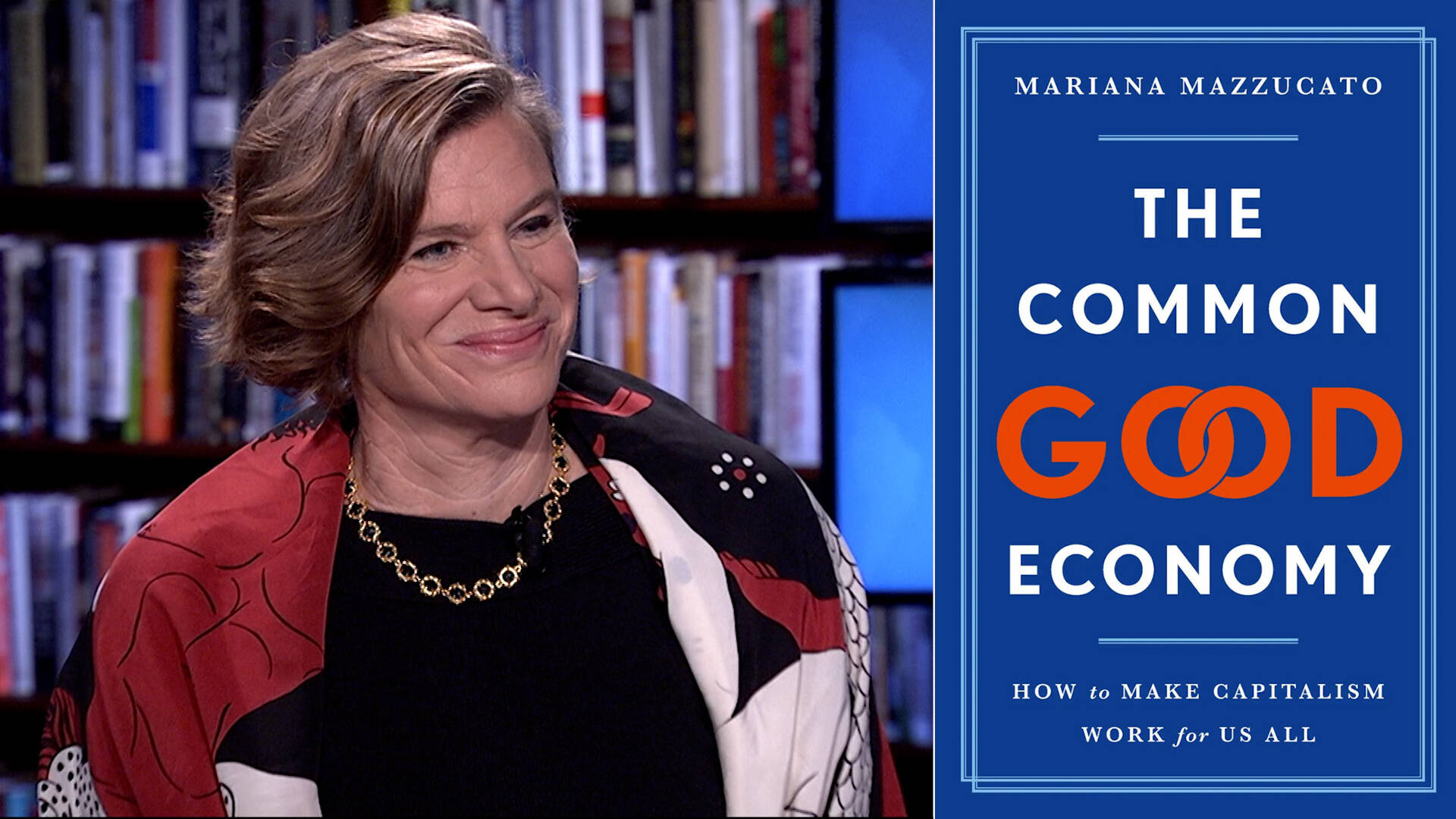
“The Common Good Economy”: Mariana Mazzucato on Fixing Capitalism
We speak with the economist Mariana Mazzucato, author of the new book The Common Good Economy: A New Compass.
Pluralistic: All laws are local (05 Feb 2026) – Pluralistic: Daily links from Cory Doctorow
About halfway through Thomas Piketty's 2013 barnstorming Capital in the 21st Century, Piketty tosses off a little insight that skewered me on the spot and never let me go: the notion that any societal condition that endures beyond a generation becomes "eternal" in the popular consciousness:
013 - Olivier De Schutter on Why the Economy Creates Poverty – and How To Fix It

John Fullerton: “Regenerative Economics: New Economic Paradigms, Living Systems, & Holistic Thinking” - The Great Simplification
Our modern economic system is designed to maximize financial capital, viewing money as though it were wealth itself.

Pioneers, Settlers and Town Planners
The rants and raves of Simon Wardley on Evolution, Technology, Economics and Business

Community Wealth Building — Urban Affairs Review
Scholars of urban politics have long debated the issue of what cities can and should do to promote the economic well-being of their residents. As the of election Zohran Mamdani illustrates, urban residents are increasingly demanding that city governments do more to address the increasingly exorbitant costs of housing, childcare, and transportation. One obvious solution is to raise taxes on the private holders of wealth. By the same token, his election has prompted handwringing on the right about the “inevitable” flight of capital out of New York City. Scholarship that runs the gamut from the public choice school associated with the “city limits” perspective (Peterson 1981) through to Marxian accounts (Logan and Molotch 1987) all recognize that the private ownership of wealth and the mobility of capital puts cities in a bind, especially in a context of highly circumscribed levels of federal urban spending. Though several scholars (Logan and Swanstrom 1990; Kantor and Savitch 1993; Schragger 2016) have demonstrated that cities have greater latitude to promote egalitarian public policies than these perspective allow, few would argue that the deep structural problems of economic and social inequality can be fully resolved by tax-and-spend liberalism (Imbroscio 2010).

Preface | The World After Capital
Since publishing the previous version of The World After Capital, I have met with people across the political spectrum to discuss the ideas from the book. When I present these in person, I emphasize that the ideas are neither left nor right but forward (credit to Scott Santens who first used this phrase about Universal Basic Income). My writing, however, at times has alienated readers who identify as being more on the right. In this new edition, I am therefore making an extra effort to emphasize how both my diagnosis of where we are at and my suggestions for how to move forward do not map onto the existing political divides. Instead this is a new way of understanding our challenges and opportunities that can be the basis for movements and parties that are not trapped in Industrial Age ideology.