


Yes, there was a political backlash to leaders around the world in 2024. But this has been true in the U.S. for many election cycles—and may last for many more.
Unpopular leaders punished at the polls in 2022 election
Scott Morrison and Barnaby Joyce were the most unpopular leaders of any party since 1987, new analysis of the 2022 federal election from The Australian National University (ANU) shows. The findings come from the joint ANUpoll/Comparative Study of Electoral Systems survey of more than 3,500 voters, which examined Australians' political attitudes before and after the 21 May vote. Study co-author Professor Ian McAllister said the findings show leaders were more important than in previous elections.

Billionaires, Corporate Landlords, and AI Companies Are Seen As Among the Worst Actors in U.S. Society
Voters view billionaires, corporate landlords, payday loans, sports gambling, cryptocurrency, and AI companies as negatively impacting the U.S. economy and society.

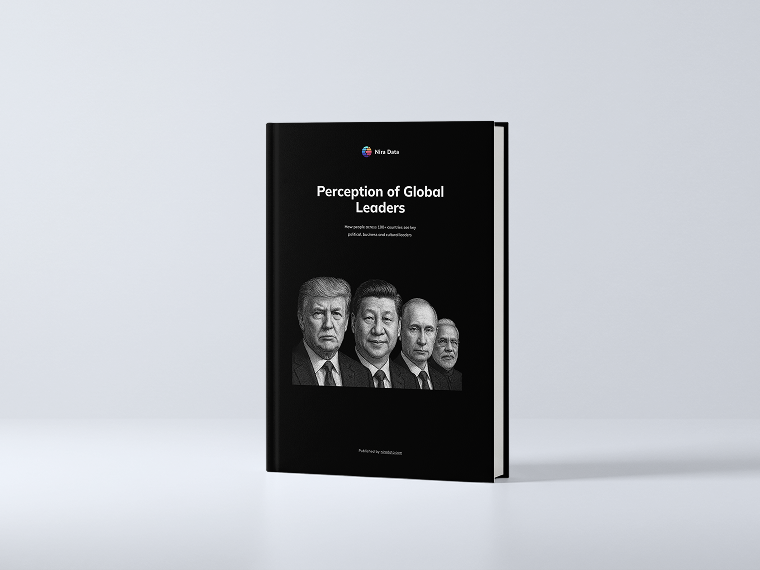
Perception of Global Leaders - Nira Data
Discover global leader rankings, approval ratings, and reputation insights in the 2025 Perception of World Leaders report.
The rise of American authoritarianism
A niche group of political scientists may have uncovered what’s driving Donald Trump’s ascent. What they found has implications that go well beyond 2016.

Worldcoin isn’t as bad as it sounds: It’s worse
Opinion: Worldcoin is no radical new financial system, and certainly not one aimed at equality or fairness.

The Global State of Democracy 2026: Democracy in an Age of Conflict
In the face of increasing political and societal fragmentation, the Global State of Democracy 2026 explains the patterns that define the direction of democratization around the world. Drawing on the latest data from the Global State of Democracy Indices, the report documents both democratic stagnation and key declines in indicators that measure the credibility of elections, the effectiveness of legislatures, respect for freedoms of expression and the press, and access to justice. These phenomena affect countries across thespectrum of democratic performance.
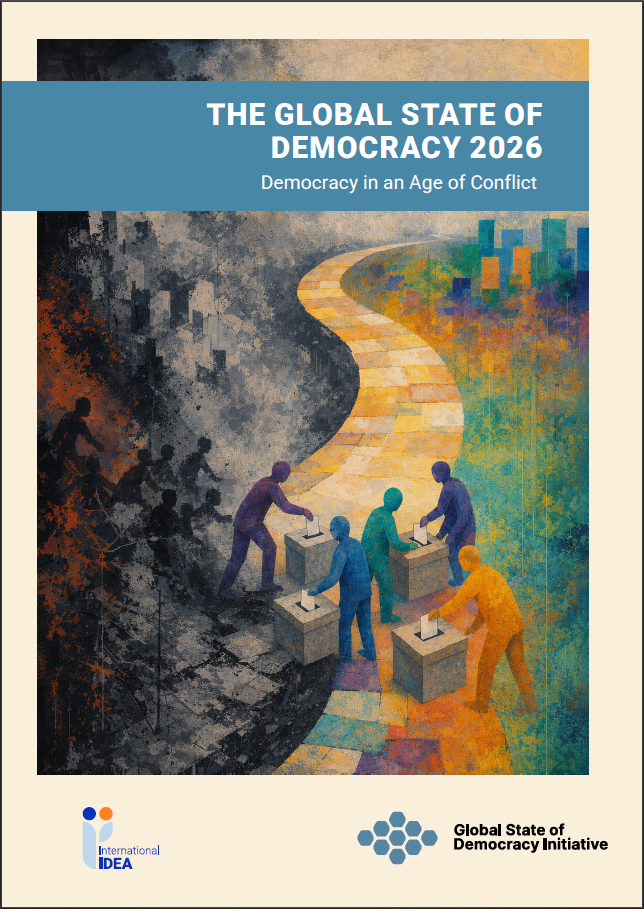
The Global State of Democracy 2026: Democracy in an Age of Conflict
In the face of increasing political and societal fragmentation, the Global State of Democracy 2026 explains the patterns that define the direction of democratization around the world. Drawing on the latest data from the Global State of Democracy Indices, the report documents both democratic stagnation and key declines in indicators that measure the credibility of elections, the effectiveness of legislatures, respect for freedoms of expression and the press, and access to justice. These phenomena affect countries across thespectrum of democratic performance.
People Are Very Mad That the New Captain America Is Acting Like Captain America
Ever since he punched Hitler in the face 75 years ago, Captain America has been a political character. Many times he’s walked away from the government,

Opinion | The Monopolization of America (Published 2018)
In one industry after another, big companies have become more dominant over the past 15 years, new data show.

A fact-based worldview for all | Gapminder
We live in a globalized world, not only in terms of trade and migration. More people than ever care about global development. But most people have severe misconceptions about contemporary global development. We know, because we have tested people’s knowledge. One of the main reasons for this is that students don’t learn to understand the world based on statistics and facts. Instead, we have a dramatic worldview formed by outdated school books and sensationalist news-stories. People intuitively believe that most things are getting worse. The dramatic worldview leads to irrational decisions by individuals, nonprofits, governments and business. For the first time in human history reliable statistics exist. There’s data for almost every aspect of global development. The data shows a very different picture: a world where most things improve; a world that is not divided; and a world where the fast population growth will soon be over. The world has never been less bad. But that doesn’t mean it’s perfect.
'Convergence' Is Here – And We're Not Prepared
American politics is converging towards a vague concept of authoritarian "unity," influenced by a small network of backers.

Elon Musk’s Diplomacy: Woo Right-Wing World Leaders. Then Benefit. - …
archived 13 May 2024 19:26:28 UTC

When Do Parties Lie? Misinformation and Radical-Right Populism Across 26 Countries
The spread of misinformation has emerged as a global concern. Academic attention has recently shifted to emphasize the role of political elites as drivers of misinformation. Yet, little is known of the relationship between party politics and the spread of misinformation—in part due to a dearth of cross-national empirical data needed for comparative study. This article examines which parties are more likely to spread misinformation, by drawing on a comprehensive database of 32M tweets from parliamentarians in 26 countries, spanning 6 years and several election periods. The dataset is combined with external databases such as Parlgov and V-Dem, linking the spread of misinformation to detailed information about political parties and cabinets, thus enabling a comparative politics approach to misinformation. Using multilevel analysis with random country intercepts, we find that radical-right populism is the strongest determinant for the propensity to spread misinformation. Populism, left-wing populism, and right-wing politics are not linked to the spread of misinformation. These results suggest that political misinformation should be understood as part and parcel of the current wave of radical right populism, and its opposition to liberal democratic institution.

Country Perception
How countries and global organizations are perceived around the world
This Is How We Radicalized The World
On Sunday, far-right evangelical Jair Bolsonaro was elected president of Brazil. The era of being surprised at this kind of politics is over. Now we have to live with what we've done.

