

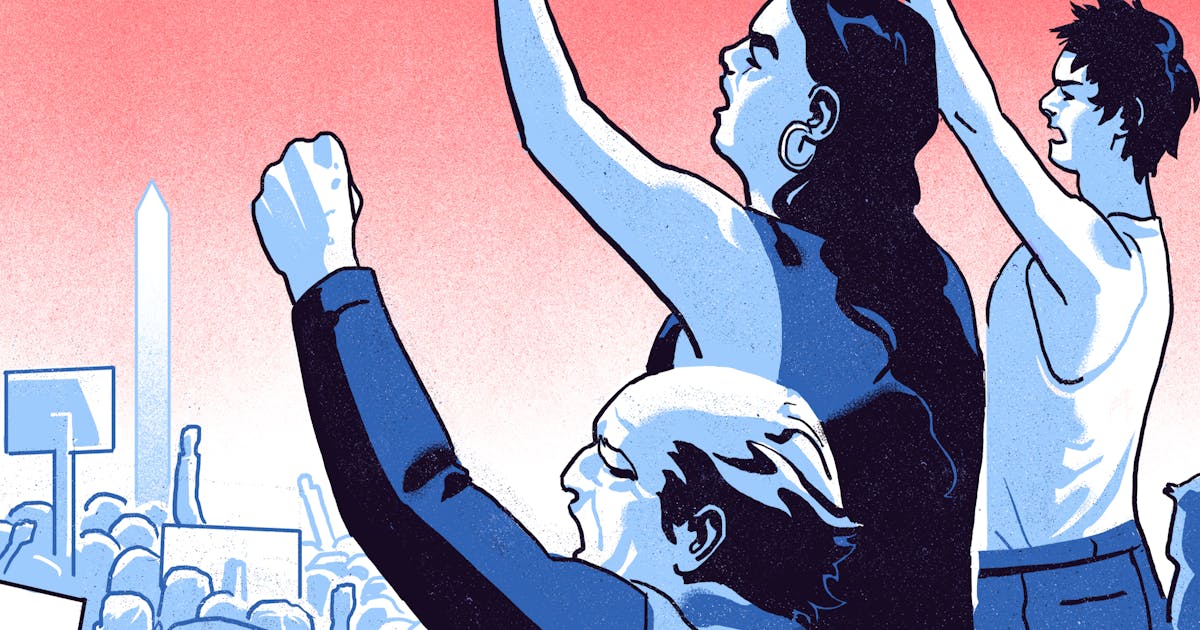
Ordinary people have more power than they know.
Collections: How the Weak Can Win – A Primer on Protracted War
Thanks to our volunteer narrator, this post is now available in audio format. This week, in an effort to fill in some of the theoretical basis for thinking about how weaker powers think about fight…

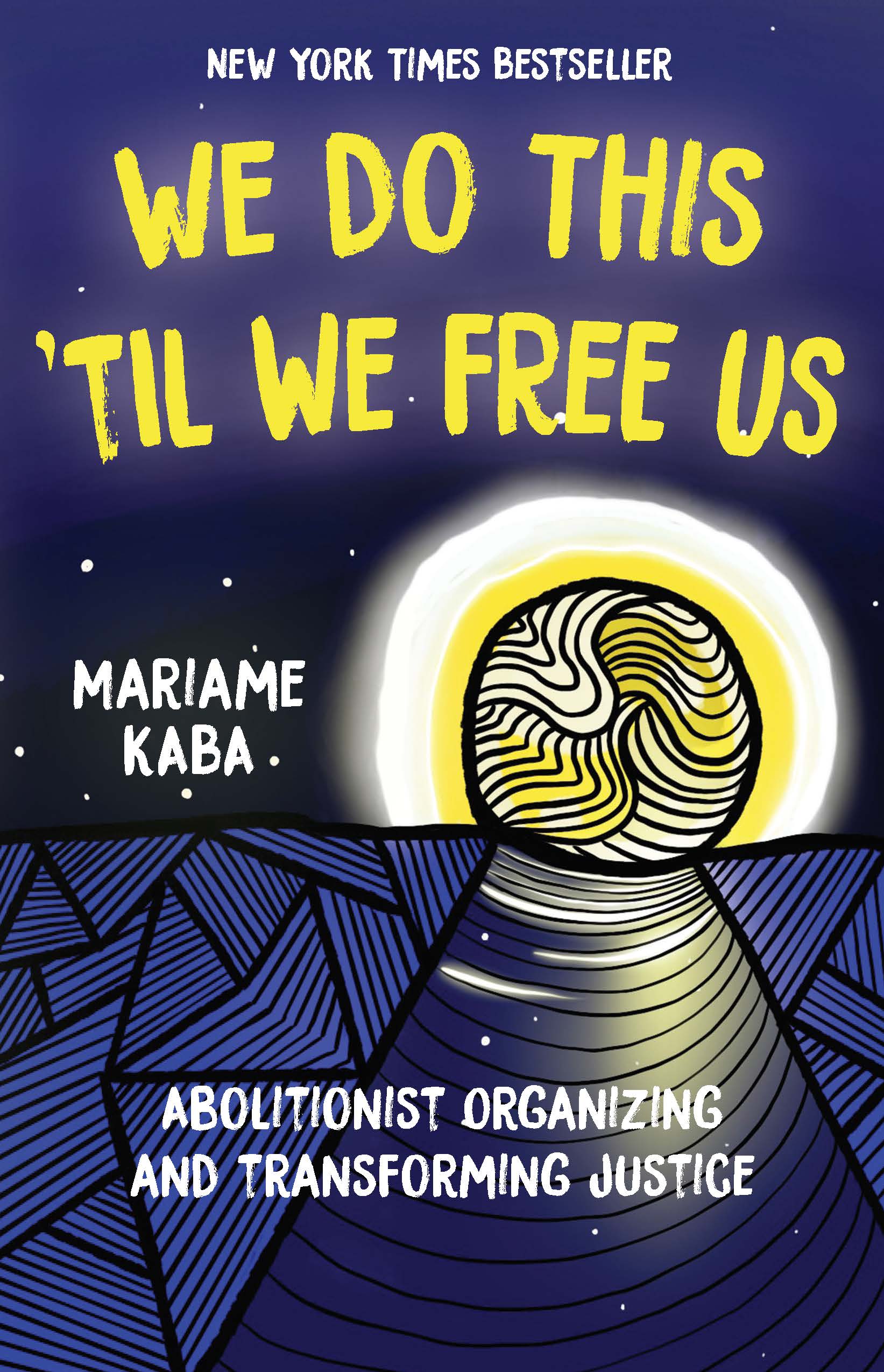
We Do This 'Til We Free Us
New York Times Bestseller “Organizing is both science and art. It is thinking through a vision, a strategy, and then figuring out who your targets are, always being concerned about power, always being concerned about how you’re going to actually build power in order to be able to push your issues, in order to be able to get the target to actually move in the way that you want to.” What if social transformation and liberation isn’t about waiting for someone else to come along and save us? What if ordinary people have the power to collectively free ourselves? In this timely collection of essays and interviews, Mariame Kaba reflects on the deep work of abolition and transformative political struggle. With a foreword by Naomi Murakawa and chapters on seeking justice beyond the punishment system, transforming how we deal with harm and accountability, and finding hope in collective struggle for abolition, Kaba’s work is deeply rooted in the relentless belief that we can fundamentally change the world. As Kaba writes, “Nothing that we do that is worthwhile is done alone.”
Hold the Line: A Guide to Defending Democracy
A practical guide for organizers, communities, and individuals defending democracy.

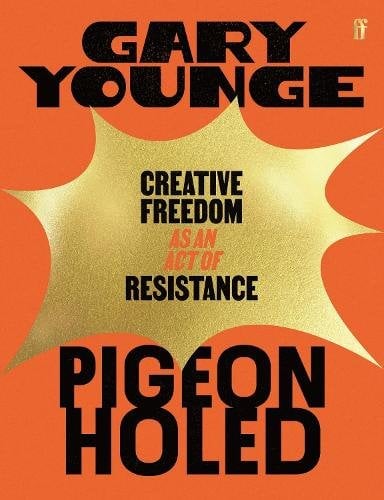
Pigeonholed: Creative Freedom as an Act of Resistance
Creative Freedom as an Act of Resistance
Resistance Is Your Friend
As candles attract moths, so innovation offers attract resisters. You know this from experience. You work hard to propose something of demonstrable benefit to your clients or community and their first inclination is to resist it. Logical arguments do not change their minds. Optimists unhelpfully tell you to keep your chin up because resistance signifies you are doing something important. You start to wonder if anyone takes you seriously. Resistance is so common and intractable that it has a name: Valley of Death. Everyone wishes you good luck in getting through it alive. What is the story about resistance?

Opinion | I Am Part of the Resistance Inside the Trump Administration (Published 2018)
I work for the president but like-minded colleagues and I have vowed to thwart parts of his agenda and his worst inclinations.

The Pre-emption of Resistance: Occupy Oakland and the Evolution of State Power
Author(s): Behbehanian, Laleh | Advisor(s): Burawoy, Michael B | Abstract: This dissertation aims to contribute to our understanding of contemporary state strategies targeting social movements by examining the case of Occupy Oakland. Emphasizing how state strategies, both tactical and discursive, dynamically evolve through their iterative relation to movement strategies, it presents a detailed empirical account that is disaggregated into three “moments”, each of which are characterized by the predominance of a distinct state strategic repertoire. The objective is to highlight an underlying transformation through which the state’s strategies evolve from being highly reactive, indiscriminate and vulnerable to spectacularization to becoming increasingly pre-emptive, targeted and discursively buttressed.The first “moment” commences with the movement’s occupation of Oscar Grant Plaza. Faced with Occupy Oakland’s highly disruptive tactics and its firm rejection of any forms of negotiation or cooperation with City officials, the state resorts to a strategy of Naked Coercion (reactive, indiscriminate violence that is highly vulnerable to spectacularization) which backfires and results in an internationally televised disaster on the evening of October 25th. This creates an extraordinary window of opportunity for the movement, dramatically increasing public support and enabling it to undertake the first general strike in the U.S. since 1946. This fuels a process of adaptation as the struggle proceeds into the second “moment”, and the state shifts to a strategy of Targeted Repression that is increasingly pro-active, targeted and discursively buttressed so as to diminish the danger of its spectacularization. The new strategy succeeds in permanently dislodging the occupation of Oscar Grant Plaza, as well as criminalizing the tactic of occupation and excising it from movement’s repertoire. Still unsatisfied with the repression it had achieved, in the third and final “moment” the state introduces a strategy of Pre-emptive Neutralization that is pre-emptively oriented, targeted at high “risk” populations and discursively buttressed by powerful spectacles of “risk”. This enables a thorough incapacitation of the movement – fully neutralizing its potential for collective action by rendering Occupiers a target population that could no longer even publicly assemble without inciting highly militarized police responses that were now pre-emptively justified by the risk of “violence” they collectively posed.

Anatomy of a counter-insurgency - MR Online
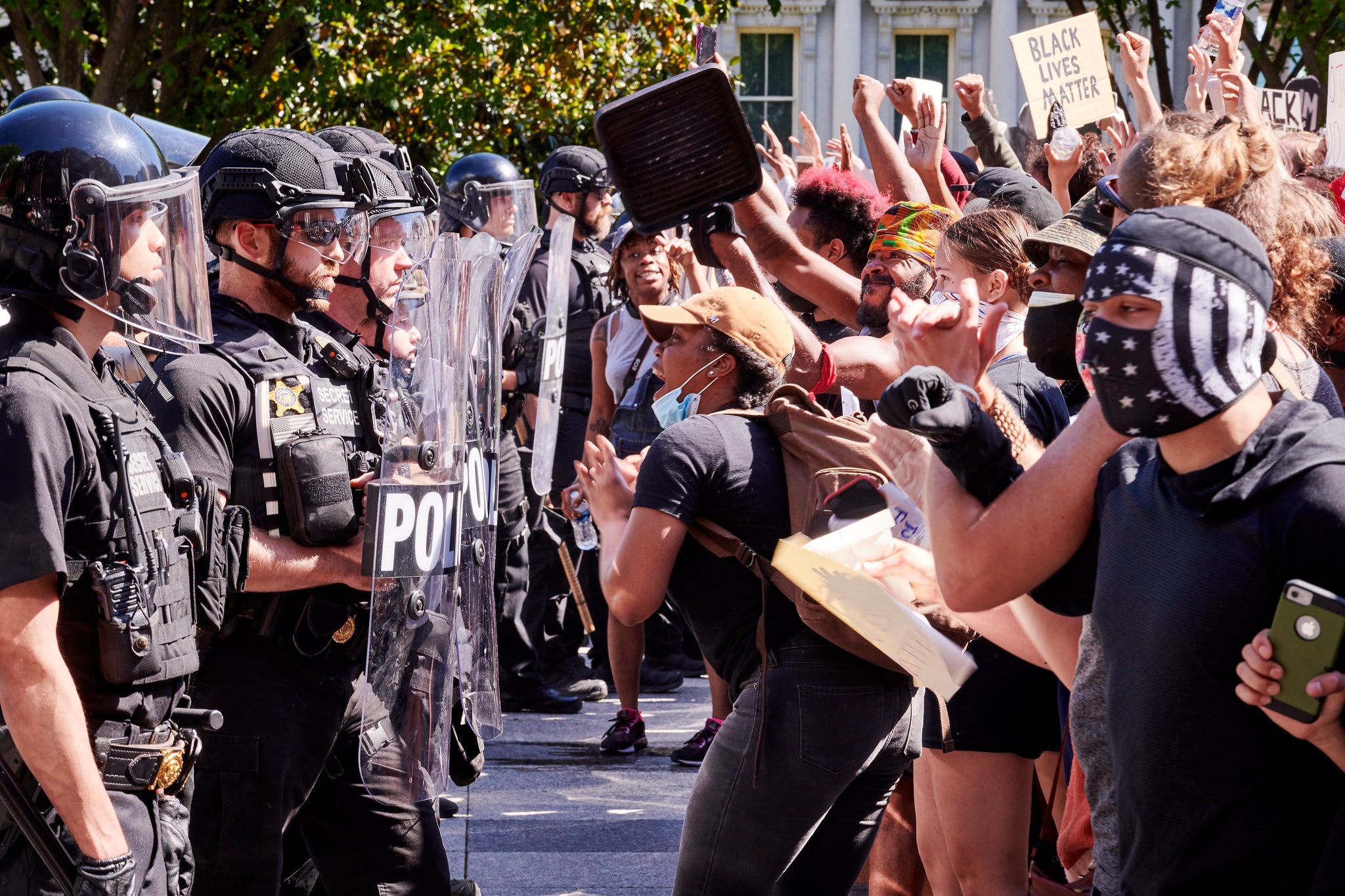
The defanging of the George Floyd Uprising was not accidental but was rather a deliberate attempt on the part of the American ruling class to regain social control in the wake of the largest and most militant protests in recent memory. This article examines the dimensions of how this defanging took place: how, within the space of two weeks, we went from burning down a police station to making small budgetary demands.
The AI Resist List
A living directory of ways communities resist AI harms—and build alternatives worth fighting for.

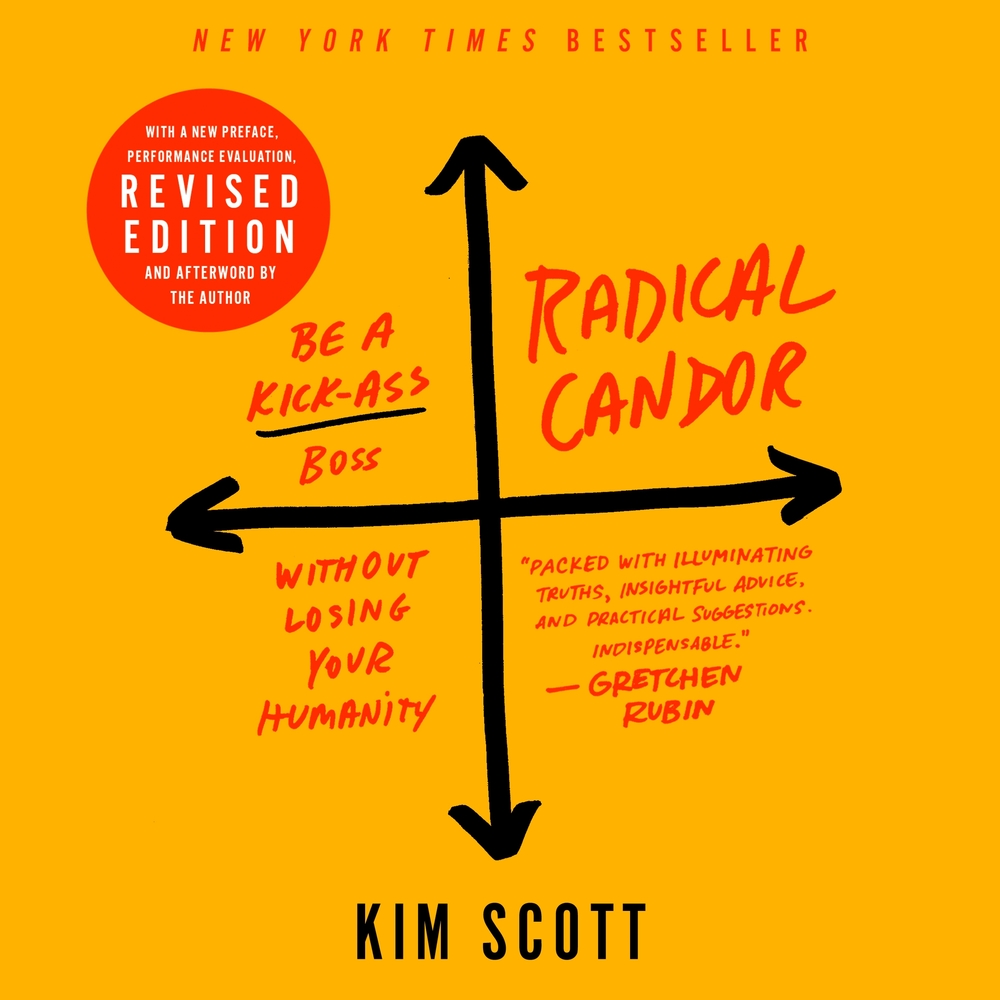
Radical Candor: Be a Kickass Boss Without Losing Your Humanity by Kim Malone Scott
From the time we learn to speak, we’re told that if you don’t have anything nice to say, don’t sa...
The Dispersion of Power: A Critical Realist Theory of Democracy
Abstract The Dispersion of Power is an urgent call to rethink centuries of conventional wisdom about what democracy is, why it matters, and how to make it better. Drawing from history, social science, psychology, and critical theory, it explains why elections do not and cannot realize the classic ideal of popular rule, and why prevailing strategies of democratic reform often make things worse. Instead, Bagg argues, we should see democracy as a way of protecting public power from capture—an alternative vision that is at once more realistic and more inspiring. Despite their many shortcomings, real-world elections do prevent the most extreme forms of tyranny, and are therefore indispensable. In dealing with the vast inequalities that remain, however, we cannot rely on standard solutions such as electoral reform, direct democracy, deliberation, and participatory governance. Instead, Bagg shows, protecting and enriching democracy requires addressing underlying inequalities of power directly. In part, this entails substantive policies attacking the advantages of wealthy elites. Even more crucially, deepening democracy requires the organization of oppositional, countervailing power among ordinary people. Neither task is easy, but historical precedents exist in both cases—and if democracy is to survive contemporary crises, leaders and citizens alike must find ways to revive and reinvent these essential democratic practices for the twenty-first century.

We Will Shoot Back: Armed Resistance in the Mississippi…
"Ranging from Reconstruction to the Black Power period,…

You're not powerless, you're just under attack.
A phenomenon that I’ve noticed frequently: people believing they are powerless.

The Rebel: An Essay on Man in Revolt | Philopedia
Overview of Albert Camus’s The Rebel, exploring metaphysical and historical rebellion, nihilism, revolution, and the limits of political violence.

Human-Computer Insurrection: Notes on an Anarchist HCI
The HCI community has worked to expand and improve our consideration of the societal implications of our work and our corresponding responsibilities. Despite this increased engagement, HCI continues to lack an explicitly articulated politic, which we argue re-inscribes and amplifies systemic oppression. In this paper, we set out an explicit political vision of an HCI grounded in emancipatory autonomy - an anarchist HCI, aimed at dismantling all oppressive systems by mandating suspicion of and a reckoning with imbalanced distributions of power. We outline some of the principles and accountability mechanisms that constitute an anarchist HCI. We offer a potential framework for radically reorienting the field towards creating prefigurative counterpower - systems and spaces that exemplify the world we wish to see, as we go about building the revolution in increment.


