

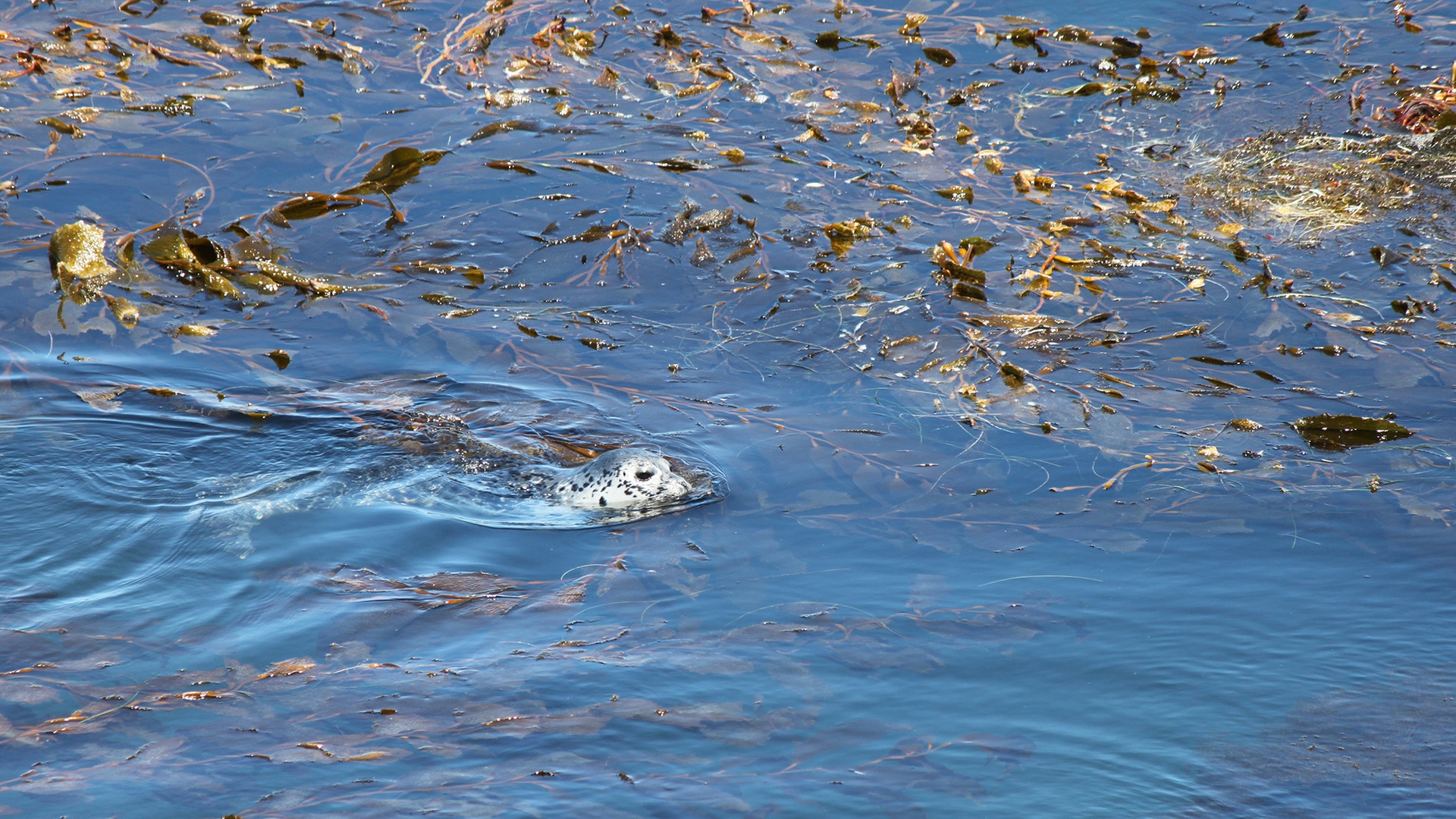
The unique underwater kelp forests that line the Pacific Coast support a varied ecosystem that was thought to have evolved along with the kelp over the past 14 million years. But a new study shows that kelp flourished off the Northwest Coast more than 32 million years ago, long before the appearance of modern groups […]
Aboriginal Memories of Inundation of the Australian Coast Dating from More than 7000 Years Ago (Australian Geographer)
"Some stories belonging to Australian Aboriginal groups tell of a time when the former coastline of mainland Australia was inundated by rising sea level. Stories are presented from 21 locations from every part of this coastline. In most instances it is plausible to assume that these stories refer to events that occurred more than about 7000 years ago, the approximate time at which sea level reached its present level around Australia. They therefore provide empirical corroboration of postglacial sea-level rise. For each of the 21 locations, the minimum water depth (below present sea level) needed for the details of the particular group of local-area stories to be true is calculated. This is then compared with the sea-level envelope for Australia (Lewis et al., Quaternary Science Reviews, 2013) and maximum and minimum ages for the most recent time that these details could have been observed are calculated. This method of dating Aboriginal stories show that they appear to have endured since 7250-13,070 cal yr BP (5300-11,120 BC). The implications of this extraordinary longevity of oral traditions are discussed, including those aspects of Aboriginal culture that ensured effective transgenerational communication and the possibility that traditions of comparable antiquity may exist in similar cultures."

Reciprocal nutritional benefits in a sponge-seagrass association
Sponges commonly form associations within seagrass meadows, but their potential impact on seagrass productivity and nutrient cycles remains poorly understood. This study investigates the association between the demosponge Chondrilla nucula and the Mediterranean seagrass Posidonia oceanica in two sampling occasions during the plant growth (spring) and senescence (autumn) seasons at a small inlet near Naples, Italy, where the sponge grows conspicuously within the seagrass bed. We found a non-linear relationship between the benthic cover of the sponge and the seagrass, with higher C. nucula cover linked to intermediate P. oceanica cover, suggesting spatial dependence. P. oceanica showed higher net primary production (NPP) in spring, while C. nucula was net heterotrophic in spring but exhibited slightly positive NPP in autumn. NPP remained stable when the two organisms were associated, regardless of the season. C. nucula consistently contributed inorganic nutrients to the association in the form of phosphate, ammonium, and substantial nitrate, recycling nutrients that potentially benefited P. oceanica in its growth season. In return, the seagrass consistently provided dissolved organic carbon, which aided sponge nutrition in spring. These findings suggest reciprocal benefits in the interaction between C. nucula and P. oceanica, with nutrient exchange facilitating a facultative mutualism that potentially supports and stabilizes the productivity of the seagrass ecosystem. SIGNIFICANCE STATEMENT This study provides a novel exploration of the reciprocal interactions between the demosponge Chondrilla nucula and the Mediterranean seagrass Posidonia oceanica, revealing a facultative mutualism mediated by nutrient exchange. Our findings show a non-linear spatial dependence between sponge and seagrass cover and demonstrate the sponge’s substantial contributions of inorganic nutrients (phosphate, ammonium and conspicuous nitrate) to the seagrass, particularly during its productive spring season. In return, P. oceanica supplies dissolved organic matter, aiding sponge nutrition. This study uniquely quantifies these reciprocal nutrient exchanges across the plant growth and senescence seasons, demonstrating how such interactions stabilize net primary production and support ecosystem functioning. These insights address a critical gap in understanding the role of sponge-seagrass associations in nutrient cycling, highlighting their significance for the resilience, productivity, and metabolic balance of coastal ecosystems under changing environmental conditions.

Earliest octopuses were giant top predators in Cretaceous oceans
Top predators drive changes in ecosystem structure. For the last ~370 million years, large-sized vertebrates have dominated the apex of the marine food chain, while invertebrates have served as smaller prey. Here we describe invertebrate top predators ...

Termite Ecology in the First Two Decades of the 21st Century: A Review of Reviews
Termite ecology came of age in 1978 with the seminal review of Wood and Sands which by considering the quantitative contributions made by termites to the carbon cycle at the landscape level concluded that they were major players in tropical ecosystems. Subsequent field work in the succeeding two decades was summarised in 2000 by Bignell and Eggleton, the most recent review which attempted to cover the entire topic in detail, which included 188 listed references and has been extensively cited for almost 20 years. Subsequent summaries more narrowly defined or in some cases more superficial are listed in the bibliography. In this overview, the main and subsidiary headings in Bignell and Eggleton are revisited and reclassified in the light of 186 selected articles added to the relevant literature since 2000, and some earlier work. While the literature on termite ecology remains buoyant, it has declined relative to publications on other aspects of termite biology. Overall, the thesis that termites have a major impact on, and are major indicators of soil health and landscape integrity in the tropics and sub-tropics is maintained, but the drivers of local diversity, abundance and biomass remain complex, with many biographical, edaphic and optimum sampling issues not completely resolved. The large increase in diversity and abundance data from Neotropical biomes can also be noted.

Reciprocal nutritional benefits in a Mediterranean seagrass-sponge association
Sponges commonly form associations within seagrass meadows, but their potential impact on seagrass productivity and nutrient cycles remains poorly understood. This study investigates the association between the demosponge Chondrilla nucula and the Mediterranean seagrass Posidonia oceanica in two sampling occasions during the plant growth (spring) and senescence (autumn) seasons at a small inlet near Naples, Italy, where the sponge grows conspicuously within the seagrass bed. We found a non-linear relationship between the benthic cover of the sponge and the seagrass, with higher C. nucula cover linked to intermediate P. oceanica cover, suggesting spatial dependence. Posidonia oceanica showed higher net primary production (NPP) in spring, while C. nucula was net heterotrophic in spring but exhibited near zero metabolic balance in autumn. NPP remained stable when the two organisms were associated, regardless of the season. Chondrilla nucula consistently contributed inorganic nutrients to the association in the form of phosphate, ammonium, and substantial nitrate, recycling nutrients that potentially benefited P. oceanica in its growth season. In return, the seagrass released dissolved organic carbon in spring, which is consistent with supporting sponge heterotrophic nutrition. These findings suggest reciprocal benefits in the interaction between C. nucula and P. oceanica , with nutrient exchange facilitating a facultative mutualism that potentially supports and stabilizes the productivity of the seagrass ecosystem.
Chondrilla nucula (Porifera, Demospongiae) : an example of successful plasticity ; ecological and morphological aspects
Sponges (Porifera) represent an important component of the Mediterranean sessile benthic community. They are present both in shallow and deeper waters, on soft and hard bottoms and some species, namely the bath sponges, has an application in human life since a long time. In the last few decades, they also assumed an importance among the organisms producing bioactive compounds which application goes from the homeopathy to the classical medicine to the industry. The study of the taxonomy, ecology and biology of sponges has an history hundreds years old. Now, due to the new findings that render sponges an exploitable marine resource, a coupling of the traditional sciences with the new emerging applications (biotechnology) is urgently needed. The Northern Adriatic Sea was the craddle of the sponge science hosting 36% of the sponge species present in the whole Mediterranean Sea. For the present work, the sponge fauna of a channel-like bay called Limski kanal (Croatia) has been intensively studied for the first time and a list of sponges, including species new for this area, is the result of a series of surveys in twelve sampling sites along the channel. As an introduction to the classification of sponges, a guide to the identification of the most common Mediterranean species has been written and included. A study on the temporal dynamic of a sponge community (Limski kanal, Croatia) was made by using fixed frames that have been photographed along a period of two years. Either seasonality, morphological variability, growth and degeneration phenomena have been observed, providing one more evidence of the incredible plasticity of the Porifera. Among the species in the Limski kanal, Chondrilla nucula (Porifera, Demospongiae) has been chosen as model organism. Firstly, its distribution, abundance and average coverage have been studied, showing that this species is very common along the channel, also in areas with a high sedimentation. Its distribution pattern depends mainly on light availability and kind of substrate. C. nucula is known as a very plastic species: here some macromorphological aspects related to the locomotion, the fragmentation events, the elimination of the sediment and the epibiosis are described in the attempt to give an overview on the successful life strategies of this sponge. Up to now only morphological studies on the oogenesis and spermatogenesis are available but the complete life cycle is unknown. In this study, macromorphological variations in specimens of C. nucula in reproduction and the first stages of embryogenesis have been described for the first time. Finally, in view of a biotechnological use of sponges as bioremediator organisms, the filtration and the bacterial retention rates of C. nucula have been investigated using clearance tests. In spite of a low filtration rate, the sponge showed high bacterial retention rates. This, together with the easy techniques required to farm it, makes of this sponge an eligible candidate for bioremediation. To achieve an effective conservation management plan and a sustainable exploitation of the marine resources, the knowledge on the biological and ecological characteristics of the benthic community and of the single species is absolutely necessary.
The real mystery behind Moana: after 1,700 years, why did Polynesians suddenly sail east?
New evidence suggests a massive centuries-long drought may be part of the answer.

The Ohlone Way: Indian Life in the San Francisco-Monterey Bay Area by Malcolm Margolin
Two hundred years ago, herds of elk and antelope dotted the hills of the San Francisco–Monterey Bay area. Grizzly bears lumbered down to the creeks to
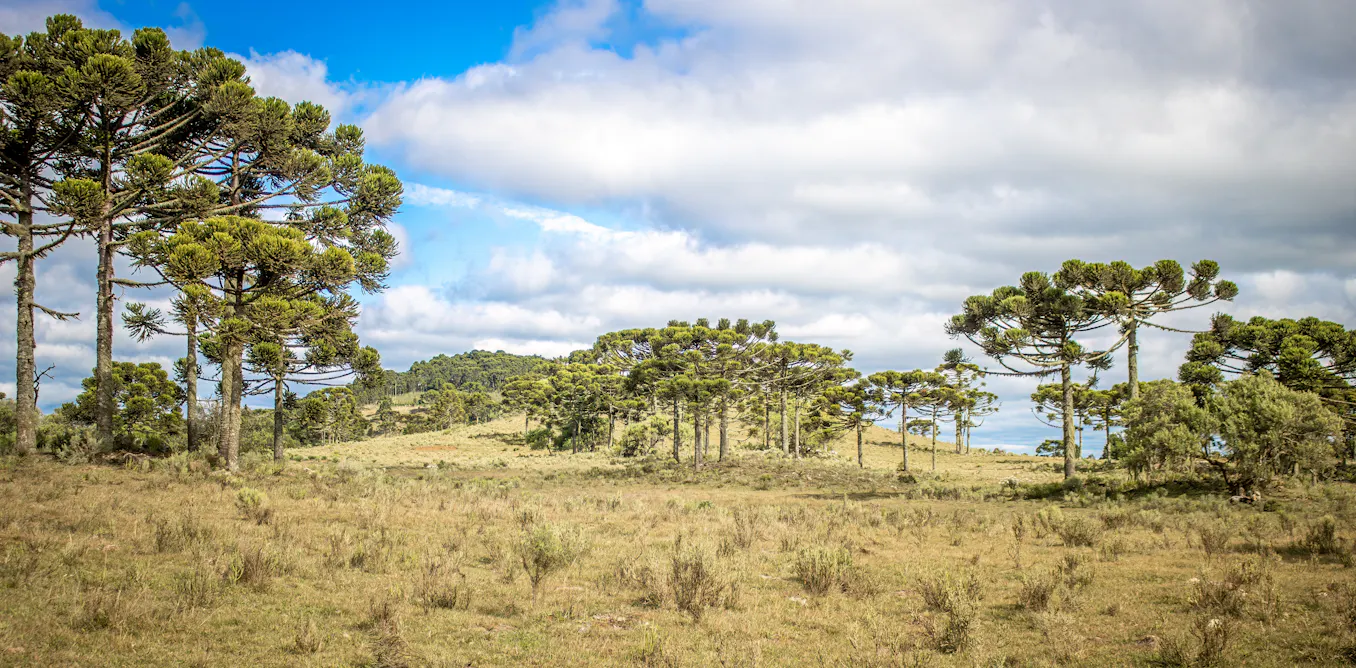
Brazil’s highland forest has been shaped by climate change and Indigenous people for 6,000 years
Prehistoric pollen records show that forest dynamics were driven by more than just broad-scale climatic changes.
Protect our Living Legends - Woodland Trust
Many of our oldest and most special trees are not legally protected. Urge Government to change the law and prevent further tragedy.

Koi Pond, Oakland Museum
“Look,” you say, “beneath them.” Beneath them, like a subplot or a motive, is a school of uniformly dark ones, smaller, unadorned, perhaps another species, living in the shadow of the gold, purple, yellow, indigo, and white, seeking the mired roots and dusky grasses, unliveried, the quieter beneath…

Crown shyness: are trees social distancing too? | Natural History Museum
If you look up in some forests, you might notice conspicuous gaps between the trees' branches. © Pongpawan Sethanant/ Shutterstock
Whales' Bubble Net Fishing | Nature's Great Events | BBC Earth
https://aneeshsathe.com/the-viscous-frontier/
In May 1976 a Satawalese master navigator named Mau Piailug stood on the deck of a double-hulled Polynesian canoe in Honolua Bay, Maui, and prepared to sail to Tahiti. Sans compass, chronometer, and chart. The canoe was Hōkūleʻa, a replica of the voyaging craft that had carried Polynesians across the Pacific a thousand years earlier. Over the next thirty-four days Piailug would navigate her about two thousand three hundred nautical miles south-southeast to Papeete using the rising and setting positions of stars, the shape of ocean swells refracted off islands beyond the horizon, the colour of the water at dusk, and the behaviour of terns returning to land at evening.