Americans' trust in the mass media has dropped sharply since last year to its lowest point since 1972. Republicans' lack of faith in the media is chiefly behind this decline.
Americans Trust Local News. That Belief Is Being Exploited. (Published 2019)
A growth in impostor local news that promotes ideological agendas.

Opinion | The hard truth: Americans don’t trust the news media
A note from our owner.

Opinion | A website wanted to restore trust in the media. It’s actually a political operation.
Do you really know where your news comes from?

Show your work: The new terms for trust in journalism - PressThink
The transparency movement has finally come of age. Power has shifted to the users. Their trust has to be earned in different ways now.

Americans’ Social Activity Has Steeply Declined in the Past 30 Years
Our survey finds significant, double-digit declines in Americans’ participation in key social activities from 1995 to 2026.

The Internet Has Become Too American to Trust | The Walrus
Trump and Big Tech have fused into a new kind of threat

The Rise of the Right-Wing Media Machine
This conservative media machine now rivals—and may well surpass—the power and the influence of the old-line press. It holds sway over much of the national agenda, deciding which ideas and...
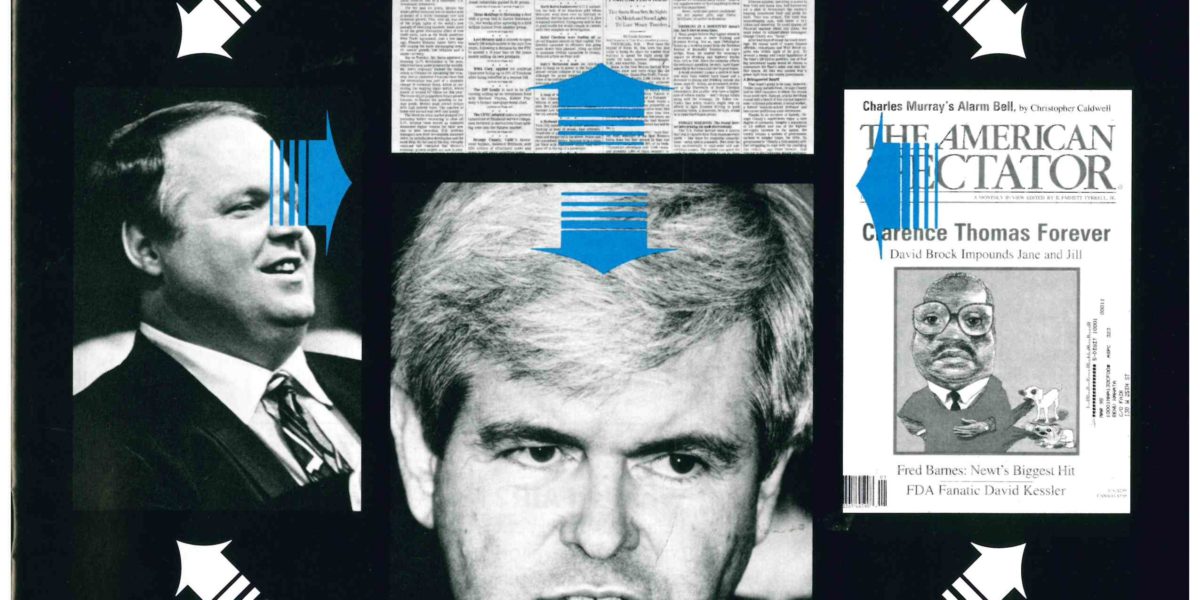
The Rise of the Right-Wing Media Machine
This conservative media machine now rivals—and may well surpass—the power and the influence of the old-line press. It holds sway over much of the national agenda, deciding which ideas and...
Media Ownership Monitor
Mass media influences how facts are viewed and debated in a society, contributing to crafting its public opinion. Independence and pluralism...

Semafor Keeps Hosting Ridiculous “Restoring Trust In Media” Events That Only Further Undermine Trust In Media
You might recall that when political news website Semafor entered the media industry on the back of $25 million in private money, they made all kinds of promises about how they were somehow going t…

Reimagining American public media: A key infrastructure for local journalism
As the state of U.S. local journalism continues to deteriorate, contributing to growing news deserts and the proliferation of mis- and disinformation, alternative models for sustaining local news are increasingly paramount. One such alternative to the failing commercial model that deserves more attention, we argue, is the American public media system. While less robust than its international counterparts, the U.S. public media system tends to be less reliant on market support, less subject to commercial pressures, and more devoted to a universal service mission. This study explores to what extent the American public media system may serve to lessen the severity of the local journalism crisis. Drawing on interviews and conversations with two dozen public media practitioners and analysts, our research examines how public media could be reimagined and repurposed to better serve local information needs. We conclude that a renewed investment in the existing system in tandem with structural reforms presents a possible pathway towards a more sustainable future for local news.
Shifts in U.S. Social Media Use, 2020-2024: Decline,...
Using nationally representative data from the 2020 and 2024 American National Election Studies (ANES), this paper traces how the U.S. social media landscape has shifted across platforms,...

The U.S. Press Loves To Pretend Widespread Corruption Doesn't Exist
Despite widespread U.S. corruption being anything but subtle, its presence consistently remains absent from corporate media narratives surrounding most U.S. dysfunction.

Shifts in U.S. Social Media Use, 2020–2024: Decline, Fragmentation, and Enduring Polarization
Using nationally representative data from the 2020 and 2024 American National Election Studies (ANES), this paper describes how U.S. social media use has shifted across platforms, demographics, and politics. Overall platform reach declined, driven by growth in the share of Americans — especially the youngest and oldest cohorts — who report using no social media. Visiting and posting activity on Twitter/X and Facebook have fallen by nearly 50% since 2020, with the decline on Twitter/X driven primarily by reduced participation among Democratic users. While Facebook, YouTube, and Twitter/X lost ground, TikTok and Reddit grew modestly, consistent with a more fragmented digital public sphere. Platform audiences aged and became slightly more educated and racially diverse. Politically, most platforms shifted toward Republican users while remaining, on balance, Democratic-leaning. Twitter/X experienced the largest change: among posters, the partisan balance swung over 70 percentage points from Democrats to Republicans. Across platforms, political posting remains closely tied to affective polarization, as the most partisan respondents are also the most active. As casual users disengage while polarized partisans remain vocal, online discourse becomes narrower and more ideologically extreme.
Local News and National Politics
The level of journalistic resources dedicated to coverage of local politics is in a long-term decline in the US news media, with readership shifting to national outlets. We investigate whether this trend is demand- or supply-driven, exploiting a recent wave of local television station acquisitions by a conglomerate owner. Using extensive data on local news programming and viewership, we find that the ownership change led to (1) substantial increases in coverage of national politics at the expense of local politics, (2) a significant rightward shift in the ideological slant of coverage, and (3) a small decrease in viewership, all relative to the changes at other news programs airing in the same media markets. These results suggest a substantial supply-side role in the trends toward nationalization and polarization of politics news, with negative implications for accountability of local elected officials and mass polarization.