

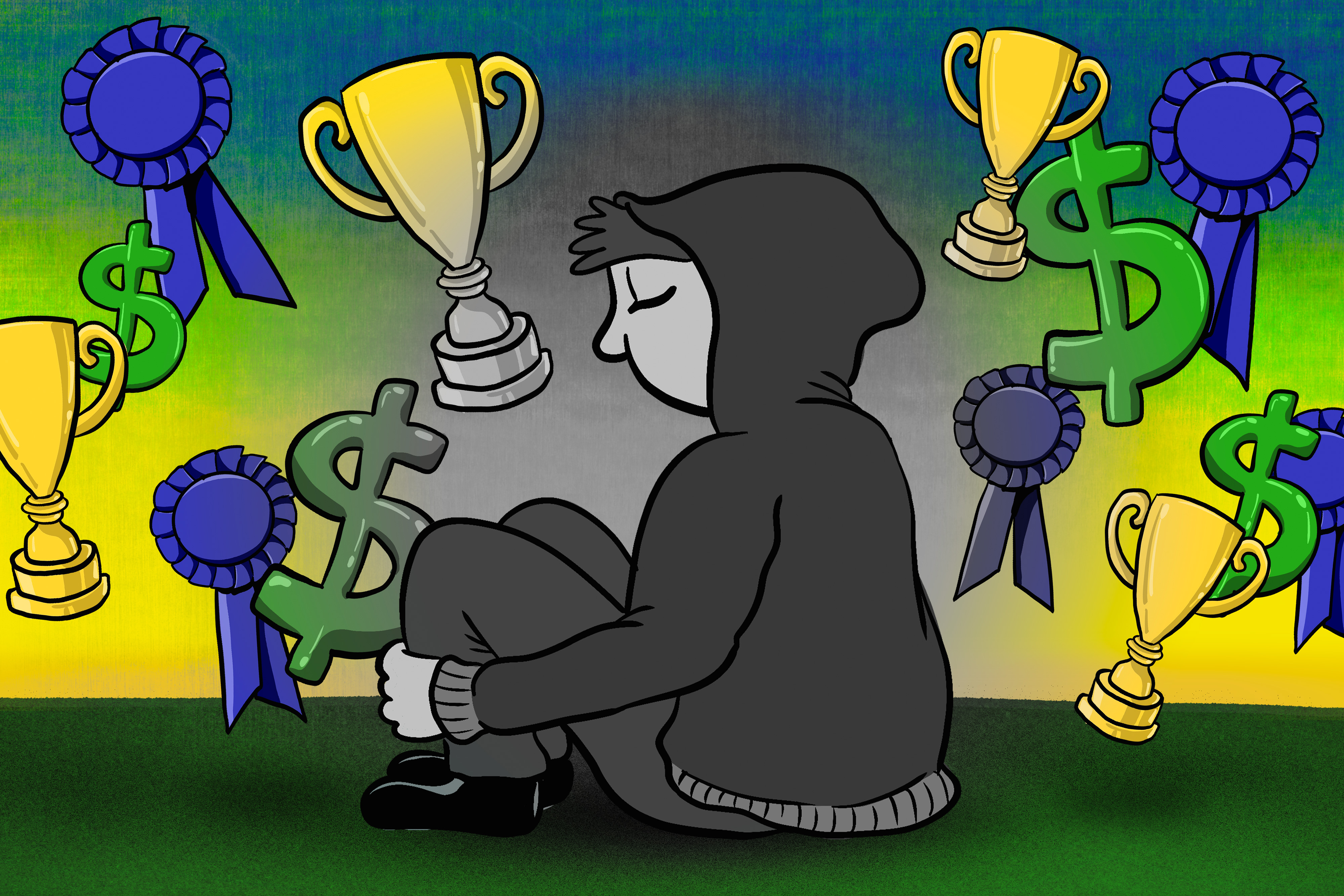
The brain’s sensitivity to rewarding experiences — a critical factor in motivation and attention — can be shaped by socioeconomic conditions, according to an MIT study.
Us Versus Them: Harming the ‘Outgroup’ Is Linked to Elevated Activity in the Brain’s Reward Circuitry - Neuroscience News
Aggression toward members in an "outgroup" was associated with increased activity in areas of the brain associated with reward. Activity in the ventromedial prefrontal cortex impacted the level of aggression a person demonstrated against an outsider.

Serotonin Helps Your Brain Predict Future Rewards - Neuroscience News
New research reveals that serotonin plays a key role in how the brain predicts future rewards, shedding light on its puzzling activity in response to both pleasure and pain.

How We Pay Attention Changes the Very Shape of Our Brains
Imagine arriving at the airport just in time to catch a plane. Everything in your behavior betrays the heightened concentration of your attention. Your mind on alert, you look for the departures si…

how to pay attention again (the neuroscience of focus in the age of everything)
on the attention economy, and reclaiming your brain’s right to choose

How Information is Like Snacks, Money, and Drugs To Your Brain - Slashdot
A new study by researchers at UC Berkeley's Haas School of Business has found that information acts on the brain's dopamine-producing reward system in the same way as money or food. From a report: "To the brain, information is its own reward, above and beyond whether it's useful," says Assoc. Prof. ...

Revisiting evidence for an attentional tunneling effect caused by scarcity
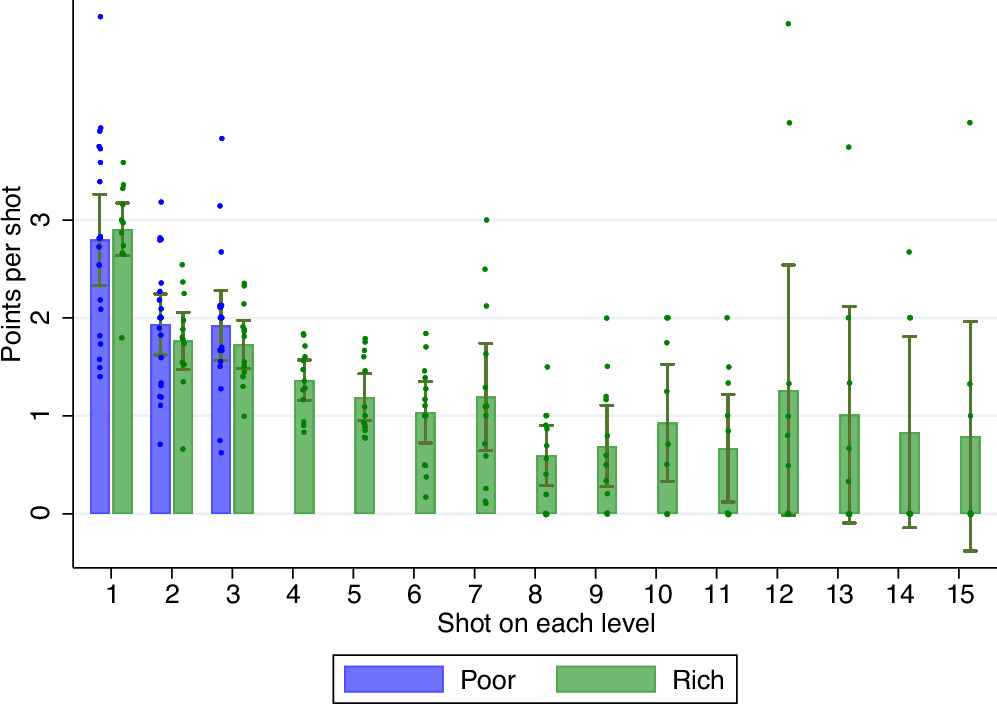
People in poverty sometimes behave in ways that perpetuate their socioeconomic condition. By one influential account, these behaviors arise from psychological effects of scarcity on attention that create greater focus toward managing scarce resources, at the cost of attention to potentially-beneficial information outside of this ‘tunnel’. Although the tunneling hypothesis has been widely discussed in academia and beyond, its direct empirical support derives primarily from a landmark study by Shah et al. (2012) in which participants played games while their access to resources was experimentally manipulated, rendering participants either ‘rich’ or ‘poor’. Here, we present new analyses that contest the original interpretation of the data, showing that the behavioral differences between ‘rich’ and ‘poor’ participants are more parsimoniously explained by the game’s structure than by an attentional shift caused by the scarcity manipulation—a conclusion we substantiate through an additional experiment. We contextualize our findings within the literature on scarcity and attention, and highlight the need for greater clarity regarding the tunneling hypothesis itself.
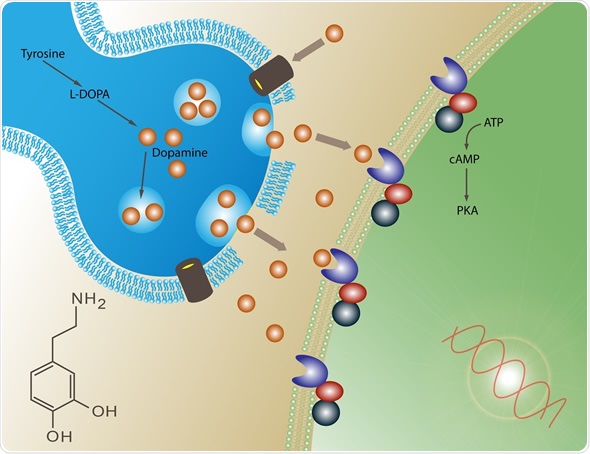
Chronic inflammation removes motivation by reducing dopamine in the brain
Why do we feel listless when we are recovering from an illness? The answer is, apparently, that low-grade chronic inflammation interferes with the dopaminergic signaling system in the brain that motivates us to do things.
Procrastination Is More About Managing Emotions Than Time, Says Study - Slashdot
An anonymous reader quotes a report from the BBC: [A new study] identified two areas of the brain that determine whether we are more likely to get on with a task or continually put it off. Researchers used a survey and scans of 264 people's brains to measure how proactive they were. Experts say the...
Things are made by teams
“How do we get people to meaningfully coordinate in service of doing stuff that matters?” This is one of those big, civilization-spanning sort of questions. There are many answers, there’s no one right way (but there are many wrong ones, as discovered thru evidence of trying them) - and while there’s generic motivators for human behavior, there’s a sort of loss and amplification factor that happens when you mismatch the reward function. To be more blunt - hunger is a powerful motivator, but hungry people tend to not perform at their peak.
Rethinking the cognitive foundations of the attention economy
The attention economy is the economic system in which human attention is the scarce resource. This literature takes a particular passage in Herbert Simon’s seminal Chapter Designing Organization fo...

Think Twice: How the Gut's "Second Brain" Influences Mood and Well-Being
The emerging and surprising view of how the enteric nervous system in our bellies goes far beyond just processing the food we eat
Young children would rather explore than get rewards
Young children will pass up rewards they know they can collect to explore other options, a new study suggests. Researchers found that when adults and 4- to 5-year-old children played a game where certain choices earned them rewards, both adults and children quickly learned what choices would give them the biggest returns. But while adults ...

Social isolation linked to changes in brain structure and lower cognition ability
This showed that socially isolated people had poorer cognition, including in memory and reaction time, and lower volume of grey matter in many parts of the brain. These areas included the temporal region (which processes sounds and helps encode memory), the frontal lobe (which is involved in attention, planning and complex cognitive tasks) and the hippocampus – a key area involved in learning and memory, which is typically disrupted early in Alzheimer’s disease.

Hyperactive–impulsive ADHD traits predict higher curiosity in adults: evidence from a cross-sectional study
Attention-deficit/hyperactivity disorder (ADHD) is typically framed in terms of difficulties with sustained attention, behavioral regulation, and impulse control, yet growing work suggests that some associated traits may also relate to potentially adaptive tendencies. Curiosity has been highlighted in qualitative research as one such trait that can function as both a strength and a challenge for adults with ADHD, but quantitative evidence examining its relationship to ADHD traits remains limited. This study examined whether ADHD traits are associated with individual differences in trait curiosity in adults.
The attention market—and what is wrong with it
Attention is described as a “scarce commodity” that is traded in “a marketplace.” This, it is further claimed, contributes to a “widespread sense of attentional crisis.” But is there really an attention market, and if so, what, if anything, is wrong with it? We defend the claim that there are markets in attention. We provide an account of such attention markets and use that account to address what is morally wrong with them. Our account draws on knowledge of how attention works and what roles it plays in the mind. The attention market trades in an ability to influence our attention – somewhat (though not exactly) like the labor market trades in an ability to influence how we use our capacity for work. Specifically, the commodity it trades in is attentional landscaping potential, viz. the ability to systematically influence patterns of attention by changes to the sensory environment individuals are exposed to. Attention markets thus, we argue, commodify influence over a human capacity that plays a central role in shaping individual experience, agency, and belief formation. This feature of attention markets makes them ethically problematic. As markets in access to external influence, attention markets pose a special threat to individual autonomy and escape the classical liberal defense of free markets. Those who value autonomy should worry about the attention markets that exist today.

