


Hugh Pickens writes "According to Rebecca J. Rosen, it may seem impossible for an encyclopedia of everything to ever near completion, but at least for the major articles on topics like big wars, important historical figures, and central scientific concepts, the English-language Wikipedia is pretty w...
The Depths of Wikipedians—Asterisk
A conversation about yogurt wars, German hymns, tropical cyclones, and the people who make Wikipedia function.
Wikipedia Is Battling for the Soul of the Internet
The internet’s largest stockpile of free knowledge is under threat from MAGA, A.I. and foreign autocrats. A bibliophile ex-ambassador is here to help.


Language agents achieve superhuman synthesis of scientific knowledge
Language models are known to hallucinate incorrect information, and it is unclear if they are sufficiently accurate and reliable for use in scientific research. We developed a rigorous human-AI comparison methodology to evaluate language model agents on real-world literature search tasks covering information retrieval, summarization, and contradiction detection tasks. We show that PaperQA2, a frontier language model agent optimized for improved factuality, matches or exceeds subject matter expert performance on three realistic literature research tasks without any restrictions on humans (i.e., full access to internet, search tools, and time). PaperQA2 writes cited, Wikipedia-style summaries of scientific topics that are significantly more accurate than existing, human-written Wikipedia articles. We also introduce a hard benchmark for scientific literature research called LitQA2 that guided design of PaperQA2, leading to it exceeding human performance. Finally, we apply PaperQA2 to identify contradictions within the scientific literature, an important scientific task that is challenging for humans. PaperQA2 identifies 2.34 +/- 1.99 contradictions per paper in a random subset of biology papers, of which 70% are validated by human experts. These results demonstrate that language model agents are now capable of exceeding domain experts across meaningful tasks on scientific literature.


Wikipedia Mining Algorithm Reveals The Most Influential People In 35 Centuries Of Human History
The top ranked men and women will surprise you

The Wikipedia Revolution: How a Bunch of Nobodies Creat…
"Imagine a world in which every single person on the pl…

Frustrations with Wikipedia
Its policies, ultimately good-natured, make covering niche, technical subjects difficult.

Wikipedia:Reliable sources/Perennial sources
This is a non-exhaustive list of sources whose reliability and use on Wikipedia are frequently discussed. This list summarizes prior consensus and consolidates links to the most in-depth and recent discussions from the reliable sources noticeboard and elsewhere on Wikipedia.
Can Language Models Play the Wikipedia Game?
Language models increasingly support or automate information retrieval from document collections too large to index. This task is difficult when it requires specialist linguistic or scientific knowledge. We used the Wikipedia Game to test language models on an analogous information retrieval task. In the game, players must reach a target article using only article links. We compared sentence embedding models and LLMs across five Wikipedia languages and five academic-literature datasets. We construct very large local graphs of Wikipedia pages and of paper citations using OpenAlex and provide code to build and navigate them. This allows the study of language models' navigation capabilities without relying on third-party APIs. We compared the models with human and TF-IDF benchmarks. The Wikipedia Game format enables robust comparisons across techniques, languages, and domains. No model significantly outperformed humans, although the best models (GPT-o3 mini, GPT-4o, QwQ:32B, and DeepSeek-R1:70B) achieved comparable success. Performance and rankings varied across languages and topics, with implications for practitioners utilising these techniques.
Beyond disambiguation pages
Learning from how Wikipedia handles overlapping subjects to improve my Obsidian vault.

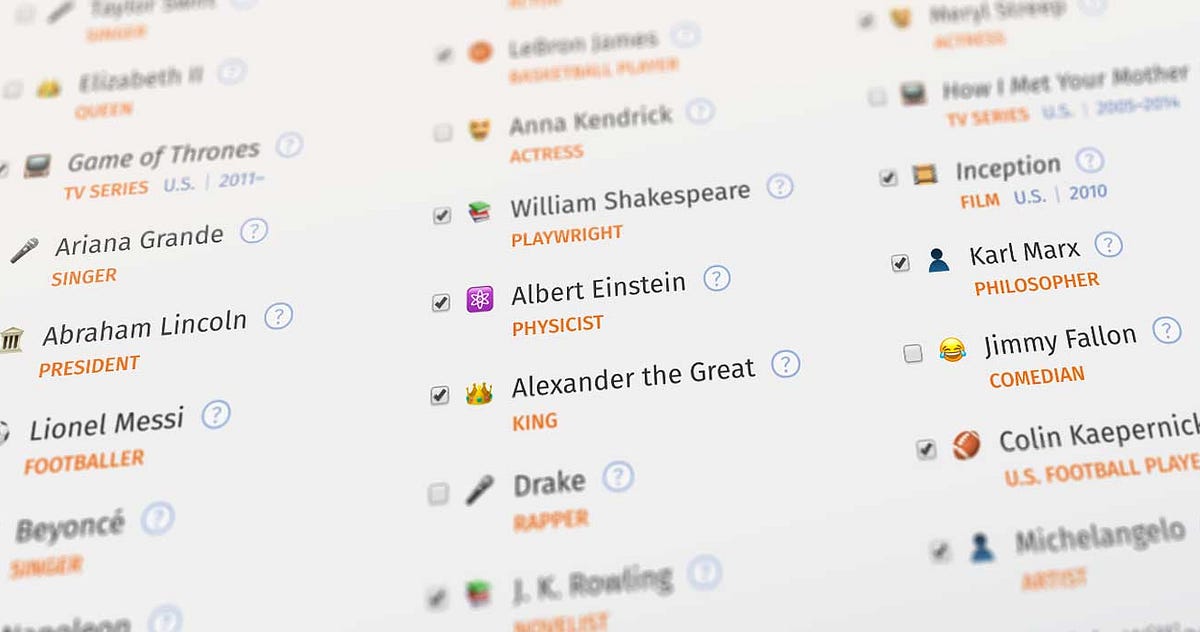
Transforming Wikipedia into an accurate cultural knowledge quiz
Building “Test Your Culture” by taking the world’s largest encyclopedia… and combining it with data science
Wikipedia is fixing one of the Internet’s biggest flaws
The Internet has so many cesspools, it's surprising to see what happens behind the scenes at Wikipedia.

How Wikipedia Will Survive in the Age of AI (With Wikipedia’s CTO Selena Deckelmann)
The Wikimedia Foundation’s chief technology and product officer explains how she helps manage one of the most visited sites in the world in the age of generative AI.
Wikipedia:archive.today guidance
The English Wikipedia has decided to stop using archive.today and its related websites. This decision was agreed on after a request for comment with more than 200 participants concluded in February 2026, and is due to multiple concerns, including the site using editors' and readers' computers to run a denial-of-service attack and evidence that the website has tampered with some archived pages.