


According to a new working paper from the National Bureau of Economics, the number of American firms listed publicly in the U.S. has dropped more than half. In 1997, more than 7,500 American firms were listed publicly in the U.S. Nearly two decades later, in 2016, the number had dropped to 3,618 fir...
louisgray.com: The Myth of the Billion Dollar Startup
According to the Wall Street Journal, there are now as many as thirty companies who consider themselves startups valued at a billion dollars or more , based on how much money they’ve raised through pr

American tech giants are making life tough for startups
Big, rich and paranoid, they have reams of data to help them spot and buy young firms that might challenge them

The golden era of being an open startup is gone
To me, the golden era of being an open startup is gone. Some founders and early adopters are shutting down their open pages and changing their transparency practices. I don’t think they are doing it just because things change and we need to cope.

The rise of the "successful" unsustainable company
We're funding too many unsustainable companies.
Nearly half as many people are launching businesses as 20 years ago
According to a study conducted by BDC in collaboration with the Université de Montréal, not enough people are starting businesses to replace those closing their doors
How Silicon Valley missed the next wave of e-commerce
There are lots of exciting retail companies — just not in the U.S.

To become a public company, start operating like one early on | TechCrunch
There is a generation of well-funded, fast-growing technology companies now eyeing the public markets as the platform for continued rapid growth. The pipeline is healthy. But what needs to be done to get ready for an IPO and, crucially, what comes next?

Why Founders Market Their Products Too Late
Founders predictably underestimate the importance of hiring marketers. Here’s why many startups don’t get round to marketing their product…

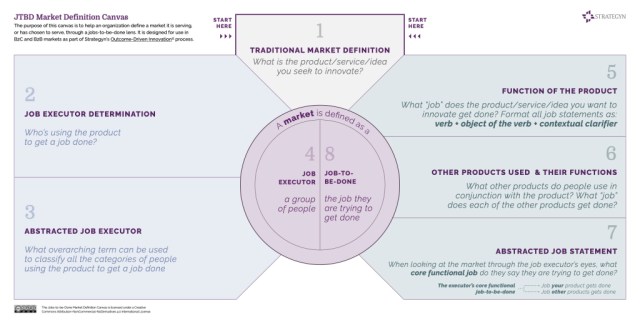
Steve Blank How to Find a Market? Use Jobs-To-Be-Done as the Front End of Customer Discovery
Modern entrepreneurship began at the turn of the 21st century with the observation that startups aren’t smaller versions of large companies – large companies at their core execute known business mo…
Why it's nice to compete against a large, profitable company
Competing against big firms? Their revenue streams are their Achilles heel. Learn how smaller startups have a shot.
Why Buying a Stalled Startup is Better than Starting From Scratch (Now)
After a long stretch in the venture-backed startup world, I eased out a few years ago to work on turnarounds — finding stalled companies…

The Real Retail Killer
How private equity is gouging some of the country’s best-known corporate brands

Opinion | The Monopolization of America (Published 2018)
In one industry after another, big companies have become more dominant over the past 15 years, new data show.

Is America Encouraging the Wrong Kind of Entrepreneurship?
In a 1990 paper, “Entrepreneurship: Productive, Unproductive, and Destructive,” late economist William Baumol argued that not all entrepreneurs are equal: there are both “productive” and “unproductive” endeavors. Most people think of all entrepreneurship to be what Baumol referred to as the “productive” kind, where the companies that founders launch commercialize something new or better, benefiting society and themselves in the process. Baumol was worried, however, by a very different sort of entrepreneur, the “unproductive” ones who exploit special relationships with the government to construct regulatory moats, secure public spending for their own benefit, or bend specific rules to their will — in the process, stifling competition to create advantage for their firms. Two recent trends indicate that this may be happening in the U.S. today: rising profits, especially those earned by the largest businesses in the economy, and suggestive evidence of an increase in efforts to shape the rules of the game. Baumol may have been ahead of his time. If the U.S. is going to tackle its many problems, we are going to have to find ways to encourage would-be entrepreneurs to start innovative, productive businesses, rather than dedicating their efforts to co-opting government in order to secure economic advantage.
Coopting Disruption
Our economy is dominated by five aging tech giants – Alphabet, Amazon, Apple, Meta, and Microsoft. In the last twenty years, no company has commercialized a new

