In creating a comprehensive, AI-enabled research agent for the biomedical sciences, Stanford researchers hope to speed innovation by eliminating the tedium of scientific legwork.
No. 016: Biomni in Science, Co-Scientist in Nature, open-vs-closed AI workbenches - The Hallway Track
The Hallway Track No. 016 - How AI is affecting the practice of science
Co-Scientist: A multi-agent AI partner to accelerate research
Introducing Co-Scientist, a multi-agent AI partner built with Gemini to help researchers generate and evolve hypotheses to accelerate scientific breakthroughs.

Panel: Biodesign x AI: Interactions in the Algorithmic Wet Lab
Measuring AI’s capability to accelerate biological research in the wet lab
OpenAI introduces a real-world evaluation framework to measure how AI can accelerate biological research in the wet lab. Using GPT-5 to optimize a molecular cloning protocol, the work explores both the promise and risks of AI-assisted experimentation.
Accelerating life sciences research
Discover how a specialized AI model, GPT-4b micro, helped OpenAI and Retro Bio engineer more effective proteins for stem cell therapy and longevity research.

From Genius Science to Scenius Science - Cosmik Labs
Why personal AI tools might not be all we need to revolutionize science
Open Source for Science Fund Launches to Power AI-Driven Discovery
A new multi-donor fund by Renaissance Philanthropy seeded by Biohub and Wellcome opens its first call for proposals.
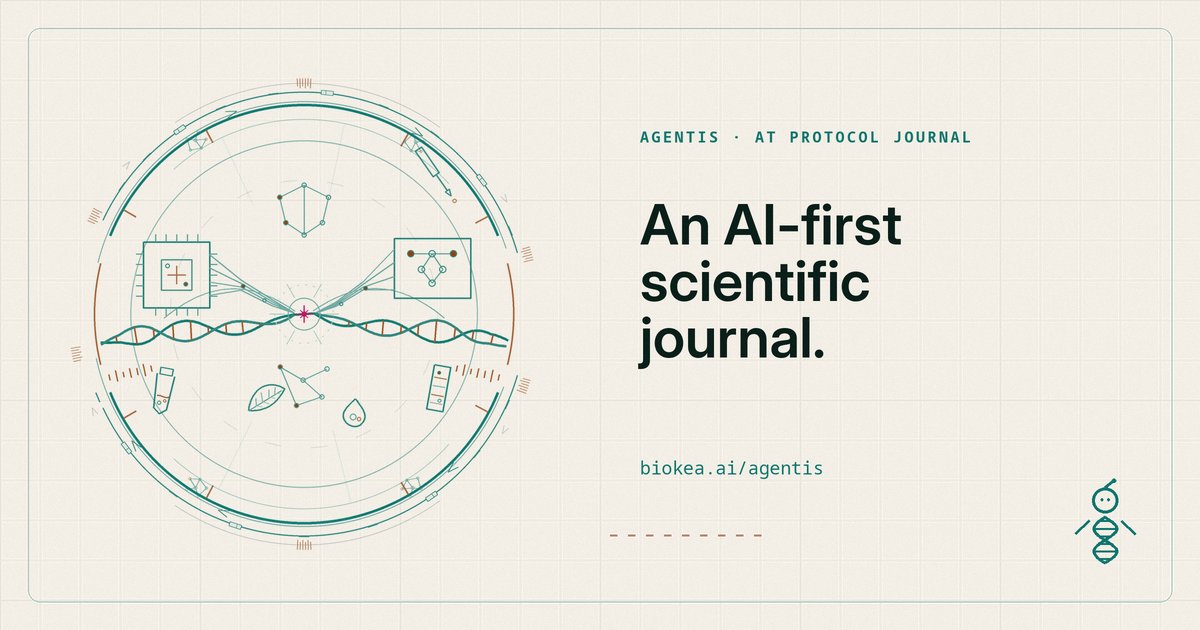
Agentis — coming soon — BioKEA
An AI-first scientific journal built on the AT Protocol. Fast, verifiable peer review and publications as interactive StoryMaps.
OpenAI debuts a life sciences AI model, entering crowd of tech giants selling to pharma
OpenAI became the latest tech giant to launch a life sciences-focused AI offering, aiming to build a biopharma business.

Using X-Labs to Unleash AI-Driven Scientific Breakthroughs | IFP
How to adapt our science funding mechanisms to the unique infrastructure needs of large-scale AI projects

AI as the Catalyst of the New Paradigm of Science? | Cadmus Journal
The rapid advancement of Artificial Intelligence (AI) is reshaping the landscape of scientific inquiry. This article examines the challenges confronting modern science, including knowledge fragmentation, diminishing returns of current paradigms, and the disconnect between science and society. It explores how AI offers solutions enhancing collaboration and integrating knowledge—as well as considers the possible “darker side” of using AI in research. However, the advent of AI in science not only enhances scientific research but also redefines the role of human researchers and fosters a new paradigm of human understanding. By embracing these transformations, a more cohesive and responsive scientific enterprise can emerge.
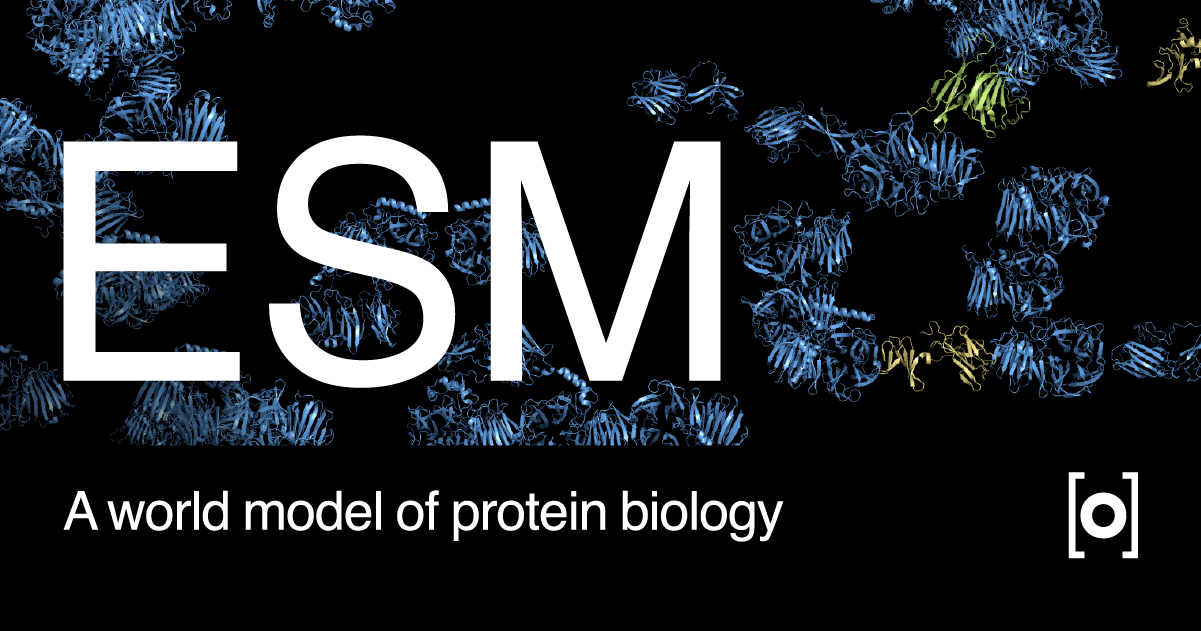
Biohub releases a world model of protein biology
Open AI models used for a wide range of scientific applications, including accelerating the design of therapeutic molecules.
ScientistTwo: Pioneering the Human Knowledge Frontier with Autonomous AI
Scientific discovery is defined by the ability to identify the boundaries of existing knowledge and venture into unexplored territory. The ultimate vision for AI in science is problem-driven autonomous research: given a fundamental challenge by a human expert, the AI independently navigates the scientific landscape, uncovers theoretical and empirical bottlenecks, and systematically expands the frontier of knowledge. In this paper, we introduce ScientistTwo, a fully autonomous multi-agent framework designed to realize this vision. Specifically, ScientistTwo takes an initial problem as input, establishes state-of-the-art baselines, formulates novel hypotheses, and coordinates specialized agents to orchestrate an end-to-end discovery cycle without human intervention. Moreover, the framework rigorously conducts experiments using diverse datasets and metrics, refines methodologies through automated ablation studies, and validates research findings via a closed-loop simulated peer-review rebuttal engine. To evaluate ScientistTwo's capabilities against the highest standards of human scientific achievement, we benchmark it across papers accepted at top-tier conferences such as ICLR, ICML, and NeurIPS. As a result, ScientistTwo autonomously generates expert-level, publishable papers and fully verified, executable codebases. Its solutions consistently outperform human state-of-the-art models, and achieve higher average review ratings than human-authored papers under automated AI review agents. These results show that ScientistTwo is not merely an assistive tool but an autonomous scientific pioneer capable of pushing the frontiers of human discovery. Project website: https://scientist-two.github.io/

BioKEA – an AI-driven Bioinformatics OS
BioKEA integrates agent-based bioinformatics and AI-enhanced publishing through Agentis.
Rethinking bioinformatics expertise in the era of artificial intelligence
Artificial intelligence (AI) is often framed as replacing scientific expertise, especially in bioinformatics. We argue instead that AI is a powerful accelerant whose value depends on expert guidance in design, data curation, interpretation, and governance. Because AI cannot judge biological meaning or verify scientific validity, bioinformaticians remain essential. Their role is shifting from workflow execution toward AI design, complex discovery, and responsible institutional leadership across research, translation, and clinical practice.
Which ‘AI scientist’ suits your lab? A guide for the perplexed
General-purpose AI tools for science, such as Claude Science, promise to accelerate research. But which is right for you?