

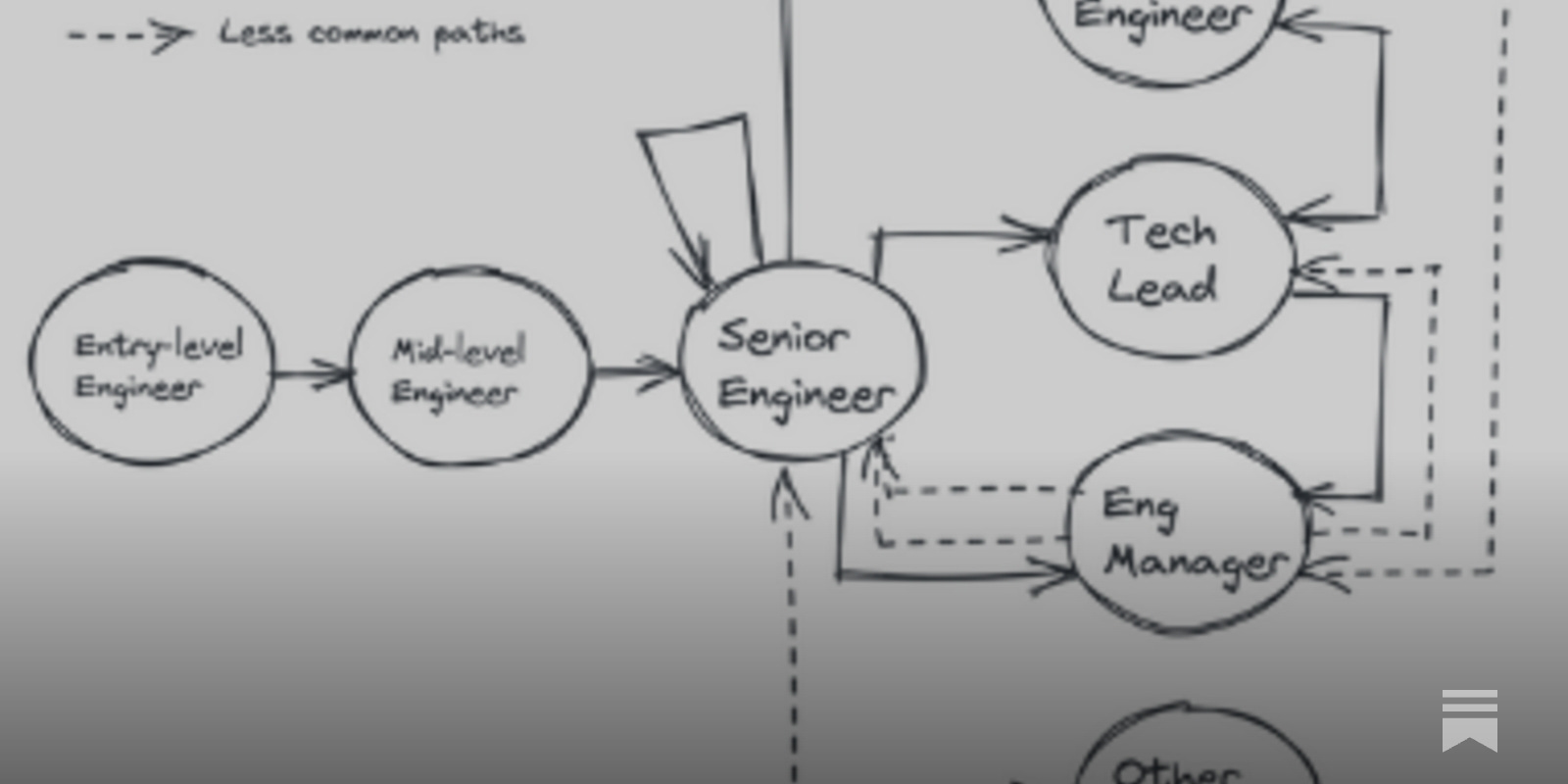
Levels at big tech, the most common career paths, and what comes after making it to Staff
Staff Engineer: Leadership beyond the management track
At most technology companies, you'll reach Senior Software Engineer, the career level, in five to eight years. At that point your path branches, and you have the opportunity to pursue engineering management or continue down the path of technical excellence to become a Staff Engineer.
Staff archetypes
Most career ladders define a single, uniform set of expectations for Staff engineers operating within the company. Everyone benefits from clear role expectations, but career ladders are a tool that applies better against populations than people. This is particularly true for Staff-plus engineers, whose career ladders often paper over several distinct roles hidden behind a single moniker. The more folks I spoke with about the role of Staff-plus engineers at their company, the better their experiences began to cluster into four distinct patterns. Most companies emphasized one or two of the patterns, and one pattern only existed in companies with many hundreds or thousands of engineers. A few companies didn’t feature any technical leadership pattern and pushed all their experienced engineers towards engineering management. In literature, recurring character patterns are called archetypes, such as the “hero” or the “trickster,” and the archetype term is helpful for labeling these frequent variants of Staff-plus engineers.
Leveling Up: Career Advancement for Software Developers | Peter Lyons
Staff Engineer, Back End

Engineering managers have a new job description
Why engineering managers are expected to be hands-on again and how AI tools are making it possible to stay technically sharp while still leading.

Hiring (and Retaining) a Diverse Engineering Team
Stories from six engineering leaders who succeeded in building and growing diverse teams. Hiring approaches, retention tactics and strategies.

Neuroscience needs a career path for software engineers
Few institutions have mechanisms for the type of long-term positions that would best benefit the science.

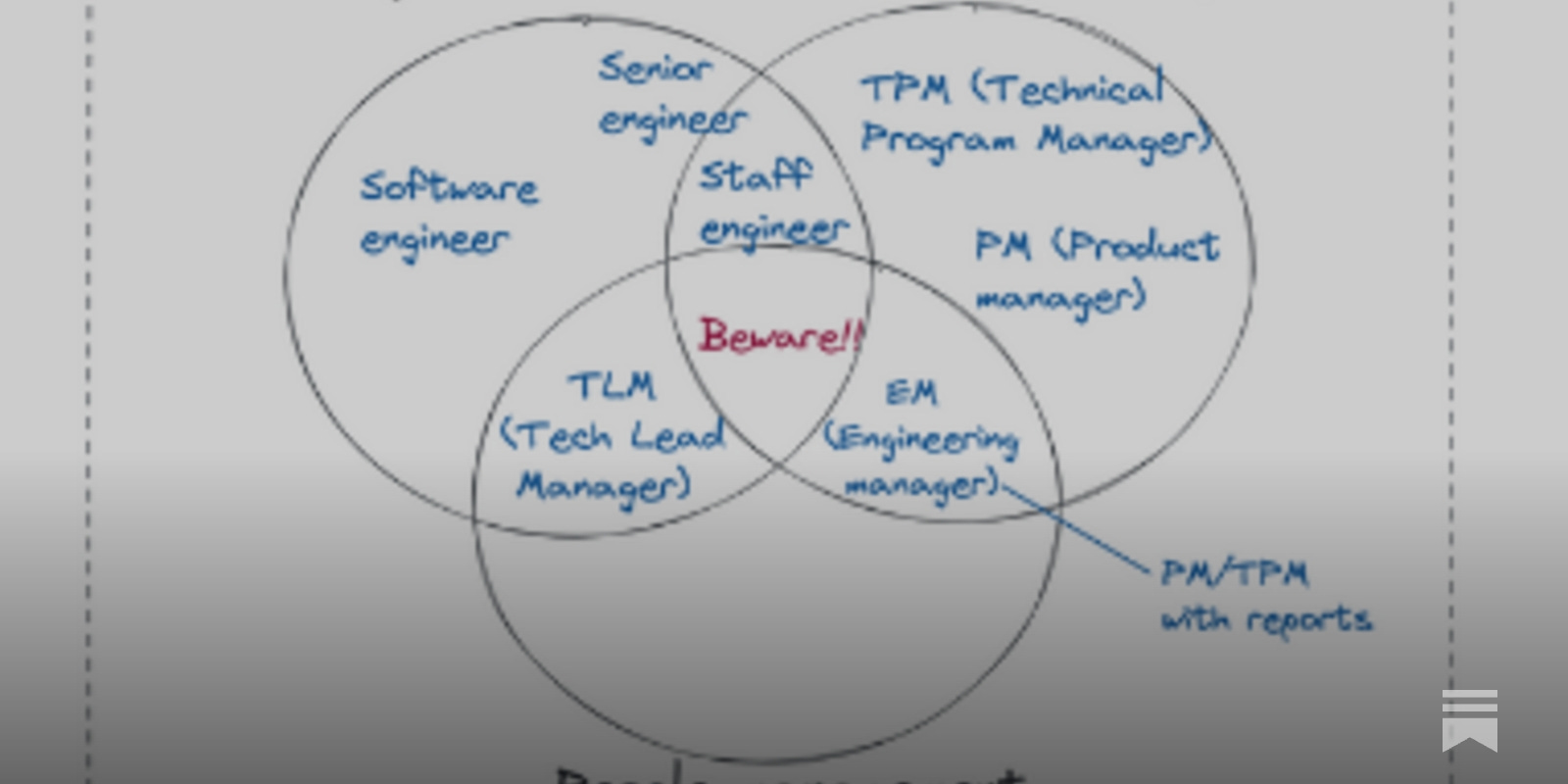
Engineering Leadership Skill Set Overlaps
How Staff Engineer, Engineering Manager (EM), Product Manager (PM), Tech Lead Manager (TLM) and Technical Program Manager (TPM) positions overlap in Big Tech and at high-growth startups – and their di
Scaling Engineering Teams: Lessons from Google, Facebook, and Netflix
After spending over a decade in engineering leadership roles at some of the world’s most chaotic innovation factories—Google, Facebook, and Netflix—I’ve learned one universal truth: scaling e…

Fellow Engineers: This is where your money comes from
Recently I saw some rather surprising conversations on Reddit’s /r/cscareerquestions which is generally a great place to talk through different CS Career issues people are having and try to h…

other futures: tech, resistance & imagining otherwise
big tech wants to control our future, but there are other paths we can choose instead. on "other futures" we bring together leading tech researchers, organizers, critics, and storytellers to help us imagine what more liberatory and human-centered tech futures could look like—and how we can build them together. brought to you by DAIR and the All Tomorrows Institute.

Undergraduate Computational Science and Engineering Education
It is widely acknowledged that computational science and engineering (CSE) will play a critical role in the future of the scientific discovery process and engineering design. However, in recent years computational skills have been deemphasized in the curricula of many undergraduate programs in science and engineering. There is a clear need to provide training in CSE fundamentals at the undergraduate level. An undergraduate CSE program can train students for careers in industry, education, and for graduate CSE study. The courses developed for such a program will have an impact throughout the science, technology, engineering, and mathematics (STEM) undergraduate curriculum. This paper outlines the content of a CSE curriculum, the skills needed by successful graduates, the structure and experiences of some recently developed CSE undergraduate programs, and the potential career paths following a CSE undergraduate education.

How to Pick a Career (That Actually Fits You) — Wait But Why
Our career path is how we spend our time, how we support our lifestyles, how we make our impact, and even sometimes how we define our identity. Let’s make sure we’re on the right track.

Software Innovation Lab
Scale your engineering power. We enable deep-tech startups to achieve their vision, from research to product delivery.

Don't Feed the Thought Leaders
In this article, the author shares their experience as an engineering manager and the challenges they faced when trying to reach alignment and prev...

How I’d start my engineering career today
If you could start your engineering career over today, here’s what actually matters now that AI has made most coding skills nearly worthless.

one of the reasons why I'm critical of "bigger models will solve this" is that cranking the output velocity of technician work sharpens the need for process work, which is the domain of expertise. process is incredibly hard to get right. most fields are bad at it. and it's *gaining* importance.

Ed
when it comes to LLMs, I have been trying to beat the technician/expert drum. LLMs are becoming master technicians, but they obviously lack integrative capabilities to deploy expertise. but I'm starting to realize that a lot of people don't understand, or don't value the difference.
