

Software can be rebuilt, because software is a machine. But a software ecosystem is not a machine. It is a living system.
Regenerative Software - The Phoenix Architecture
No Fork Required - Scott's Thoughts
What if another operating system isn't the solution to anything at all? What if device-level identity could tie into existing systems to help pull users out of walled gardens, rather than creating new gardens?
Sustainable software manifesto
The systems we build are never neutral. They can magnify harm or support a just and sustainable society. How we build today shapes tomorrow’s possibilities.
Designing and Programming Malleable Software
User needs for software features and interfaces are diverse and changing, motivating the goal of making it as easy as possible for users themselves to change software, or to have it changed on their behalf in response to their developing needs. However, in my opinion, current approaches do not address this issue adequately: software engineering promotes flexible code, but in practice this does not help end-users effect change in their software. End-user and live programming systems help users customize their interfaces by accessing and modifying the underlying source code. I take a different approach, seeking to maximize the kinds of modifications that can take place through regular interactions, e.g. direct manipulation of interface elements. I call this approach malleable software. To understand contemporary needs for and barriers to modifying software, I study how it is produced, maintained, adopted, and appropriated in a network of communities working with biodiversity data. I find that the mode of software production, i.e. the technologies and economic relations that produce software, is biased towards centralized, one-size-fits-all systems. This leads me to propose a long-term, interdisciplinary research program in reforming the tools of software development to create infrastructures for plurality. These tools should help multiple communities collaborate without forcing them to consolidate around identical interfaces or data representations. Malleable software is one such infrastructure, in which interactive systems are dynamic constellations of interfaces, devices, and programs assembled at the site of use. My technological contribution is a reconstruction of the programming mechanisms used to create interactive behavior. I generalize existing control structures for interaction as entanglements, and develop a higher-order control structure, entanglers, which produces entanglements when particular pre-conditions, called co-occurrences, are met. Entanglers cause interactions to be assembled dynamically as system components come and go. I develop these mechanisms in Tangler, a prototype environment for building malleable interactive software. I demonstrate how Tangler supports malleability through a set of benchmark cases illustrating how users can modify systems by themselves or with programmer assistance. This thesis is an early step towards a paradigm for programming and designing malleable software that can keep up with human diversity.
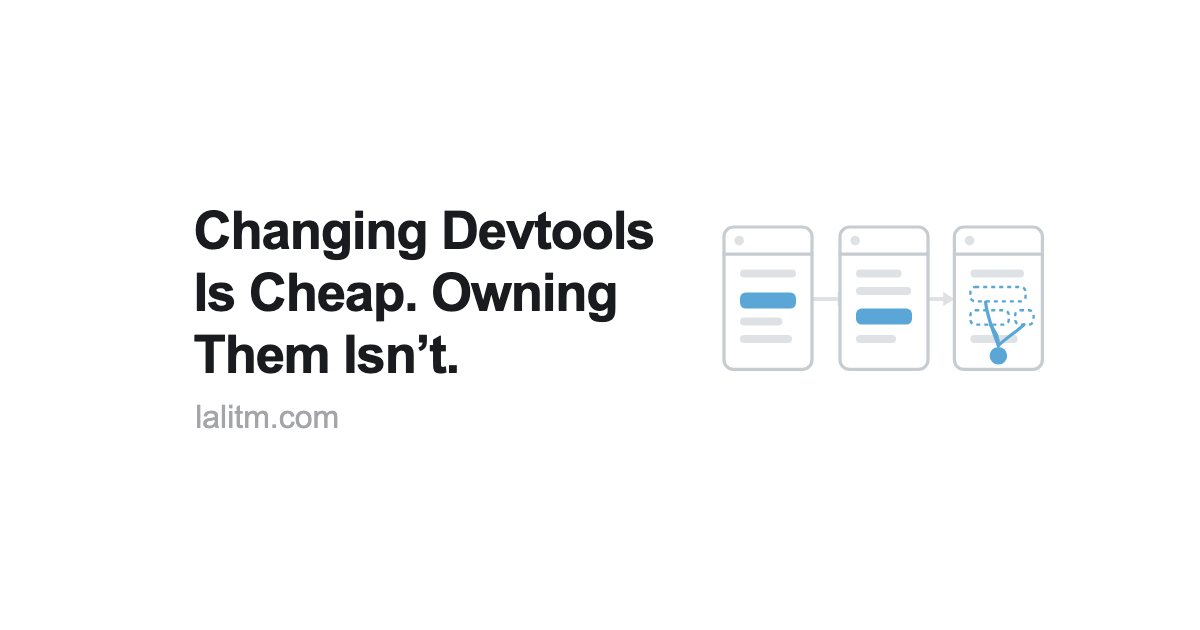
Changing Devtools Is Cheap. Owning Them Isn’t.
AI makes devtools cheap to customize, but personalized forks still demand ongoing attention and ownership.
An ecological perspective to master the complexities of the digital economy
Economic and social interactions are shifting to digital platforms which grow into vast ecosystems where user engagement creates value for members while ecosystem orchestrators harvest massive revenue. The digital ecosystem business model succeeds by adeptly navigating fast-changing environments, including new technologies and volatile demands, through dynamic innovation in a decentralized decision-making setting. This renders digital platform ecosystems complex adaptive systems. Recognizing that natural ecosystems are a prime example of complex adaptive systems, we propose a systematic hierarchical framework for describing and understanding digital ecosystems, rooted in ecology and evolution. Our framework compares digital ecosystems hosted by societies to natural ecosystems embedded in biomes, products to species, and technologies and elements of business strategy to the genetic makeup of a species. As digital platforms face heightened scrutiny about their socio-economic power and societal value, our approach contributes to the development of deeper understanding and sustainable governance of the digital economy.
Home Page - Software Heritage
preserves software source code for present and future generations
The ecosystem is moving
Considerations for distributed and decentralized technologies from the perspective of a product that many would like to see decentralize....
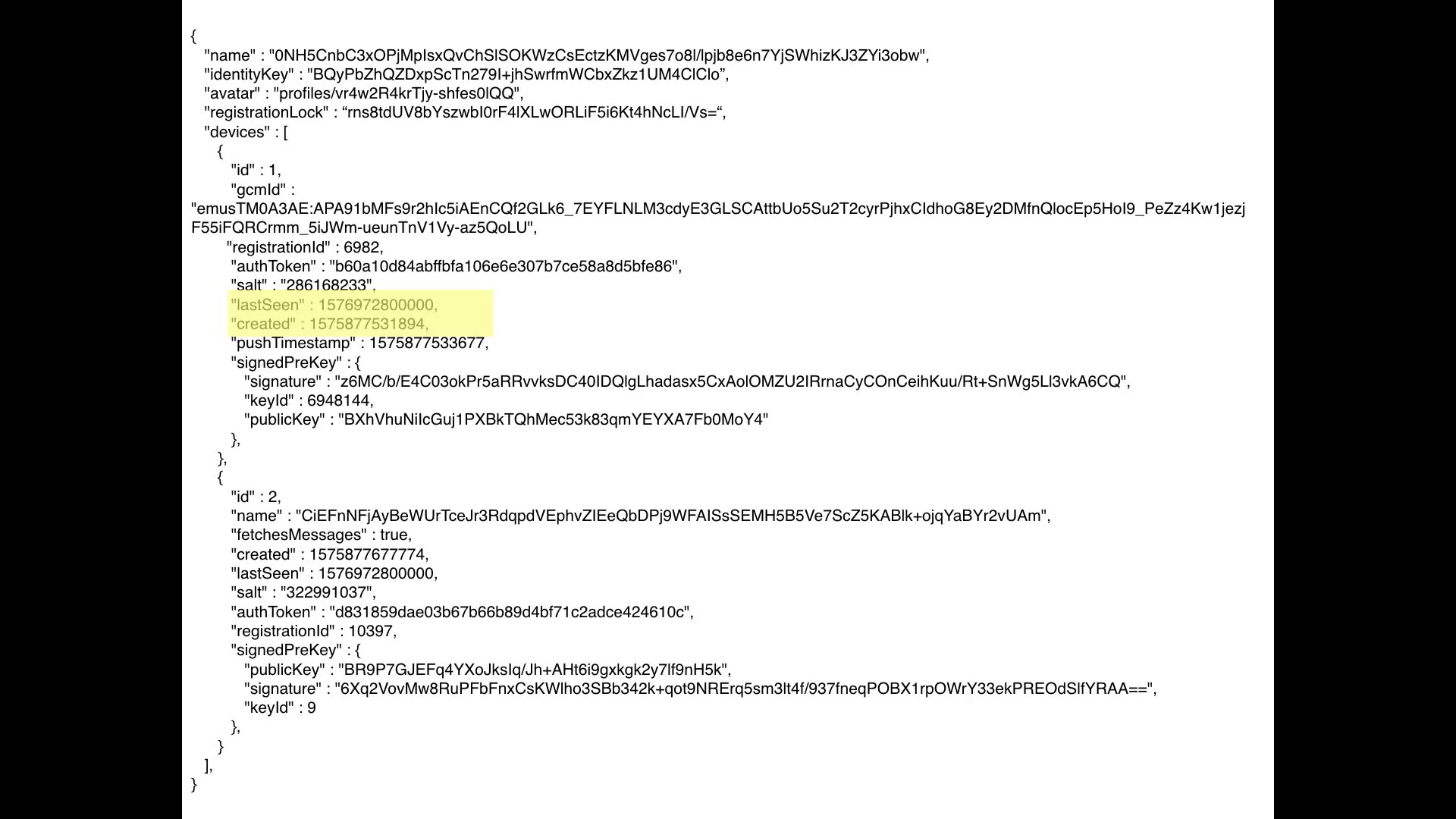
Ecosystem Plugins - Wesley's notes
Bridging the interop gap and addressing the long-tail of user needs
Software Bonkers
I’m software bonkers: I can’t stop thinking about software. And I can’t stop building software.
Code Was Never the Asset - The Phoenix Architecture
Why AI makes the hidden economics of software unavoidable
Burnout in Open Source: A Structural Problem We Can Fix Together ✸ Software Stewardship Lab
Burnout is affecting the entire Open Source ecosystem. Here's what we could do to make things better.
code and tests aren't the moat. they never were. no need for agents to copy a project. forking was always an option. the moat of an oss project is its community, its governance, and its ecosystem connections. agents will never be able to replicate that. don't hide. let's build in the open, together
Why does every platform rebuild the same safety tools from scratch, behind closed doors? Our Head of Product @julietshen.bsky.social joined the Won't Fix pod to talk open-source T&S infrastructure, AI vs. human judgment & safety for the decentralized web: youtube.com/watch?v=RxFV7VwxkLs

Won't Fix Episode 9: With Juliet Shen, Cofounder & HOP at ROOST
www.youtube.com
