


(in increasing order of effectiveness)
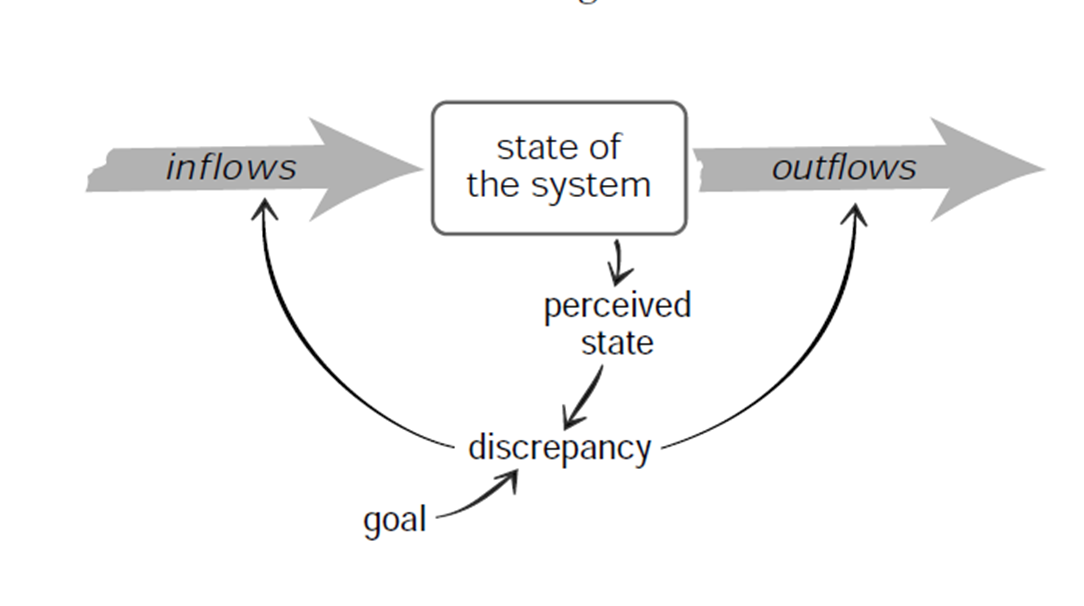
Leverage Points: Places to Intervene in a System
By Donella Meadows~ Folks who do systems analysis have a great belief in “leverage points.” These are places within a complex system (a corporation, an economy, a living body, a city, an ecosystem) where a small shift in one thing can produce big changes in everything. This idea is not unique to systems analysis — […]
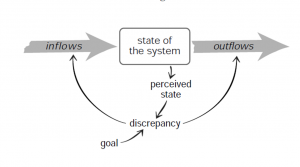
Leverage Points: Places to Intervene in a System
By Donella Meadows~ Folks who do systems analysis have a great belief in “leverage points.” These are places within a complex system (a corporation, an economy, a living body, a city, an ecosystem) where a small shift in one thing can produce big changes in everything. This idea is not unique to systems analysis — […]
Ground Control: Volunteer where it counts
We've evaluated hundreds of organizations to find opportunities open to anyone, immediately impactful, and ready to accept your help.

The Systems Thinker
The Systems Thinker works to catalyze effective change by expanding the use of systems approaches. All articles are available free of charge in an effort to expose as wide of audience as possible. Browse, share with others, save your favorites and tell others about this valuable resource!
Facilitation Techniques and Workshop Activities | Library
Hundreds of group facilitation activities for workshops, meetings and training sessions. Find the best team building activities, energisers, process facilitation and leadership development...
Mechanism Experiments and Policy Evaluations
Randomized controlled trials are increasingly used to evaluate policies. How can we make these experiments as useful as possible for policy purposes? We argue greater use should be made of experiments that identify the behavioral mechanisms that are central to clearly specified policy questions, what we call "mechanism experiments." These types of experiments can be of great policy value even if the intervention that is tested (or its setting) does not correspond exactly to any realistic policy option.
Against optimization
One of the most inescapable edicts when leading a team is the order to optimize the system towards the organization’s goals.

After aid: Thoughts on a localised humanitarian system (part 1)
You have probably read 100+ articles on this topic — USAID shutdown, funding cuts from several EU governments and the UK. An…

Binding Chaos: Mass Collaboration on a Global Scale
The world is long overdue for a completely new system of governance. If there was ever a need for political representation or a paternalistic and opaque authority, it has been removed by technology. Every political system we have tried has proven incapable of protecting human rights and dignity. Every political system we have tried has devolved into oligarchy. To effect the change we require immediately, to give individuals control and responsibility, to bring regional systems under regional governance, allow global collaboration and protect the heritage of future generations, we need a new political model.
ver.ooo
Curious about systems — how they behave, how they fail, and what they get up to when nobody is steering.

blacksky-algorithms/rsky
An AT Protocol implementation prioritizing community safety and self-governance, written in Rust.
Association En2Hors - Administration
En2Hors a pour objet de promouvoir la pratique de la danse en organisant des rencontres, des déplacements et la participation à des stages ou des cours.
Decentralisation as a shifting mental framework
Programming note: every week I send out an email newsletter. It contains all the articles I published that week, as well as an additional essay that has been not been published elsewhere yet. This is a republication of last week’s essay I send out. If you’re interested, subscribe below to get all the updates directly […]

Dilemmas in a general theory of planning
The search for scientific bases for confronting problems of social policy is bound to fail, becuase of the nature of these problems. They are “wicked” problems, whereas science has developed to deal with “tame” problems. Policy problems cannot be definitively described. Moreover, in a pluralistic society there is nothing like the undisputable public good; there is no objective definition of equity; policies that respond to social problems cannot be meaningfully correct or false; and it makes no sense to talk about “optimal solutions” to social problems unless severe qualifications are imposed first. Even worse, there are no “solutions” in the sense of definitive and objective answers.

Toward a Critical Technical Practice
This is a chapter in Geof Bowker, Les Gasser, Leigh Star, and Bill Turner, eds, Bridging the Great Divide: Social Science, Technical Systems, and Cooperative Work, Erlbaum, 1997.
Participatory Action Research

A bunch of us are learning about how to convene and facilitate Participatory Action Research. This is an unorganized reading list of the best resources, references, etc we can find to school up on frameworks and approaches.
ParticipatoryEcosystem

Ronen Tamari (@ronentk.me)