

Another if-this-then-at blueprint I've been exploring: IF an identity has a cryptographically-signed payment proof THEN unlock access to confidential data…
attested.network — Proof of Payment for ATProtocol
An open specification for decentralized, cryptographically verifiable proof of payments.
Decentralized Identity Verification using Zero-Knowledge Proofs: A Privacy-Preserving Authentication Framework
In the contemporary online interaction, digital iden- tity is central, but most systems follow a centralized provider like Google or Facebook. Although convenient, these models pose ma- jor risks to data breach, surveillance, and single point of failure. The proposed paper proposes a privacy-sensitive decentralized identity verification system that uses Zero-Knowledge Proofs (ZKPs) to allow users to make it through claims (e.g., age, citizen- ship, or enrollment) without any personal data being provided, thereby solving the challenges outlined in the paper. Our architecture integrates verifiable credentials, zero-knowledge-SNARKs and an issuer trust registry that is maintained on blockchain smart contracts to guarantee trustless verification and eliminate dependence on centralized authorities. Its system gives its users full control over credentials, allows reuse across applications, and does not expose data.A proof-of-concept implementation has shown the approach to be feasible with Circom and SnarkJS to generate proof, Solidity smart contracts to verify them, and a user interface implemented in React. Results of the evaluations showed that determination of the verification latency is low, the overhead to generate proofs is moderate, and no privacy leakage occurs. It can be used in potential applications such as education, e-governance, healthcare, finance, and online voting.
Encrypted Spaces — Research preview
An architecture for collaborative applications where data is encrypted and operations are cryptographically verifiable.

PrivateID - The best way to verify identity
PrivateID offers secure, on-device biometric authentication and identity verification, ensuring privacy with no data leaving your device.

A New Form of Verification on Bluesky - Bluesky
We’re introducing a new layer of verification — a user-friendly, easily recognizable badge. Additionally, independent organizations can verify accounts directly through our Trusted Verifiers feature.

Unlock
Unlock is a protocol which enables creators to monetize their content with a few lines of code in a fully decentralized way.
Identity verification on Claude | Claude Help Center
Being responsible with powerful technology starts with knowing who is using it. Identity verification helps us prevent abuse, enforce our usage policies, and comply with legal obligations.

Age Verification in the Context of the EUDI Wallet: Balancing Privacy and Security
As digital identity solutions become increasingly prevalent, the necessity for robust age verification mechanisms has emerged as a critical concern for a range of services, from online transactions to access to age-restricted content. Current age verification methods often fall short of accommodating the diverse standards across jurisdictions, leading to vulnerabilities and inconsistencies in user experience. One of the main objectives of this study is to identify and analyze in a systematic way existing age verification methods and the main relevant international regulatory frameworks. The Age Verification Profile by the European Commission is including and exploring Zero-Knowledge Proof-based solutions for age verification, which are also considered in the EUDI Wallet Architecture and Reference Framework. This approach not only minimizes data privacy risks but also facilitates seamless digital interactions across the European Union. This paper primarily aims to explore the critical role of the European Digital Identity Wallet Architecture and Reference Framework in age verification and demonstrate that the EUDI Wallet seeks to enhance the security and efficiency of online transactions by introducing robust age verification mechanisms that effectively balance user privacy, security, and compliance with various regulatory requirements while preventing unauthorized access to services with age restrictions, which is in line with the broader objectives of the European Digital Identity initiative. Furthermore, we examine the European Union's age verification approach via the EUDI Wallet and the U.S. framework approach, conducting a comparative analysis between them that highlights key differences in architectural design and legal underpinnings and emphasizes their advantages.
Cryptographic Autonomy License
1. Purpose This License gives You unlimited permission to use and modify the software to which it applies (the “Work”), either as-is or in modified form, for Your private purposes, while protecting…

Revisiting Keyed-Verification Anonymous Credentials
As part of the Digital Library's transition to Open Access, new features for researchers are available in the Premium Edition. Click here to learn more.

Biscuit
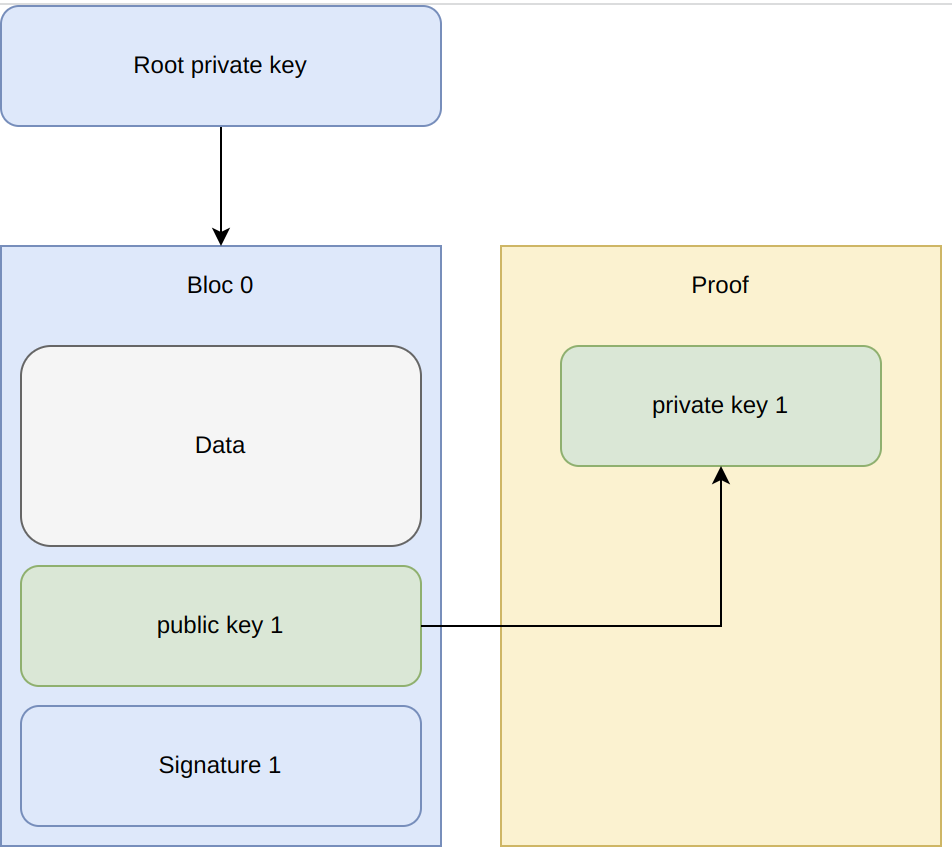
Eclipse Biscuit is an authorization token with decentralized verification, offline attenuation and strong security policy enforcement based on a logic language
Lawful-access bill could threaten encryption, deter investment, Chamber of Commerce warns
Bill would require telecoms, internet companies to change systems to give surveillance, monitoring capabilities to authorities

Blink: Intent to Experiment: Signature-based Integrity
Blink: Intent to Experiment: Signature-based Integrity
groups.google.com