

Compression and LLMs are trying to solve the exact same problem: predicting what comes next. Learn the fundamentals of compression and how better prediction leads to better shrinkage.
Beyond Model Collapse: Scaling Up with Synthesized Data Requires...
Large Language Models (LLM) are increasingly trained on data generated by other LLM, either because generated text and images become part of the pre-training corpus, or because synthetized data is...

Semantic Compression
An introduction to the idea that code should be approached with a mindset towards compressing it semantically, rather than orienting it around objects.

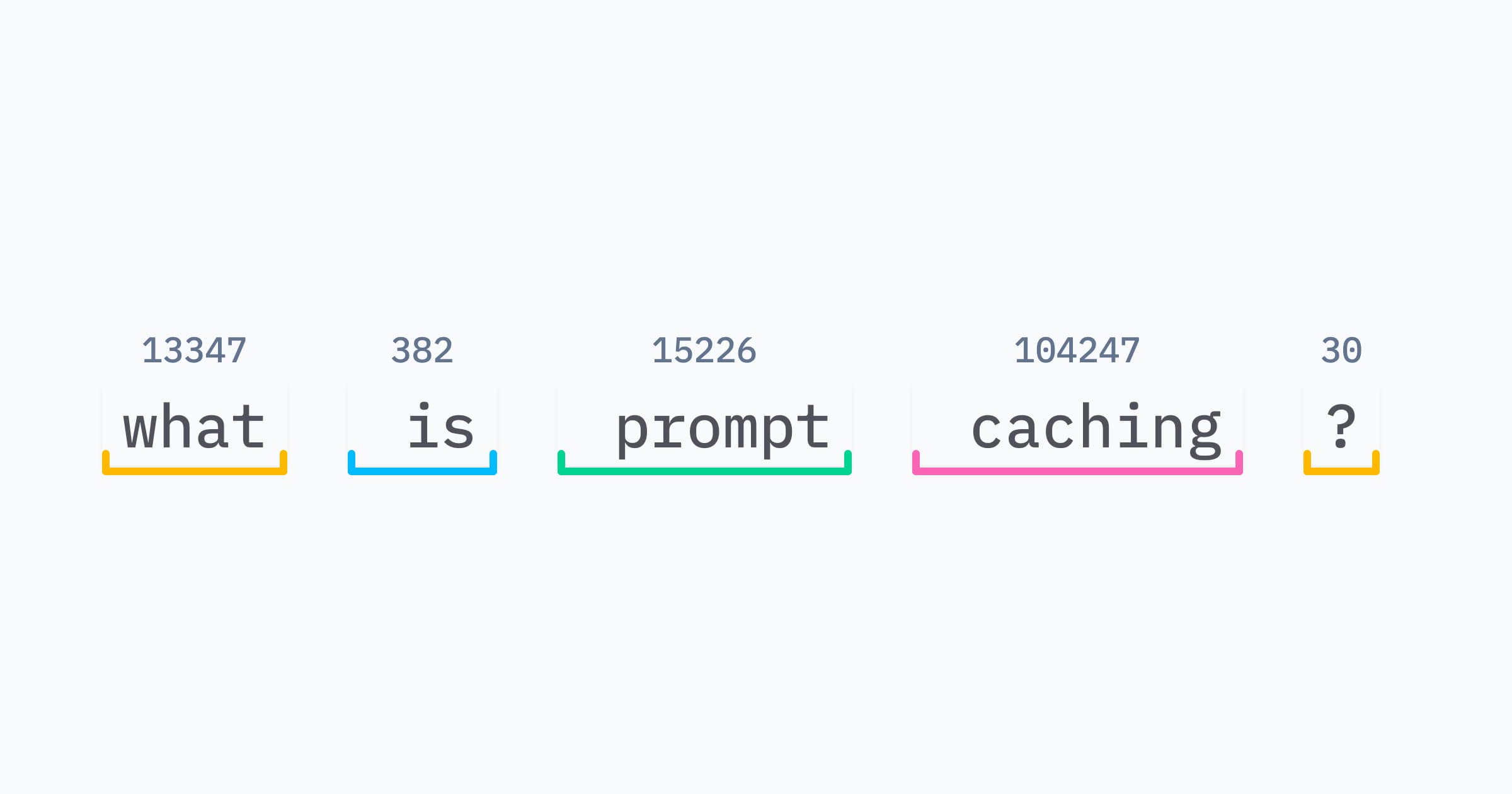
Prompt caching: 10x cheaper LLM tokens, but how? | ngrok blog
A far more detailed explanation of prompt caching than anyone asked for: how tokens, embeddings, and attention make cached LLM tokens 10x cheaper and faster.
Compression Dictionary Transport - HTTP | MDN
Compression Dictionary Transport is a way of using a shared compression dictionary to dramatically reduce the transport size of HTTP responses.
Best LLM for Coding 2026 | AI Coding Model Rankings & Benchmarks
Which AI model writes the best code? We rank every major LLM — open and closed source — across SWE-bench, HumanEval, LiveCodeBench, and Terminal-Bench coding benchmarks. Compare the best LLMs for coding, software engineering, and programming.

Large language model
A large language model (LLM) is a neural network trained on a vast amount of text for natural language processing tasks, especially language generation. LLMs can typically generate, summarize, translate, and analyze text in many contexts, and are a foundational technology behind modern chatbots.[1] Biased or inaccurate training data can make an LLM's output less reliable.[2]
Quantization from the ground up | ngrok blog
A complete guide to what quantization is, how it works, and how it's used to compress large language models

The most important thing when working with LLMs
Blog post: The most important thing when working with LLMs by Steve Klabnik
Alex Cheema on Twitter / X
.@karpathy shouted out my work on @exolabs at @ycombinator AI SUS!“we use LLMs similarly to mainframes in the ‘70s - compute is timeshared by having a slice in the batch dimension. models will compress over time, and with this we’ll be able to run more on-device” pic.twitter.com/UKSrquQGAL— Alex Cheema (@alexocheema) June 18, 2025

Announcing Burn-LM (alpha): LLM Inference Engine
We're happy to announce the Burn-LM, an LLM inference engine based on Burn! The goal is to support any large model, LLM, VLM, and others, for inference but also for training (pre-training, post-training, and fine-tuning).

Prompt caching: 10x cheaper LLM tokens, but how? | ngrok blog
A far more detailed explanation of prompt caching than anyone asked for.
Dictionary Compression is finally here, and it's ridiculously good
Dictionary compression could completely change how applications send data over the web. It's recently gained broad support, and offers absurd real-world...

LLM is a learned distribution p on sequences of tokens. If you just sample a bunch of text from p willy nilly and put it in the training data and train you just get back p. But if you sample a bunch of text from p and throw out whatever's bad and train on what's left then you learn p(x|x is not bad)
something that has come up fairly recently with LLMs - for coding, specifically - is that it’s become a lot easier to burn stupefying amounts of tokens on stuff very fast, with agents running 24/7 or managing more agents (see: Yegge’s Gas Town) even with low inference costs that adds up in a hurry

Jesse Felder
‘While some cling to the promise of an AI “revolution,” the cost of adoption is proving a stubborn bottleneck. These developments also suggest that the economics of replacing human labor with AI may be more complicated than some early forecasts originally implied.’ fortune.com/2026/05/22/microsoft-ai-cost-…


