Manage complex configurations. Modular, correct and boilerplate-free.
nickel/RATIONALE.md at 378ece30b3e3c0ab488f65956ca509345ba62900 · nickel-lang/nickel
Better configuration for less. Contribute to nickel-lang/nickel development by creating an account on GitHub.
Getting Started with Nickel « Oliver's Development Musings
This is part 2 of the Great Rust Web Experiment. For Part 1 see here. I’m building the same relatively small web-application in Rust using both Iron and Nick...
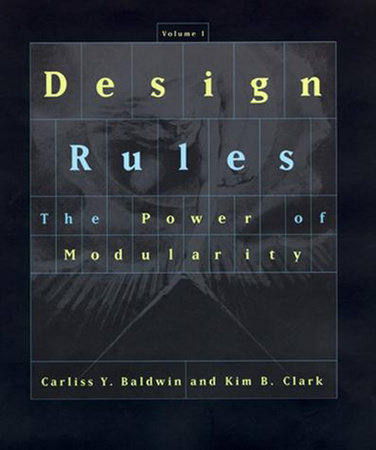
Design Rules, Volume 1: The Power of Modularity
We live in a dynamic economic and commerical world, surrounded by objects of remarkable complexity and power. In many industries, changes in products and t
(PDF) A Kit-of-No-Parts Poster2
PDF | When we build electronics from discrete components our designs are shaped by their standardized forms and func- tionalities. While datasheets... | Find, read and cite all the research you need on ResearchGate

brenelz/solid-2-nitro
Contribute to brenelz/solid-2-nitro development by creating an account on GitHub.
Master Hexagonal Architecture in Rust
Everything you need to write flexible, future-proof Rust applications using hexagonal architecture.

Towards Modular Open Science
Science is trapped in a paper-shaped box. In this talk at the ATProto community, Rowan Cockett introduces the structural states of scientific components — the floor, the buckets, and the shelf — and makes the case for a second wave of modular science where modularity emerges from packaging rather than being imposed as a precondition. The talk introduces the Open Exchange Architecture (OXA), a new standard for modular and composable scientific content.
3M LifeLab SXSW | SOFTlab | Archinect
We worked with 3M and BBDO to create the 3M LifeLab at SXSW. The structure was not simply a space that showcased 3M products, but was created using some of the amazing materials created by 3M. We designed a multi-functional structure that acted as a ceiling, spatial divider...

Portfolio of Work | Nivedha Nirmal
A curated mix of brand identities, digital design, and experiments - crafted with clarity and taste, reflecting my approach to design.
mechanical minimalism: korg's phase8 + spare parts

Metalabel - A New Space to Release Creative Work
Metalabel is a new space to release and collect creative work.

Styling with utility classes - Core concepts
Building complex components from a constrained set of primitive utilities.
Kit-of-No-Parts
Conventionally electronics that are built from a kit-of-parts have been optimized for speed, efficiency and repeatability of assembly. While this approach demonstrates the power of modular systems that have made many of the technologies we rely on possible, it also constrains us to particular styles of building, influencing what we build as well as impacting how we come to think about electronics. A Kit-of-No-Parts demonstrates a new approach to building electronics that emphasizes the expressive qualities of diverse materials as well as the skill and creativity of the builder. I believe that a more insightful and skilled process is also capable of producing more intelligible and personal results. In order to promote a different approach I have developed a series of techniques that allow us to build electronics using a variety of craft materials and tools. This website documents these techniques in the form of “recipes”. Besides containing instructions on how to build electronics these recipes are also detailed accounts of my development process that aim to promote further exploration and material investigation, instead of straightforward replication. This website is both the documentation and result of my thesis work towards a masters degree in the High-Low Tech research group at the MIT Media Lab. My thesis describes A Kit-of-No-Parts as an approach to crafting electronics, rather than designing discrete components. While the thesis has been written and handed in, this website remains a work in progress. I continue to add new information and update the existing. >> Download Thesis
Kit-of-No-Parts
Conventionally electronics that are built from a kit-of-parts have been optimized for speed, efficiency and repeatability of assembly. While this approach demonstrates the power of modular systems that have made many of the technologies we rely on possible, it also constrains us to particular styles of building, influencing what we build as well as impacting how we come to think about electronics. A Kit-of-No-Parts demonstrates a new approach to building electronics that emphasizes the expressive qualities of diverse materials as well as the skill and creativity of the builder. I believe that a more insightful and skilled process is also capable of producing more intelligible and personal results. In order to promote a different approach I have developed a series of techniques that allow us to build electronics using a variety of craft materials and tools. This website documents these techniques in the form of “recipes”. Besides containing instructions on how to build electronics these recipes are also detailed accounts of my development process that aim to promote further exploration and material investigation, instead of straightforward replication. This website is both the documentation and result of my thesis work towards a masters degree in the High-Low Tech research group at the MIT Media Lab. My thesis describes A Kit-of-No-Parts as an approach to crafting electronics, rather than designing discrete components. While the thesis has been written and handed in, this website remains a work in progress. I continue to add new information and update the existing. >> Download Thesis