

The machine may not be consuming itself. It may be acquiring a much more efficient engine.
AI is eating the academic publishing industry alive, but some good might come of it
In a publish-or-perish environment where numbers count much more than quality, artificial intelligence has become the great disruptor. But what this could ultimately lead to is universities rebuilding…

When AI Makes Publish-or-Perish Obsolete – tembeling 2.0
For decades, academia has operated on a convenient assumption: academic productivity is a reasonable proxy for academic quality.
AI in scientific publishing: Slower, worse, and more expensive
There’s a saying in the management world, popularized by NASA administrator Daniel Goldin in the 1990s, that the goal of technological improvements is to make products faster, better, and cheaper. Although this strategy had some success in the aerospace industry, the zealots of artificial intelligence (AI) have been making the same argument regarding how it will transform work, claiming that so little human effort will be required that humanity will enter an era of radical abundance, free from disease, drudgery, and danger, among other benefits, leaving society with more time for creative pursuits. But history tells a different story. When machines began to increase productivity during the second industrial revolution, American engineer Frederick Winslow Taylor’s The Principles of Scientific Management encouraged corporations to use surveillance to get employees to work harder and longer, an approach that exhausted and discouraged workers and led to the transfer of knowledge and any decision-making from workers to management, while enriching the profits for only those at the top. Yet, it remains foundational to the American economic enterprise. Indeed, scientific publishing is starting to experience some Taylorism with the insertion of AI. Rigorous human checking of AI-generated research papers is creating bottlenecks as publishers strive to maintain the integrity of the scientific record. The challenge is requiring even more human effort, making the whole endeavor slower and more expensive.

It’s the End of the Web as We Know It (And I Feel Fine)
AI is disrupting web search and publishing, perhaps for the better…

Why We’re Banning AI
We urgently need to protect human thought and creativity. Our magazine is committing itself to remaining handmade. Ensure every publication you support does the same.
New Studies Confirm Today’s Academic Publishing System Is A Terrible Deal For Society · Techdirt
Walled Culture has just written about the possibility that recent AI breakthroughs might accelerate a move to open access, at least in the field of mathematics. It would be particularly welcome against a backdrop of relatively slow progress in the open access world. That is not because the need for different business models that provide...
I Used AI to Fake a Scientific Paper. Here’s What Happened
My experiment with an IEEE journal revealed AI’s threats to scholarly publishing

AI Use in The Scholarly Kitchen - The Scholarly Kitchen
Some thoughts on the reader response the Scholarly Kitchen has seen regarding AI use by authors, a recent Nature News article on the efficacy of AI detection tools, and why it's important to keep experimenting to figure out what's ethically acceptable.
Where does the rigor go? Research software and the future of trustworthy science.
Generative AI now makes it dramatically easier to produce something that looks like research: analysis code, figures, literature reviews, even whole pap…
Project Rachel: Can an AI Become a Scholarly Author?
This paper documents Project Rachel, an action research study that created and tracked a complete AI academic identity named Rachel So. Through careful publication of AI-generated research papers, we investigate how the scholarly ecosystem responds to AI authorship. Rachel So published 10+ papers between March and October 2025, was cited, and received a peer review invitation. We discuss the implications of AI authorship on publishers, researchers, and the scientific system at large. This work contributes empirical action research data to the necessary debate about the future of scholarly communication with super human, hyper capable AI systems.

Publish and Perish: How AI-Accelerated Writing Without...
Artificial intelligence tools are accelerating manuscript production far faster than peer review capacity can expand. Applying the theory of constraints from manufacturing science, we formalize...
Is the scientific paper due to be replaced?
AI is pushing scientific publishing to the brink. For neuroscience, the crisis may be an opportunity to finally connect findings across subfields.
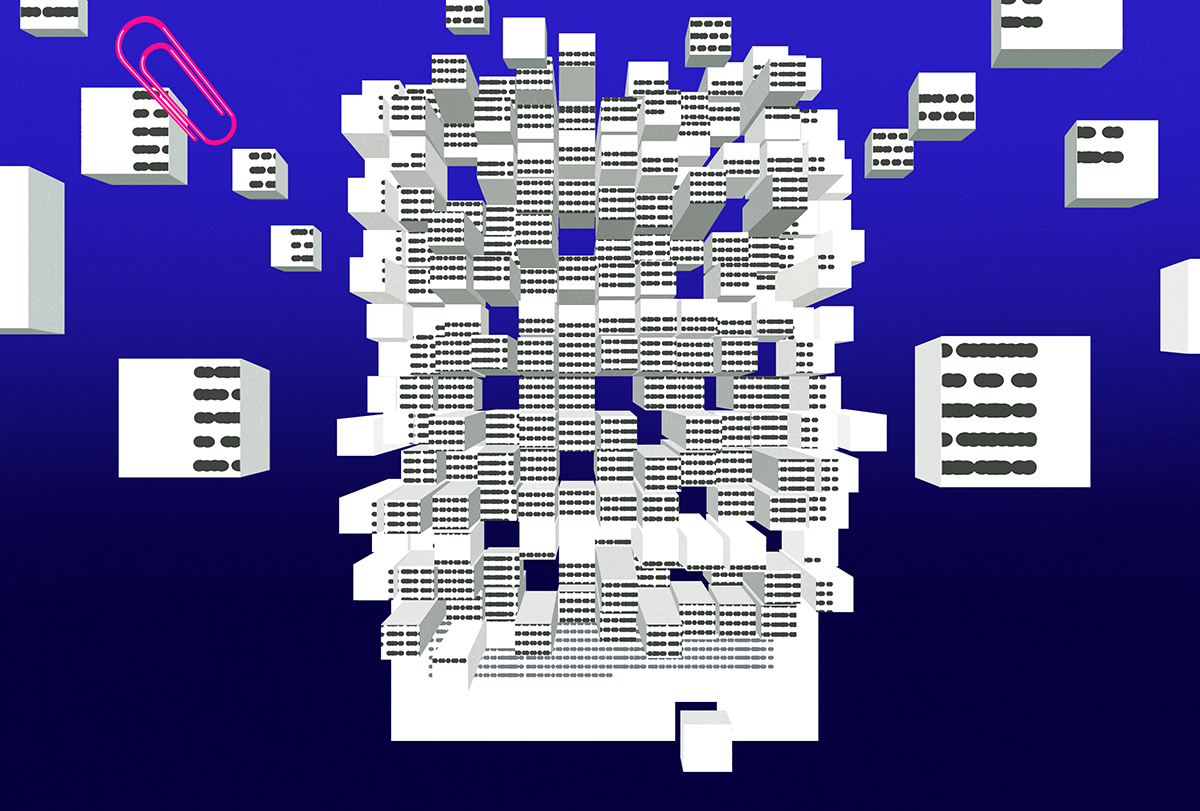
Is the scientific paper due to be replaced?
AI is pushing scientific publishing to the brink. For neuroscience, the crisis may be an opportunity to finally connect findings across subfields.
One of the innumerable negative externalities arising from LLM technology is the way in which scientific publishing is being swamped with AI slop. I've been suggesting publication caps for a while and I'm glad to see societies experimenting with them.

American Journal of Political Science (AJPS)
AJPS has introduced a new submission cap policy, effective today. Under the new policy, individuals may submit up to three manuscripts as an author or co-author in a 12-month period, with an option to request a waiver for a fourth submission. Read more: ajps.org/2026/11/04/new-ajps-submissio…
Absolutely incredible figure from this journal article arguing that AI should be accepted into the publication and peer review process. #MedSky doi.org/10.1515/cclm-2025-1180
Absolutely incredible figure from this journal article arguing that AI should be accepted into the publication and peer review process. #MedSky doi.org/10.1515/cclm-2025-1180

