

A new study from the Northwestern Innovation Institute finds that proposals showing stronger signs of AI-assisted writing were more likely to receive support from the National Institutes of Health, while also tending to align more closely with ideas that had already been funded.
Humanity AI Announces More Than $18 Million in New Grants to Shape AI for the Public Good - Humanity AI
Humanity AI Announces More Than $18 Million in New Grants to Shape AI for the Public Good Pooled philanthropic fund […]
Artificial intelligence tools expand scientists’ impact but contract science’s focus
Developments in artificial intelligence (AI) have accelerated scientific discovery1. Alongside recent AI-oriented Nobel prizes2–9, these trends establish the role of AI tools in science10. This advancement raises questions about the influence of AI tools on scientists and science as a whole, and highlights a potential conflict between individual and collective benefits11. To evaluate these questions, we used a pretrained language model to identify AI-augmented research, with an F1-score of 0.875 in validation against expert-labelled data. Using a dataset of 41.3 million research papers across the natural sciences and covering distinct eras of AI, here we show an accelerated adoption of AI tools among scientists and consistent professional advantages associated with AI usage, but a collective narrowing of scientific focus. Scientists who engage in AI-augmented research publish 3.02 times more papers, receive 4.84 times more citations and become research project leaders 1.37 years earlier than those who do not. By contrast, AI adoption shrinks the collective volume of scientific topics studied by 4.63% and decreases scientists’ engagement with one another by 22%. By consequence, adoption of AI in science presents what seems to be a paradox: an expansion of individual scientists’ impact but a contraction in collective science’s reach, as AI-augmented work moves collectively towards areas richest in data. With reduced follow-on engagement, AI tools seem to automate established fields rather than explore new ones, highlighting a tension between personal advancement and collective scientific progress.

Charting AI’s Role in Scientific Discovery — Renaissance Philanthropy – A brighter future for all through science, technology, and innovation
Renaissance Philanthropy, with support from Google.org , is conducting a landscape study of AI integration in scientific research — and we want your perspective.

The Rise of Large Language Models and the Direction and Impact of US Federal Research Funding
Federal research funding shapes the direction, diversity, and impact of the US scientific enterprise. Large language models (LLMs) are rapidly diffusing into scientific practice, holding substantial promise while raising widespread concerns. Despite growing attention to AI use in scientific writing and evaluation, little is known about how the rise of LLMs is reshaping the public funding landscape. Here, we examine LLM involvement at key stages of the federal funding pipeline by combining two complementary data sources: confidential National Science Foundation (NSF) and National Institutes of Health (NIH) proposal submissions from two large US R1 universities, including funded, unfunded, and pending proposals, and the full population of publicly released NSF and NIH awards. We find that LLM use rises sharply beginning in 2023 and exhibits a bimodal distribution, indicating a clear split between minimal and substantive use. Across both private submissions and public awards, higher LLM involvement is consistently associated with lower semantic distinctiveness, positioning projects closer to recently funded work within the same agency. The consequences of this shift are agency-dependent. LLM use is positively associated with proposal success and higher early-stage publication output at NIH, whereas no comparable associations are observed at NSF. Notably, the productivity gains at NIH are concentrated in non-hit papers rather than the most highly cited work. Together, these findings provide large-scale evidence that the rise of LLMs is reshaping how scientific ideas are positioned, selected, and translated into publicly funded research, with implications for portfolio governance, research diversity, and the long-run impact of science.

OpenAI, Google, and Microsoft Back Bill to Fund ‘AI Literacy’ in Schools
A new bill introduced by Senators Adam Schiff and Mike Rounds would award grants to the National Science Foundation—which has endured massive funding cuts under the Trump Administration for science research—to put “AI literacy” in schools.

Where does the rigor go? Research software and the future of trustworthy science.
Generative AI now makes it dramatically easier to produce something that looks like research: analysis code, figures, literature reviews, even whole pap…
The Ed. Dept. Wants to Steer Grant Money to AI. What That Means for Schools
The Education Department is proposing to make advancing AI in education one of its grantmaking priorities.

AI Research Agents Narrow Scientific Exploration
AI research agents now support large-scale AI-assisted scientific discovery. We examine whether AI-generated ideas broaden scientific exploration or primarily reinforce existing work. Using five agent frameworks and five large language models, we generate 219,655 ideas for different scientific fields. Across experiments, four consistent patterns emerge. First, AI-generated ideas are more concentrated than human-authored papers within the same research area. Second, they remain much closer to starting literature than later human follow-on work does. Third, AI-generated ideas align less with future human research. Last, AI-generated ideas are located in lower-impact regions of the historical scientific landscape. Overall, current AI research agents appear better suited to local elaboration than to broadening scientific exploration.
Is the scientific paper due to be replaced?
AI is pushing scientific publishing to the brink. For neuroscience, the crisis may be an opportunity to finally connect findings across subfields.

Is the scientific paper due to be replaced?
AI is pushing scientific publishing to the brink. For neuroscience, the crisis may be an opportunity to finally connect findings across subfields.
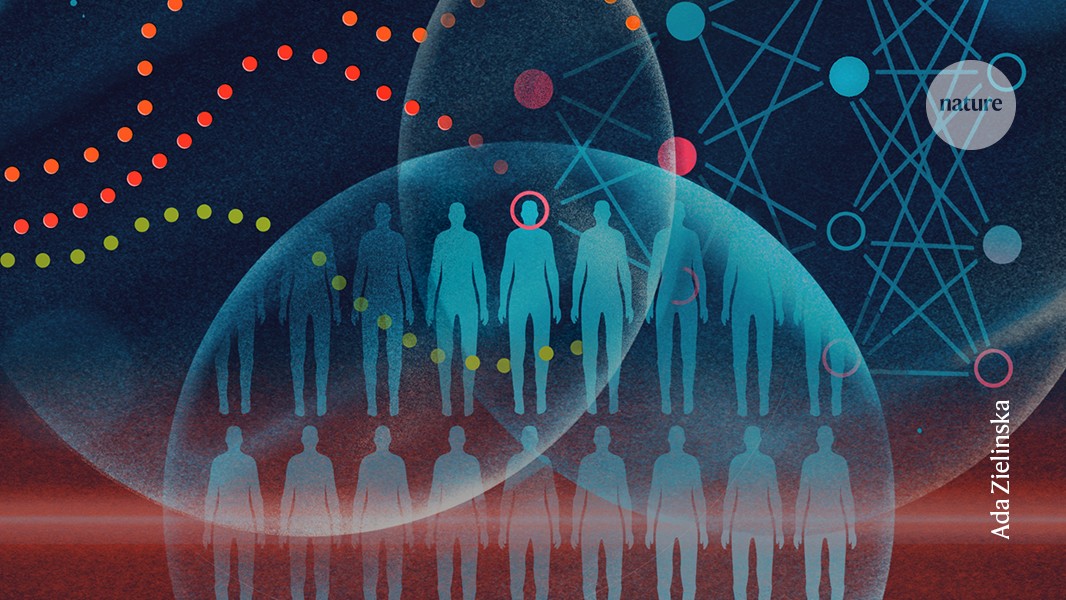
AI scientists are changing research — institutions, funders and publishers must respond
The ability to automate the discovery process in some areas of scientific inquiry raises unanswered questions about how research should be conducted.

Will AI ruin the social sciences — or revolutionize them?
The technology can whip up spurious findings and pollute survey responses, but it could also make research more rigorous.
No. 011: Sum-product conjecture disproof, AI-generated authorship fraud, OMB grant-cost rules - The Hallway Track
The Hallway Track No. 011 - How AI is affecting the practice of science
How Heavily Are PhD Students Offloading Their Scientific Writing to AI? Evidence from US STEM PhD Dissertations
Large language models are diffusing rapidly into science, raising concerns that delegating research writing to AI may undermine the development of expertise that scientific training is supposed to build. We measure AI-generated writing in the dissertations of a near-census of US STEM PhD graduates from 2019 to 2026 and link graduates to their subsequent employment. AI writing is absent before 2023, present in 29% of dissertations filed in 2026, and rapidly growing. Use is more common among students from non-English-speaking countries and at lower-ranked programs. Among graduates in the same program and cohort, those whose dissertations contain AI writing are less likely to enter academic research careers and more likely to enter non-tenure-track roles or industry, with this pattern strongest among US-origin students. At the same time as AI may increase research productivity, it thus appears to also be displacing a potentially important portion of the work through which scientific expertise is developed.

This is more than the NSF social sciences division - now on the chopping block - awarded in grants last year. Think about that: a single AI company has the money to fund more social science research than the US govt.

Hetan Shah
Anthropic AI research fund offers $5m - $30m for social science research on themes of AI impact on workers; transition initiatives; income support; building worker stakes; and wider evidence on public investments. Total fund of $200m available anthropic.com/news/economic-futures-researc…
