Policy advocates engaged in changing public opinion rarely pay much attention to what the academic literature says about how public opinion is formed and how and why it changes. That’s too bad, because while political scientists disagree about a lot of things, this is not one of them. Several decades of robust empirical tests offer […]
The Silent Majorities: six groups across society whose views point to systemic change
Expressing our shared concerns can drive public confidence in systems change.

Why the backfire effect does not explain the durability of political misperceptions
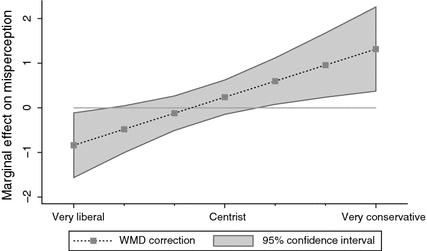
Previous research indicated that corrective information can sometimes provoke a so-called “backfire effect” in which respondents more strongly endorsed a misperception about a controversial political or scientific issue when their beliefs or predispositions were challenged. I show how subsequent research and media coverage seized on this finding, distorting its generality and exaggerating its role relative to other factors in explaining the durability of political misperceptions. To the contrary, an emerging research consensus finds that corrective information is typically at least somewhat effective at increasing belief accuracy when received by respondents. However, the research that I review suggests that the accuracy-increasing effects of corrective information like fact checks often do not last or accumulate; instead, they frequently seem to decay or be overwhelmed by cues from elites and the media promoting more congenial but less accurate claims. As a result, misperceptions typically persist in public opinion for years after they have been debunked. Given these realities, the primary challenge for scientific communication is not to prevent backfire effects but instead, to understand how to target corrective information better and to make it more effective. Ultimately, however, the best approach is to disrupt the formation of linkages between group identities and false claims and to reduce the flow of cues reinforcing those claims from elites and the media. Doing so will require a shift from a strategy focused on providing information to the public to one that considers the roles of intermediaries in forming and maintaining belief systems.
Opinionrot: Toward a Theory of Collective Reasoning Decay in the Age of Synthetic Consensus
This article introduces the concept of opinionrot to describe the structural erosion of collective reasoning within contemporary information systems. Rather than treating post-truth politics as a failure of individual rationality or as a decline in information quality alone, the article argues that public reasoning is increasingly shaped by infrastructures that capture attention, monetize cognitive bias, and automate the conditions under which claims become visible and credible. Methodologically, the article proceeds through a conceptual-historical reconstruction, tracing how persuasion became institutionalized, platformized, and increasingly predictive. It identifies three mechanisms through which opinionrot intensifies today: cognitive capture, infrastructural decay, and discursive saturation. The framework is illustrated through debates over equality and affirmative action, showing how communicative infrastructures can transform contested political concepts into predictable and polarized semantic routines. By shifting the analysis from discrete falsehoods to the conditions under which public judgment is formed, contested, and revised, the article offers a diagnostic vocabulary for studying how information infrastructures increasingly convert deliberation into statistical efficiency within contemporary economies of attention.

What is Deliberative Polling®?
Citizens are often uninformed about key public issues. Conventional polls represent the public’s surface impressions of sound bites and headlines. The public, subject to what social scientists have called “rational ignorance,” has little reason to confront trade-offs or invest time and effort in acquiring information or coming to a considered judgment.
Government Ratings - Nira Data
Track global public opinion, political sentiment, and trust in government with insights from the 2025 Global Political Opinion Report.
Media Ownership Monitor
Mass media influences how facts are viewed and debated in a society, contributing to crafting its public opinion. Independence and pluralism...

Opinion | This Is What Will Ruin Public Opinion Polling for Good
Instead of navigating the obstacles to conduct polls with human respondents, pollsters are running A.I. simulations instead. Why?

Facts and Myths about Misperceptions
Misperceptions threaten to warp mass opinion and public policy on controversial issues in politics, science, and health. What explains the prevalence and persistence of these false and unsupported beliefs, which seem to be genuinely held by many people? Though limits on cognitive resources and attention play an important role, many of the most destructive misperceptions arise in domains where individuals have weak incentives to hold accurate beliefs and strong directional motivations to endorse beliefs that are consistent with a group identity such as partisanship. These tendencies are often exploited by elites who frequently create and amplify misperceptions to influence elections and public policy. Though evidence is lacking for claims of a “post-truth” era, changes in the speed with which false information travels and the extent to which it can find receptive audiences require new approaches to counter misinformation. Reducing the propagation and influence of false claims will require further efforts to inoculate people in advance of exposure (for example, media literacy), debunk false claims that are already salient or widespread (for example, fact-checking), reduce the prevalence of low-quality information (for example, changing social media algorithms), and discourage elites from promoting false information (for example, strengthening reputational sanctions).

Rational Silence and False Polarization: How Viewpoint Organizations and Recommender Systems Distort the Expression of Public Opinion
Social media platforms are one of the most important domains in which artificial intelligence (AI) has already transformed the nature of economic and social interaction. AI enables the massive scale and highly personalized nature of online information sharing that we now take for granted. Extensive attention has been devoted to the polarization that social media platforms appear to facilitate. However, a key implication of the transformation we are experiencing due to these AI-powered platforms has received much less attention: how platforms impact what observers of online discourse come to believe about community views. These observers include policymakers and legislators, who look to social media to gauge the prospects for policy and legislative change, as well as developers of AI models trained on large-scale internet data, whose outputs may similarly reflect a distorted view of public opinion. In this paper, we present a nested game-theoretic model to show how observed online opinion is produced by the interaction of the decisions made by users about whether and with what rhetorical intensity to share their opinions on a platform, the efforts of viewpoint organizations (such as traditional media and advocacy organizations) that seek to encourage or discourage opinion-sharing online, and the operation of AI-powered recommender systems controlled by social media platforms. We show that signals from ideological viewpoint organizations encourage an increase in rhetorical intensity, leading to the rational silence of moderate users. This, in turn, creates a polarized impression of where average opinions lie. We also show that this observed polarization can also be amplified by recommender systems that, pursuant to a platform’s incentive to maximize engagement, encourage the formation of viewpoint communities online that end up seeing a skewed sample of opinion. Unlike existing models, these well-known online phenomena are not here attributed to distortion in the formation of opinions nor to the seeking out of like-minded others, but rather to the interaction of the incentives of users, viewpoint organizations, and platforms implementing recommender systems. In addition to showing how these interactions can play out in simulations, we also identify practical strategies platforms can implement, such as reducing exposure to signals from ideological viewpoint organizations and a tailored approach to content moderation.
The Dynamics of Distortion: How Successive Summarization Alters the Retelling of News
This work advances and tests a theory of how news information evolves as it is successively retold by consumers. Drawing on data from over 11,000 participants across ten experiments, the authors offer evidence that when news is repeatedly retold, it undergoes a stylistic transformation termed “disagreeable personalization,” wherein original facts are increasingly supplanted by opinions and interpretations with a slant toward negativity. The central thesis is that when retellers believe they are more (vs. less) knowledgeable than their recipient about the information they are relaying, they feel more compelled to provide guidance on its meaning and to do so in a persuasive manner. This enhanced motivation to guide persuasively, in turn, leads retellers to not only select the subset of facts they deem most essential but, critically, to provide their interpretations and opinions on those facts, with negativity being used as a means of grabbing their audience’s attention. Implications of this work for research on retelling and consumer information diffusion are explored.
Persuasion: Empirical Evidence
We provide a selective survey of empirical evidence on the effects as well as the drivers of persuasive communication. We consider persuasion directed at consumers, voters, donors, and investors. We organize our review around four questions. First, to what extent does persuasion affect the behavior of each of these groups? Second, what models best capture the response to persuasive communication? Third, what are persuaders' incentives, and what limits their ability to distort communications? Finally, what evidence exists on the way persuasion affects equilibrium outcomes in economics and politics?

How AI Will Reshape Public Opinion
Social media democratised public opinion, shifting influence away from elites and experts to ordinary people. LLMs will partly reverse this trend. They are a powerful, new technocratising force.

When Corrections Fail: The Persistence of Political Misperceptions
An extensive literature addresses citizen ignorance, but very little research focuses on misperceptions. Can these false or unsubstantiated beliefs about politics be corrected? Previous studies have not tested the efficacy of corrections in a realistic format. We conducted four experiments in which subjects read mock news articles that included either a misleading claim from a politician, or a misleading claim and a correction. Results indicate that corrections frequently fail to reduce misperceptions among the targeted ideological group. We also document several instances of a “backfire effect” in which corrections actually increase misperceptions among the group in question.
Mainstreaming the populist radical right? Online news exposure and voting behavior in the 2019 European Parliament election
How does media exposure relate to support for radical right populist parties (RRPPs)? We contribute to this classic debate by analyzing the web browsing histories and survey responses of six thousand study participants in France, Germany, Italy, Spain, and the UK during the 2019 European Parliament election. Linking direct measures of online news exposure to voting behavior allows us to assess the effects of the salience of issues politicized by RRPPs on their electoral support. The likelihood to vote for RRPPs was higher when the EU was more salient in individual media diets, while exposure to the less salient issue of immigration did not increase the propensity to vote for RRPPs. Alongside consistent results for other party families and interactions with pre-existing voting intentions, the findings indicate that the electoral effects of online media are contingent on the overall salience of a specific issue and voters’ predispositions.