


Egalitarianism is important but we neglect STEM education at our peril
Equity in K-12 STEM Education
Science, technology, engineering, and mathematics (STEM) live in the American imagination as promising tools for solving pressing global challenges and enhancing quality of life. Despite the importance of the STEM disciplines in the landscape of U.S. political, economic, and social priorities, STEM learning opportunities are unevenly distributed, and the experiences an individual has in STEM education are likely to vary tremendously based on their race, ethnicity, socio-economic class, gender, and a myriad of other factors. Equity in K-12 STEM Education: Framing Decisions for the Future approaches equity in STEM education not as a singular goal but as an ongoing process that requires intentional decision-making and action toward addressing and disrupting existing inequities and envisioning a more just future. Stakeholders at all levels of the education system - including state, district, and school leaders and classroom teachers - have roles as decision-makers who can advance equity. This consensus study report provides five equity frames as a guide to help decision-makers articulate short- and long-term goals for equity and make decisions about policy and practice.

Education - Platform | The Australian Greens
Every child deserves a great public education, no matter where they live or how much their parents earn.
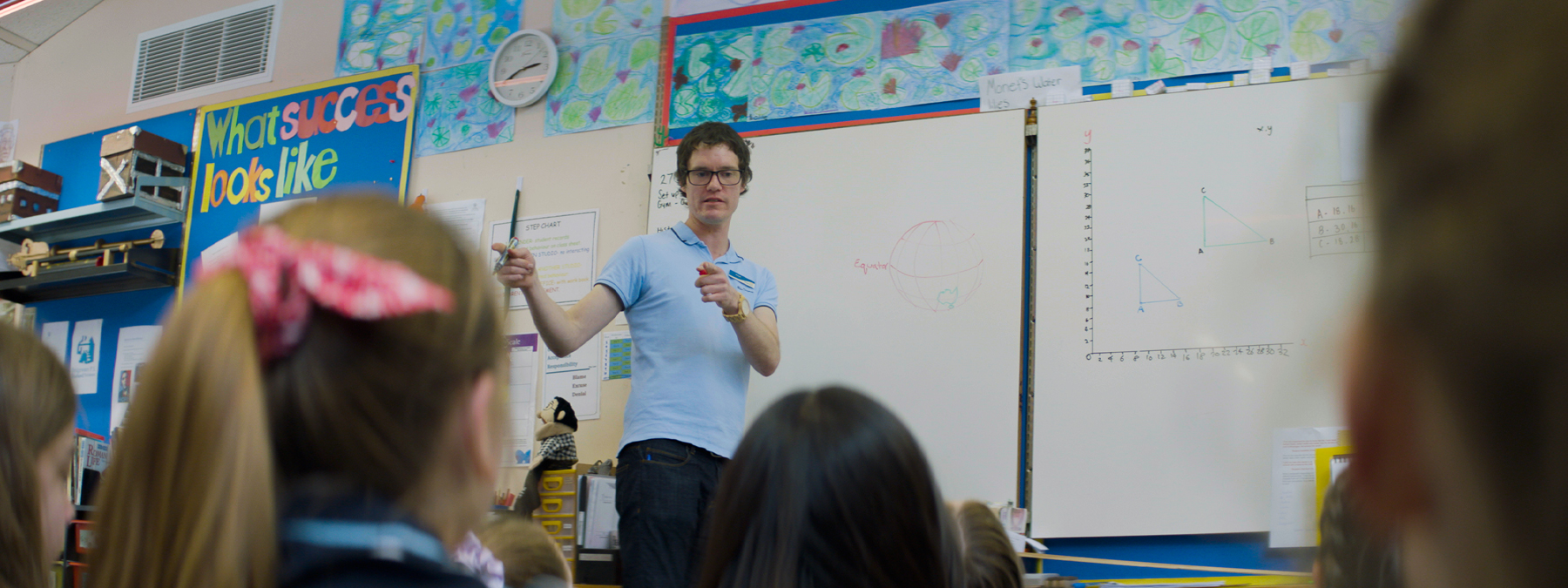
The perils of "Growth Mindset" education: Why we're trying to fix our kids when we should be fixing the system
How a promising but oversimplified idea caught fire, then got coopted by conservative ideology

We Need A Decolonized, Not A "Diverse", Education
"Diversity is antithetical to critical education, to any politics that ultimately seek to dismantle oppressive systems."

OPT Reforms and the Relative Supply of STEM Skills
Since the late 2000s, reforms to the optional practical training (OPT) program have allowed international STEM graduates to work in the United States for up to three years after graduation. We study how these reforms affected the supply of STEM skills in the United States. Exploiting the staggered 2008, 2011, 2012, and 2016 STEM-OPT expansions, we find that OPT reforms increased STEM degree completions by 14–15 percent, with gains evident at the bachelor’s and master’s levels. Domestic completions increased as well, suggesting that OPT expansions may have crowded in domestic STEM students rather than crowding them out.
OPT Reforms and the Relative Supply of STEM Skills
Since the late 2000s, reforms to the optional practical training (OPT) program have allowed international STEM graduates to work in the United States for up to three years after graduation. We study how these reforms affected the supply of STEM skills in the United States. Exploiting the staggered 2008, 2011, 2012, and 2016 STEM-OPT expansions, we find that OPT reforms increased STEM degree completions by 14–15 percent, with gains evident at the bachelor’s and master’s levels. Domestic completions increased as well, suggesting that OPT expansions may have crowded in domestic STEM students rather than crowding them out.
Egalitarians are more aware of inequality
Some of our disagreements about inequality come from people's failure to notice it.

Pluralistic: The meritocracy to eugenics pipeline (20 May 2025) – Pluralistic: Daily links from Cory Doctorow
It's kinda weird how, the more oligarchic our society gets, the more racist it gets. Why is the rise of billionaires attended by a revival of discredited eugenic ideas, dressed up in modern euphemisms like "race realism" and "human diversity"?
Women in STEM Program - Henry Luce Foundation
Through the Clare Boothe Luce Program for Women in STEM and STEM Convergence, we aspire to close the gender gap in the field, broaden the participation of women from diverse backgrounds, and advance women-led STEM innovation for positive social change.

The Myth of Class Reductionism
The fight for racial and gender justice has always been about economic inequality, too.

How to Break the Academic Silo Mindset - The Community Solution Education System
What’s stopping higher education from reaching its full potential? In this episode of Radical Cooperation, Dr. Michael Horowitz sits down with Dr. Beronda Montgomery—biologist, author of Lessons from Plants, and former Vice President for Academic Affairs and Dean at Grinnell College—to unpack why silos persist in colleges and universities, and how those divisions hold institutions […]
No need to stop the 'brain rot': Modern kids aren't less intelligent | New Scientist
The idea that the rise of tech means today's young people are less intelligent than previous generations is rife – but wrong, says neuroscientist Dean Burnett

Teaching STEM In Ways that Respect and Build Upon Indigenous Peoples' Rights : StemTeachingTools (en-US)
Indigenous ways of knowing are sometimes thought to be in opposition to and detrimental to the learning of Western Science or STEM. Consequently, indigenous ways of knowing are rarely engaged to support learning. If STEM learning is to be meaningful and transformative for Indigenous youth, respecting Indigenous peoples rights and related critical issues, including Indigenous STEM, settler-colonialism, and decolonization, must be understood and explicitly addressed in Indigenous youths' informal and formal STEM learning experiences.
How to grow tomorrows
What if schools were not just sites for delivering education, but societies in miniature? Thousands of chances to cultivate a better future

Why governments have overestimated the economic returns of higher education
Earning a degree is about signalling, and not just learning

A large gender gap persists in STEM disciplines across the world that is bad for innovation, talent attraction & against fairness principles. On International Day of Women and Girls in Science, @ansolassen.bsky.social @cairosofie.bsky.social @valentinatartari.bsky.social are sharing our findings ⬇️
