A living agent organism in Lisp. It becomes yours and evolves over time.
Agentic AI, explained | MIT Sloan
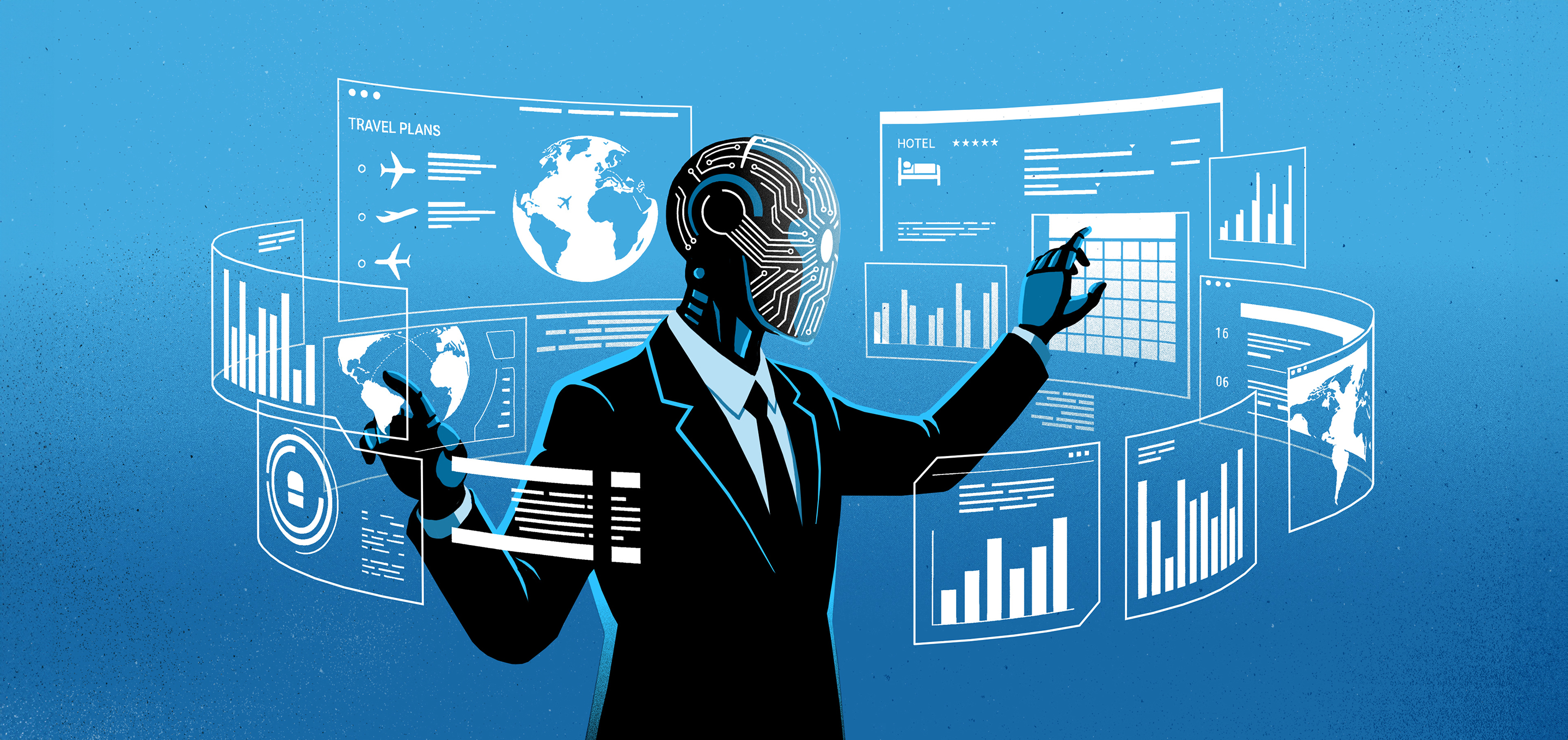
The age of agentic AI — systems that are semi- or fully autonomous and can act on their own — has arrived. Here’s what you need to know, according to MIT experts.
XMUDeepLIT/Awesome-Self-Evolving-Agents
A Survey of Self-Evolving Agents | A curated list of resources (surveys, papers, benchmarks, and opensource projects) on Self-Evolving Agents.
THE ADJACENT POSSIBLE | Edge.org
An autonomous agent is something that can both reproduce itself and do at least one thermodynamic work cycle. It turns out that this is true of all free-living cells, excepting weird special cases. They all do work cycles, just like the bacterium spinning its flagellum as it swims up the glucose gradient. The cells in your body are busy doing work cycles all the time.
Becoming Agents
In computer-human interface design , the word “agent” refers to chatbots and other seemingly autonomous entities that act on behalf of us…

Becoming Hybrid Selves: Interacting with Artificial Minds and Bodies
Humans have long tried to make artificial versions of our minds and bodies and other life forms. Recent technological advances are poised to open the Pandora box and explore whether these artificial agents will become more human or alive. In this paper we argue that this question needs to be addressed in tandem with the equally valid counterpart: to what extent do interactions with artificial others make humans less human and more artificial? Living systems such as human organisms are fundamentally open systems, continuously shaped and constituted by exchanges and interactions with the physical and social world. Thus, we suggest that we ourselves may become hybrid through our interactions with our artificial creations. Being surrounded by artificial agents from the cradle and across the lifespan may transform us, humans, into hybrid creatures. It is not only the passive and rapid absorption of the increasingly complex cognitive content that matters, nor the mere sophistication of the conversational exchanges with AI agents or embodied interactions with robots. Rather, the very nature of interaction itself matters too. It’s not what we learn, but how we learn and with whom we learn and what happens in between us and our creations.
A Drive to Survive
Since 2005, Karl Friston's proposal that the principle of free energy minimization underpins the purposive behavior of living agents has evolved through thou...
Functional Information: Towards Synthesis of Biosemiotics and Cybernetics
Biosemiotics and cybernetics are closely related, yet they are separated by the boundary between life and non-life: biosemiotics is focused on living organisms, whereas cybernetics is applied mostly to non-living artificial devices. However, both classes of systems are agents that perform functions necessary for reaching their goals. I propose to shift the focus of biosemiotics from living organisms to agents in general, which all belong to a pragmasphere or functional universe. Agents should be considered in the context of their hierarchy and origin because their semiosis can be inherited or induced by higher-level agents. To preserve and disseminate their functions, agents use functional information - a set of signs that encode and control their functions. It includes stable memory signs, transient messengers, and natural signs. The origin and evolution of functional information is discussed in terms of transitions between vegetative, animal, and social levels of semiosis, defined by Kull. Vegetative semiosis differs substantially from higher levels of semiosis, because signs are recognized and interpreted via direct code-based matching and are not associated with ideal representations of objects. Thus, I consider a separate classification of signs at the vegetative level that includes proto-icons, proto-indexes, and proto-symbols. Animal and social semiosis are based on classification, and modeling of objects, which represent the knowledge of agents about their body (Innenwelt) and environment (Umwelt).
AgenticLS @ NeurIPS 2026 — Agentic AI for Biological Discovery
AgenticLS: Agentic AI for Biological Discovery — Toward Closed-Loop Life-Science Intelligence. A NeurIPS 2026 workshop in Sydney, December 11, 2026.
0xWelt/Awesome-Agent-Ecosystem
A curated list of coding harnesses, vibe-coding communities, named personal agents, and the tools and services agents call.
Agentic coding and persistent returns to expertise
Anthropic is an AI safety and research company that's working to build reliable, interpretable, and steerable AI systems.
Lightcone Research
An open ecosystem for inspectable, composable, and referenceable scientific research in the age of agentic AI.
AGENTWORLD | *
An exploration of planetary intelligence, tracing how computation and cosmology—from ancient mechanisms to AI—reshape Earth and its possible futures.
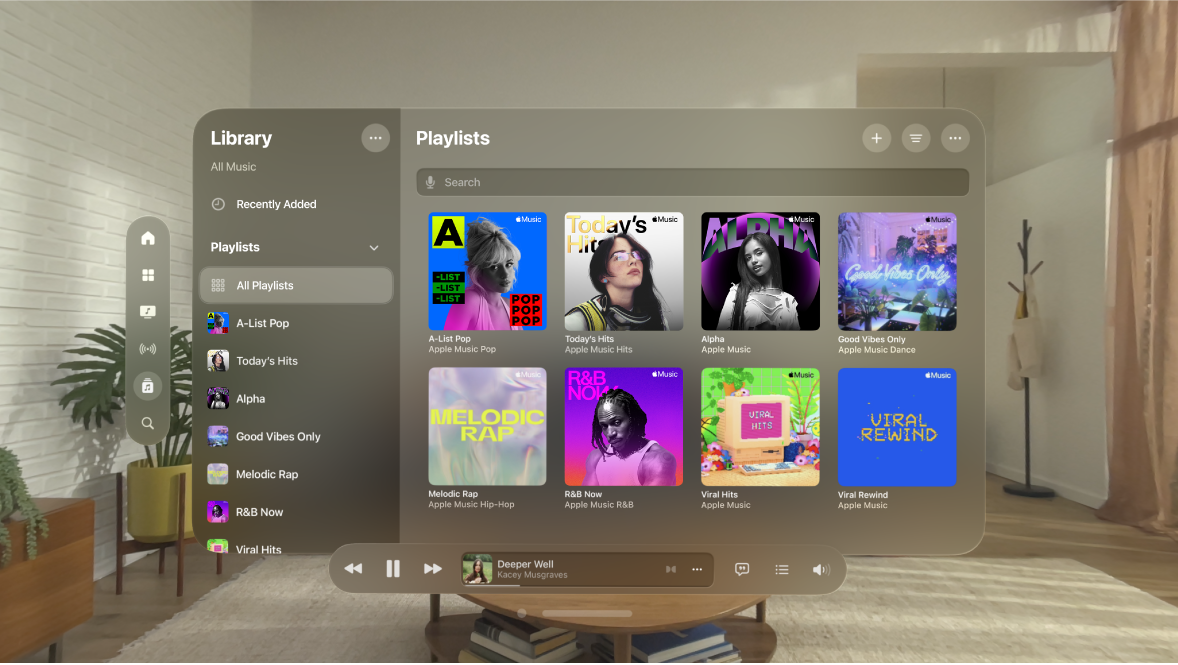
LukeW | Agent Management Interface Patterns
As an increasing number of AI applications evolve to agents doing work for people, agent management becomes a critical part of these product's design. How can p...
Is Life Just Different? | Quanta Magazine
The idea of ‘biological agency’ — that life devises its own goals and behaves accordingly — complicates our understanding of what it means to be alive. But does it serve a scientific purpose?