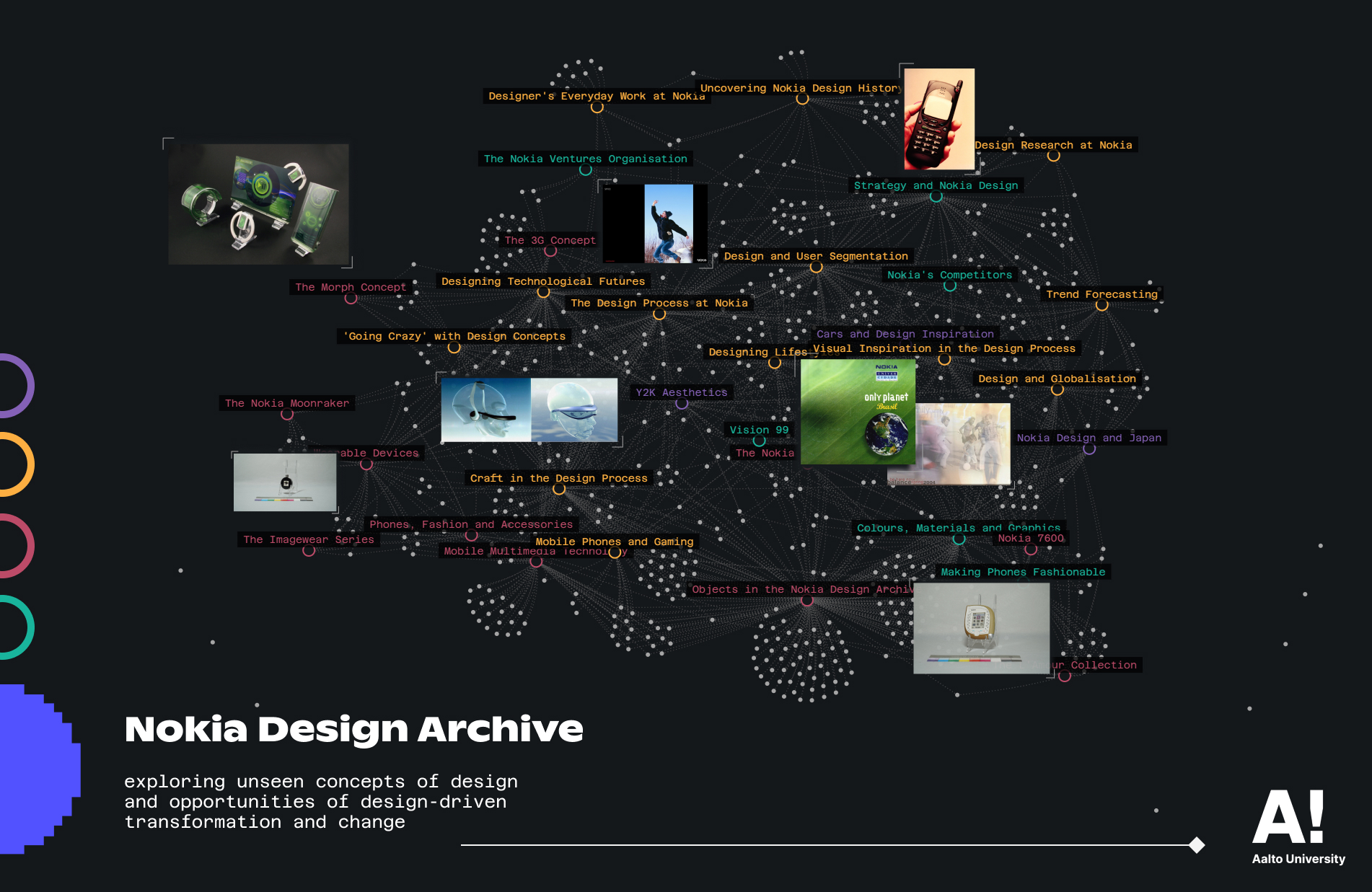
Exploring unseen concepts of design and opportunities of design-driven transformation and change
Mobile Phone Museum
We are a not-for-profit entity created to safeguard the rich history and design diversity of mobile devices which have been launched over the last four decades.

Built by Designers: No Explanation Needed
Designers now turn ideas into working products. Explore a curated collection of apps, tools, websites, and experiments designed, built, and shipped by designers.

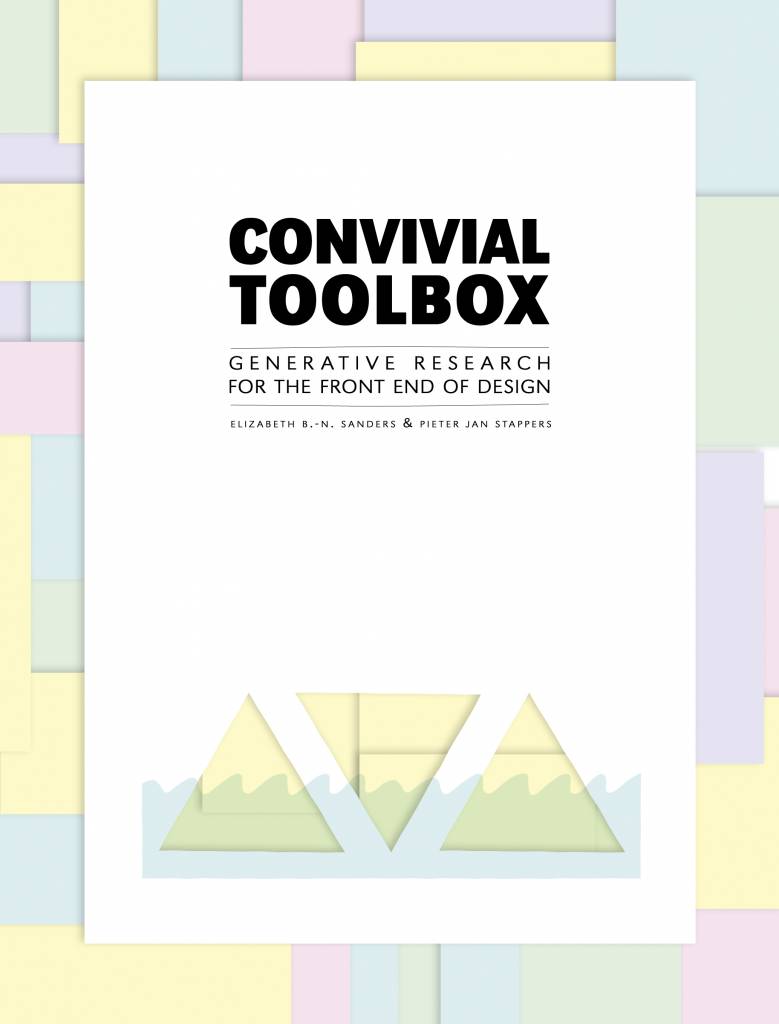
BIS Publishers | Convivial Toolbox
This book introduces an emerging domain of design research that is of immense interest today: Generative design research. This is an approach to bring ...
Designing for IndiaFOSS 2026
Collection of experiences, observations, and learnings from managing and contributing to the design of IndiaFOSS 2026.

An introduction to radical participatory design: decolonising participatory design processes
Outside of community-led design projects, most participatory design processes initiated by a company or organisation maintain or even strengthen power imbalances between the design organisation and the community on whose purported behalf they are designing, further increasing the absencing experience. Radical participatory design (RPD) is a radically relational answer to the coloniality inherent in participatory design where the community members’ disappointment is greater due to the greater expectations and presencing potential of a ‘participatory design’ process. We introduce the term RPD to show how research and design processes can be truly participatory to the root or core. Instead of treating participatory design as a method, a way of conducting a method, or a methodology, we introduce RPD as a meta-methodology, a way of doing any methodology. We explicitly describe what participation means and compare and contrast design processes based on the amount of participation, creating a typology of participation. We introduce ‘designer as community member’, ‘community member as designer,’ and ‘community member as facilitator’ models and provide characteristics for the meta-methodology of RPD.
An introduction to radical participatory design: decolonising participatory design processes
Outside of community-led design projects, most participatory design processes initiated by a company or organisation maintain or even strengthen power imbalances between the design organisation and the community on whose purported behalf they are designing, further increasing the absencing experience. Radical participatory design (RPD) is a radically relational answer to the coloniality inherent in participatory design where the community members’ disappointment is greater due to the greater expectations and presencing potential of a ‘participatory design’ process. We introduce the term RPD to show how research and design processes can be truly participatory to the root or core. Instead of treating participatory design as a method, a way of conducting a method, or a methodology, we introduce RPD as a meta-methodology, a way of doing any methodology. We explicitly describe what participation means and compare and contrast design processes based on the amount of participation, creating a typology of participation. We introduce ‘designer as community member’, ‘community member as designer,’ and ‘community member as facilitator’ models and provide characteristics for the meta-methodology of RPD.
Is Tesla disruptive? — Benedict Evans
Car people often look at Tesla the way Nokia looked at the iPhone. “Nice ideas, but we can easily do all of that, and they don’t understand our industry.” Nokia was wrong - but will the car industry look the same? Maybe not.
Implementing an online pharmaceutical service using design science research
The rising prevalence of chronic diseases is pressing health systems to introduce reforms. Primary healthcare and multidisciplinary models have been suggested as approaches to deal with this challenge, with new roles for nurses and pharmacists being advocated. More recently, implementing healthcare based on information systems and technologies (e.g. eHealth) has been proposed as a way to improve health services. However, implementing online pharmaceutical services, including their adoption by pharmacists and patients, is still an open research question. In this paper we present ePharmacare, a new online pharmaceutical service implemented using Design Science Research.

DesignABetterBusiness.tools | Tool Overview
Search and download all of the tools from the book Design A Better Business
Designs for the pluriverse: radical interdependence, autonomy, and the making of worlds
"Arturo Escobar presents a new vision of design theory by arguing for the creation of what he calls 'autonomous design'--a design practice aimed at channeling design's world-making capacity toward ways of being and doing that are deeply attuned to justice and the Earth"--Publisher description

Design: A powerful but neglected marketing tool
Design is a potent marketing tool that can be used to gain competitive distinctiveness and provide consumer satisfaction. But with few exceptions, most companies neglect or mismanage design as a marketing tool. The authors describe what constitutes good design; how companies can employ design to enhance their products, environments, communications, and corporate identity; and how companies can improve the working relationship between designers and marketing people. The article includes two audit instruments which companies can use for measuring company design sensitivity and design management effectiveness. Design (Entwurf und Gestaltung von Produkten) ist ein wirksames Marketinginstrument im Rahmen der Konkurrenzstrategie und zur Erhöhung der Konsumentenzufriedenheit. Mit einigen Ausnahmen jedoch vernachlässigen die meisten Unternehmungen das Design als Marketinginstrument oder setzen es schlecht ein. Die Autoren beschreiben, wodurch sich ein gutes Design auszeichnet, wie Unternehmungen das Design zur Aufwertung und Verbesserung ihrer Produkte, zur Abgrenzung in ihrer Umwelt und in ihrer Kommunikationspolitik und im Bereiche der Corporate Identity einsetzen können. Ferner zeigen die Autoren, wie die Unternehmungen die Zusammenarbeit zwischen den Produktgestaltern (designers) und den Marketingspezialisten verbessern können. Der Beitrag zeigt zwei Kontrollinstrumente für die Unternehmung zur Abschätzung der Design-Empfindlichkeit von Unternehmungen und zur Messung der Effizienz des DesignManagements (Handhabung der Produktgestaltung).

App Dissection
Breaking down the design details of well-crafted mobile apps. In-depth analysis of UI patterns, interactions, and user experience.

Design Thinking
In the past, design has most often occurred fairly far downstream in the development process and has focused on making new products aesthetically attractive or enhancing brand perception through smart, evocative advertising. Today, as innovation’s terrain expands to encompass human-centered processes and services as well as products, companies are asking designers to create ideas rather than to simply dress them up. Brown, the CEO and president of the innovation and design firm IDEO, is a leading proponent of design thinking—a method of meeting people’s needs and desires in a technologically feasible and strategically viable way. In this article he offers several intriguing examples of the discipline at work. One involves a collaboration between frontline employees from health care provider Kaiser Permanente and Brown’s firm to reengineer nursing-staff shift changes at four Kaiser hospitals. Close observation of actual shift changes, combined with brainstorming and rapid prototyping, produced new procedures and software that radically streamlined information exchange between shifts. The result was more time for nursing, better-informed patient care, and a happier nursing staff. Another involves the Japanese bicycle components manufacturer Shimano, which worked with IDEO to learn why 90% of American adults don’t ride bikes. The interdisciplinary project team discovered that intimidating retail experiences, the complexity and cost of sophisticated bikes, and the danger of cycling on heavily trafficked roads had overshadowed people’s happy memories of childhood biking. So the team created a brand concept—“Coasting”—to describe a whole new category of biking and developed new in-store retailing strategies, a public relations campaign to identify safe places to cycle, and a reference design to inspire designers at the companies that went on to manufacture Coasting bikes. [hbr_brightcove id=”4443548301001″]

LukeW | The Convergence of Design
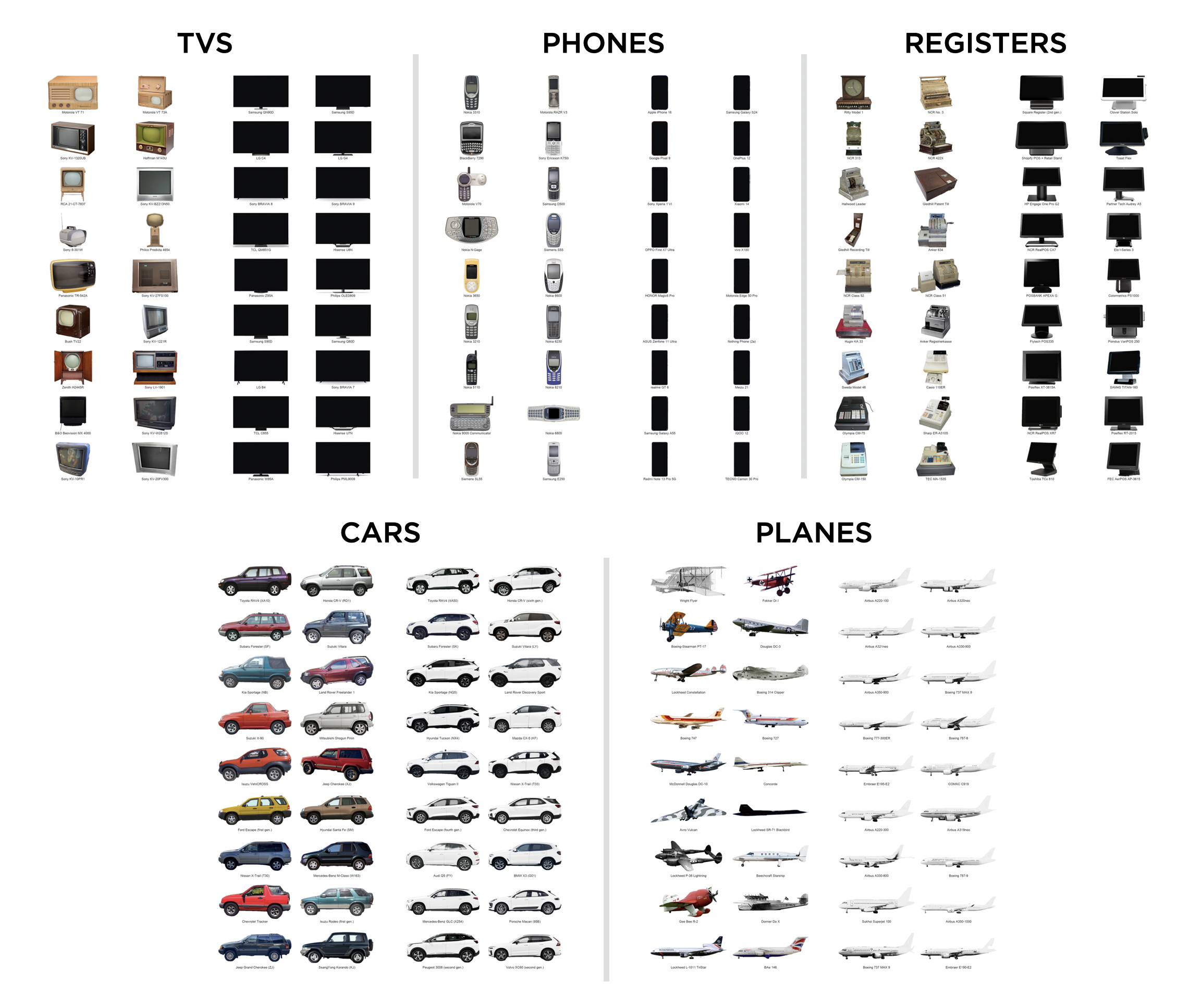
After seeing lots of posts over the years arguing that design has become homogenized, I decided to pull together historical and modern designs for a few differe...