~ a world-help site ~
The Math of Idle Games, Part I
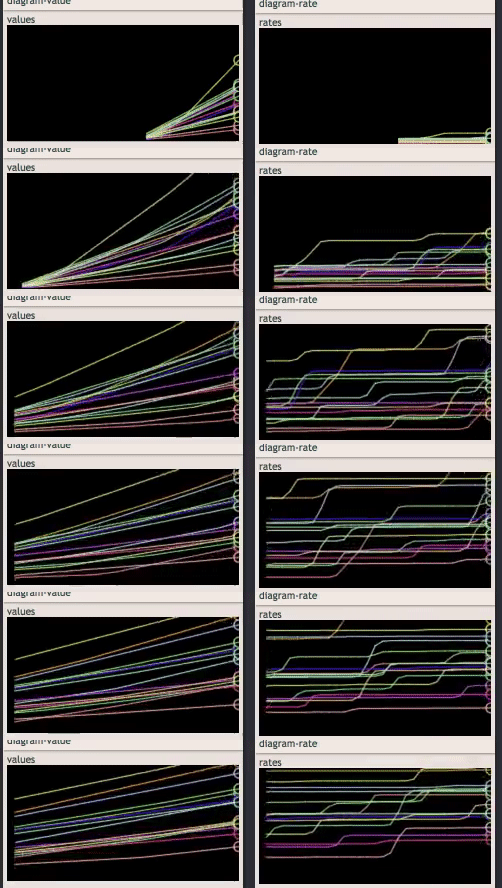
Originally published October 4, 2016 I’ve given a few talks in the past about the appeal and general mechanics of idle games, but what if you actually wanted to make one? Theory and patterns are nice, but there’s some complicated math running behind it. And how on earth
Finite and Infinite Games
Notes from James Carse's book 'Finite and Infinite Games'. Author unknown.
The Math of Idle Games, Part II
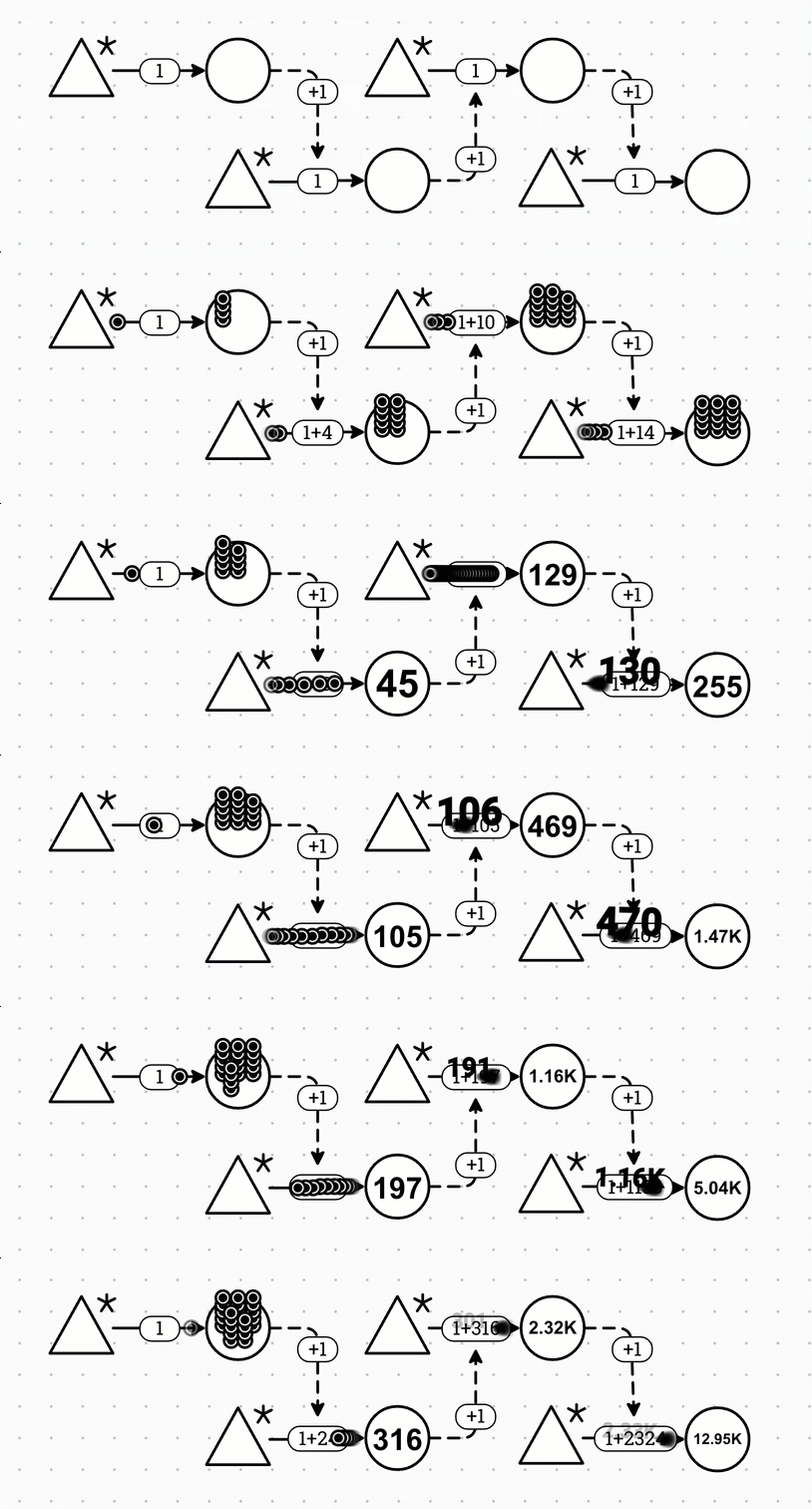
Originally published October 28, 2016 In Part I [https://www.sirpinski.com/the-math-of-idle-games-part-i/] of this three-part series, we looked at some of the standard math behind rapid-growth idle games, primarily at the relationships between exponential and polynomial growth and some methods of
17. A Value for n-Person Games
17. A Value for n-Person Games was published in Contributions to the Theory of Games, Volume II on page 307.
The Math of Idle Games, Part III
Originally published January 12, 2017 This three-part series is intended to break apart my MIGS 2016 slides [http://www.slideshare.net/AnthonyPecorella/the-rise-and-rise-of-idle-games-68916528] into what are hopefully detailed but accessible angles on the math and mechanics behind idle and incremental games. The
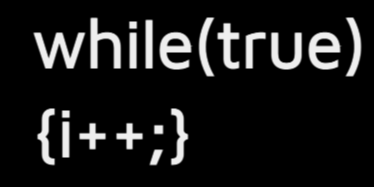

Game Theory | Open Yale Courses
This course is an introduction to game theory and strategic thinking. Ideas such as dominance, backward induction, Nash equilibrium, evolutionary stability, commitment, credibility, asymmetric information, adverse selection, and signaling are discussed and applied to games played in class and to examples drawn from economics, politics, the movies, and elsewhere.
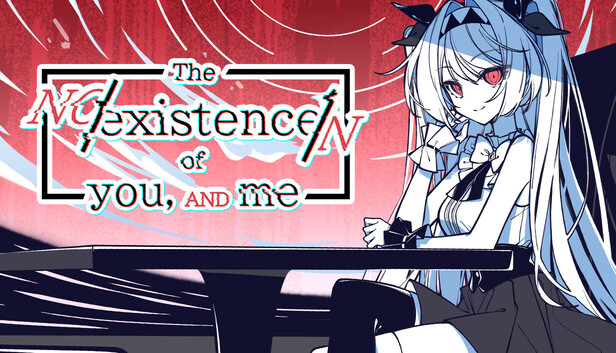
The NOexistenceN of you AND me
Use "game" as a medium to showcase the world of "you/girl". Explore the truth of "you/girl/world" through the form of a "visual novel".
Kittens Game - a Dark Souls of incremental gaming
Magic: The Gathering is Turing Complete
$\textit{Magic: The Gathering}$ is a popular and famously complicated trading card game about magical combat. In this paper we show that optimal play in real-world $\textit{Magic}$ is at least as...

TextWorld: A Learning Environment for Text-based Games
We introduce TextWorld, a sandbox learning environment for the training and evaluation of RL agents on text-based games. TextWorld is a Python library that handles interactive play-through of text games, as well as backend functions like state tracking and reward assignment. It comes with a curated list of games whose features and challenges we have analyzed. More significantly, it enables users to handcraft or automatically generate new games. Its generative mechanisms give precise control over the difficulty, scope, and language of constructed games, and can be used to relax challenges inherent to commercial text games like partial observability and sparse rewards. By generating sets of varied but similar games, TextWorld can also be used to study generalization and transfer learning. We cast text-based games in the Reinforcement Learning formalism, use our framework to develop a set of benchmark games, and evaluate several baseline agents on this set and the curated list.
Designing And Building Stockfighter, Our Programming Game | Kalzumeus Software
GameSpot's SIMply Divine: The Story of Maxis Software
GameSpot action adventure driving puzzle role-playing simulation sports strategy hardware
A Life in Games | Quanta Magazine
The mathematician John Horton Conway’s myriad accomplishments — including the Game of Life, sprouts and the surreal numbers — are the product of a mind at play.

A negative-sum game: Policing Counter-Strike: GO cheaters with Overwatch
In battling cheaters, Valve crowdsources the judge, jury, and executioner.