

you might find yourself standing in the unremarkable center
Technorealists, the silent majority? · Openness Praxis
you might find yourself standing in the unremarkable center
Should Scientists and Engineers Run Society?
Technopoly: The Surrender of Culture to Technology
A witty, often terrifying that chronicles our transform…

Ali Alkhatib: On techno-optimism
I’ve got a longer draft in the works, but I don’t think that’s going to become a blog post, so I figure it might be useful to publish something here and solicit feedback, or just plant a flag in the ground that this was a thing I did. Last week Several weeks ago I gave a talk at Wayne State University titled “the uncanny pessimism of techno-optimism”. In this post I’m going to breeze through some of the stuff I talked about and give a sense of what’ll be coming. Eventually.
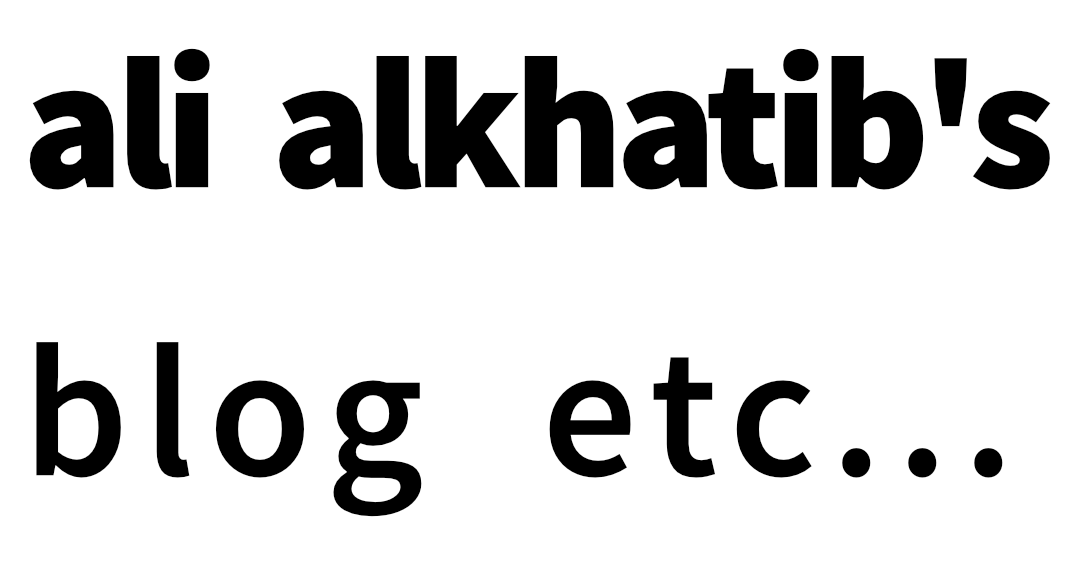
‘Headed for technofascism’: the rightwing roots of Silicon Valley
The industry’s liberal reputation is misleading. Its reactionary tendencies – celebrating wealth, power and traditional masculinity – have been clear since the dotcom mania of the 1990s
The Anti-Intellectualism of Silicon Valley Elites
I recently re-read Richard Hofstadter's Anti-Intellectualism in American Life, and now every time a reactionary Silicon Valley billionaire opens his mouth, I think about it. So I wrote about it for The Nation. Here's the column: On Instagram, there’s an activist named Brian Patrick (@pano.

TESCREAL
TESCREAL is a neologism proposed by computer scientist Timnit Gebru and philosopher Émile P. Torres. An acronym, it stands for Transhumanism, Extropianism, Singularitarianism, (modern) Cosmism, Rationalists (the internet community, not to be confused with other uses of the term), Effective Altruism, and Longtermism.[1][2] Gebru and Torres argue that these ideologies should be treated as an "interconnected and overlapping" group with shared origins.[1] They claim these constitute a movement that allows its proponents to use the threat of human extinction to justify expensive or detrimental projects and consider it pervasive in social and academic circles in Silicon Valley centered on artificial intelligence.[3] As such, the acronym is sometimes used to criticize a perceived belief system associated with Big Tech.[3][4][5]
How Liminalism Became the Defining Aesthetic of Our Time
This crowd-curated digital movement is one of the most pertinent and explicit reactions to our particular slice of dystopian late capitalism.
A Thesis on the History of the 21st Century: Technocracy, AI, and the End of the World
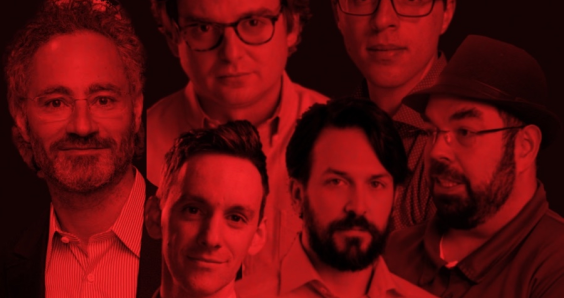
Reviewing a trio of books by a sextet of ruling-class ideologues, Mathias Fuelling finds an ambient anxiety hanging over a perceived crisis in American capitalism, with visions of bolstering a Silicon Valley-led technocracy fueled by AI investment reflecting American fears over the dawn of a "Chinese Century."
Ali Alkhatib: On techno-optimism
Major Tech Investor Calls Architect of Fascism a 'Saint' in Unhinged Manifesto
Silicon Valley's 'techno-optimism' cult believes we should let rich tech guys do whatever they want.

Technically Radical
Over 2024, we saw major tech investors and company owners overtly turn toward the right, overtly backing Donald Trump in his electoral campaign. This group of individuals, which commentators have taken to calling the “Tech Right”, are motivated by various concerns like the attempts by the Biden administration to regulate them and a general backlash against “wokeness”. Representative individuals and their respective justifications can be found in things like Marc Andreessen's essay The Techno-Optimist Manifesto or books like Balaji Srinivasan’s The Network State, and Alexander Karp and Nicholas Zamiska’s The Technological Republic.
During the 1980s and 1990s, networks of evangelists and venture capitalists fused technological boosterism with reactionary social ideals. Our video of the week examines the deep roots of Silicon Valley's shift toward the right. Featuring @beccalew.bsky.social at @westernu.ca buff.ly/ydgntnc
