


Admit you don’t know what to say Express “I care” Remind them that they matters Check them regularly Ask how I can help, but be specific (“Could I do X?” rather than “How can I help you?“) Encourage them to see professional treatment To listen without interruptions Only claim understanding if you g...
Can One Donation a Day Keep Depression Away? Three Randomized Controlled Trials of an Online Micro-Charitable Giving Intervention
Prosocial interventions grounded in social interactions have shown limited effectiveness in alleviating depressive symptoms, possibly because of the discomfort and unease that depressed individuals experience during such interactions. We developed and examined an innovative prosocial intervention—an online micro-charitable giving intervention, in which individuals voluntarily donated at least one Chinese cent (¥0.01, or about $0.0014) daily. We conducted three preregistered, 2-month randomized controlled trials with depressed individuals (Sample 1: N = 125, Sample 2: N = 296, Sample 3: N = 462). Results showed that, compared with the waitlist group, the intervention group exhibited significantly greater improvements in both depressive symptoms (Cohen’s d s = −0.19 to −0.46) and emotional positivity (Cohen’s d s = 0.22 to 0.49), and that emotional positivity mediated the intervention’s effect on the reduction of depressive symptoms. Exploratory analysis found a slightly larger intervention effect for generous donors than for minimal donors. This low-cost, easily accessible prosocial intervention holds potential for the prevention of depression. Statement of Relevance Can donating one cent (specifically one Chinese cent, or about $0.0014) alleviate depressive symptoms? We have developed a practical and effective intervention—donating at least one cent daily on an online charity platform—and have discovered that this intervention effectively mitigates depressive symptoms in depressed individuals. Despite the nominal purchasing power of one cent in contemporary society, this act of giving has been shown to significantly enhance mental health. Our findings could be relevant to everyone in society; charitable donations promote societal harmony and, in addition, offer a cost-effective way to alleviate depressive symptoms. As the intervention instruction asserts, “Charity encompasses love, regardless of its size, as even one cent holds value.”

Mutual Aid Hub
Find Mutual Aid Networks and other community self-support projects near you. Join these important efforts, offer resources, or submit needs requests.

Using AI for advice or other personal reasons is linked to depression and anxiety
A new survey found that people who spend more time with chatbots for social interactions or emotional support were likelier to report mental health symptoms.

Psychological ownership interventions increase interest in claiming government benefits
Significance Most government benefits programs exhibit a sizable participation gap, with eligible individuals forgoing billions of dollars in government benefits each year. Many policymakers have focused on addressing this participation gap, as receiving government benefits has been shown to reduce poverty, childhood hunger, educational gaps, and physical and mental illness. The current work presents psychological ownership framing as a behavioral science intervention, and we show that it can help address this benefits participation gap. These interventions are subtle, simple to implement, and cheaper to execute relative to logistical interventions. Moreover, the data show that psychological ownership interventions can be more efficacious than other common psychological interventions such as social norms and urgency. , Each year, eligible individuals forgo billions of dollars in financial assistance in the form of government benefits. To address this participation gap, we identify psychological ownership of government benefits as a factor that significantly influences individuals’ interest in applying for government benefits. Psychological ownership refers to how much an individual feels that a target is their own. We propose that the more individuals feel that government benefits are their own, the less likely they are to perceive applying for them as an aversive ask for help, and thus, the more likely they are to pursue them. Three large-scale field experiments among low-income individuals demonstrate that higher psychological ownership framing of government benefits significantly increases participants’ pursuit of benefits and outperforms other common psychological interventions. An additional experiment shows that this effect occurs because greater psychological ownership reduces people’s general aversion to asking for assistance. Relative to control messages, these psychological ownership interventions increased interest in claiming government benefits by 20% to 128%. These results suggest that psychological ownership framing is an effective tool in the portfolio of potential behavioral science interventions and a simple way to stimulate interest in claiming benefits.

Eiko Fried (@eikofried.bsky.social)
Professor of Mental Health & Data Science at Leiden University. Studying mental health problems as systems (http://eiko-fried.com). Building an early warning system for depression (http://WARN-D.com).

Patient-reported treatment outcomes in ME/CFS and long COVID
Myalgic encephalomyelitis/chronic fatigue syndrome (ME/CFS) and long COVID are persistent multisystem illnesses affecting many patients. With no known effective FDA-approved treatments for either condition, patient-reported outcomes of treatments may prove helpful in identifying management strategies that can improve patient care and generate new avenues for research. Here, we present the results of an ME/CFS and long COVID treatment survey with responses from 3,925 patients. We assess the experiences of these patients with more than 150 treatments in conjunction with their demographics, symptoms, and comorbidities. Treatments with the greatest perceived benefits are identified. Patients with each condition who participated in the study shared similar symptom profiles, including all the core symptoms of ME/CFS, e.g., 89.7% of ME/CFS and 79.4% of long COVID reported postexertional malaise (PEM). Furthermore, treatment responses between these two patient groups were significantly correlated (R 2 = 0.68). Patient subgroups, characterized by distinct symptom profiles and comorbidities, exhibited increased responses to specific treatments, e.g., a POTS-dominant cluster benefiting from autonomic modulators and a cognitive-dysfunction cluster from CNS stimulants. This study underscores the symptomatic and therapeutic similarities between ME/CFS and long COVID and highlights the commonalities and nuanced complexities of infection-associated chronic diseases and related conditions. While this study does not provide recommendations for specific therapies, in the absence of approved treatments, insights from patient-reported experiences provide urgently needed real-world evidence for developing targeted patient care therapies and future clinical trials.

Prompting My Way Through Cancer
ChatGPT didn’t replace my care team, but it did make me a better patient.
Language Access in Healthcare — Discourse Graph
An open, AI-assisted evidence synthesis of how language concordance — matching patients with providers or interpreters who share their language — affects healthcare outcomes. Every question, claim, evidence item, caveat, and source is its own addressable node.

The Limits of Knowing Other Minds
New care workers in Britain typically struggle to understand, on their initial encounters, people who communicate atypically due to their intellectual disabilities. But they are required to provide care that is attuned to these individuals’ desires and intentions. Why, then, does a care organization called L'Arche UK make it harder for carers to learn what is going on inside these people's minds? I argue that doing so does not prevent the acquisition of essential knowledge, but rather trains new carers to relate to those with intellectual disabilities as opaque. This creates a more involved relationship that opens up the possibility of forms of status and intimacy otherwise closed to such people—thereby raising questions about the supposedly fundamental role that transparency and knowledge play in knowing others.
you feel like shit
You feel like shit. That sucks. You Feel Like Shit is a game designed to help you help yourself through your shitty times and practice self care.
How to write error messages that actually help users rather than frustrate them
One of the most consistently neglected parts of today’s user experiences is our handling of errors. We’re so busy designing the happy paths through our products that we often forget to give the same care and attention to the times when things will go wrong
Experiences of Direct Care Workers and Family Caregivers of Home- and Community-Based Services (HCBS) | KFF
This issue brief presents findings from the focus groups including caregiver characteristics; physical, emotional, and mental caregiving demands of caregiving; their wages, finances, and opportunities for advancement; and what caregivers would like policymakers to know about their work.
How to Fight Your Health Insurance Denial With an External Appeal — ProPublica
When a health insurer refuses to pay for your treatment, you may have the right to have the denial reviewed — and potentially overturned — by an independent provider. Here are six steps experts suggest to help you through the external appeal process.

AI for Proactive Mental Health: A Longitudinal, Multi-Institutional Trial
Young adults today face unprecedented mental health challenges, yet many hesitate to seek support due to barriers such as accessibility, stigma, and time constr

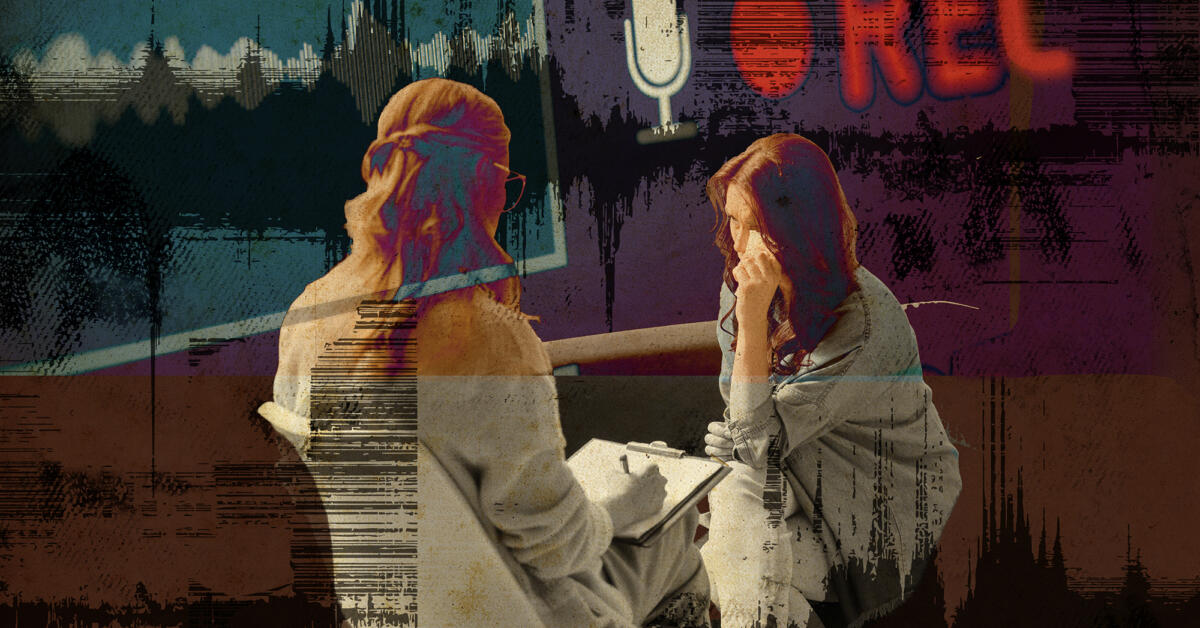
Your medical provider might be recording your mental health care visits – The Markup
Mental health providers are increasingly using AI technology to record conversations, raising privacy concerns among patients and practitioners.
People are using AI for their health crises, and no amount of screaming about it is stopping that. I started slowly drafting a piece about my experiences having long, slow conversations about AI practices in the patient communities I'm in, where I primarily stay just to provide scientific support
