A strategy for writing more often without losing momentum
Publish and Perish: How AI-Accelerated Writing Without...
Artificial intelligence tools are accelerating manuscript production far faster than peer review capacity can expand. Applying the theory of constraints from manufacturing science, we formalize...

Protocolized Writing Workshop
Your chance to race to the frontier of modern AI-forward writing and publishing
Flashcards as Notes - Wesley's notes
Effortful reading habits and resisting the urge to defer attention
Publishing is fucked. The ATmosphere could save it. | Paul Stephenson | Offprint
Building a future for publishing that keeps authors and readers at its heart.

Writing copy for landing pages
Write copy that delights visitors, persuades prospects, and wins customers.

Write. Publish. Keep what's yours. | Offprint
Offprint is where independent writers publish, grow an audience, and keep both for the long haul.

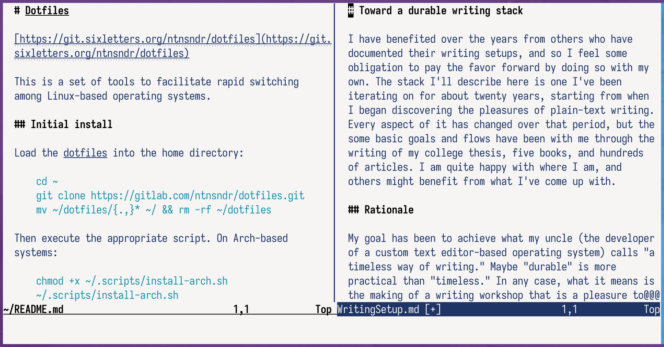
Toward a durable writing stack – Writings and rehearsals by Nathan Schneider
I have benefited over the years from others who have documented their writing setups, and so I feel some obligation to pay the favor forward by doing so with my own. The stack I’ll describe here is one I’ve been iterating on for about twenty years, starting from when I began discovering the pleasures of plain-text writing. Every aspect of it has changed over that period, but the some basic goals and flows have been with me through the writing of my college thesis, five books, and hundreds of articles. I am quite happy with where I am, and others might benefit from what I’ve come up with.
Vipul Gupta on Twitter / X
Feels bad to say, but paper writing/reviewing is definitely cooked.Reviewed 4 papers recently and genuinely felt like I spent more time reviewing them than the authors spent writing them.— Vipul Gupta (@vipul_1011) September 19, 2026
We shouldn't wait for Medium
Medium has to create a miracle in the economics of publishing. But the users of Medium just want an easy and elegant blogging system. It doesn't seem like a match, long-term.

On Writing #3
Periodically I like to gather various observations about writing, and share my perspective.

How to write Medium stories people will actually read
More than 30 million people use Medium each month. They come here in search of something worth reading. Something substantial. And you can give it to them. Medium’s algorithms put you on a level playing field. Your stories can dominate news feeds. Yo...

How I draft stories
I discovered that trying to write one big blob does not work for me. I can get as far as 2000 words before the volume overwhelms. As with many things in life, breaking it down into pieces helps a lot! This is where most outlining writers suggest a big bulleted
The Micro-Paper: Towards cheaper, citable research ideas and conversations
Academic, peer-reviewed short papers are a common way to present a late-breaking work to the academic community that outlines preliminary findings, research ideas, and novel conversations. By comparison, blogging or writing posts on social media are an unstructured and open way to discuss ideas and start new conversations. Both have limitations in the proliferation of research ideas. The short paper format relies on the conference and journal submission process while blogging does not operate within a structured format or set of expectations at all. However, at times the demand exists for late-breaking ideas and conversations to arise in a raw form or with urgency but should still be archived and recorded in a way that promotes citational honesty and integrity. To address this, I present: The Micro-Paper, as a micro-paper itself. The Micro-Paper is a small, cheap, accessible, digital document that is self-published and archived, akin to a pre-print of a short paper. This meta micro-paper discusses the context, goals, and considerations of micro-paper authoring.
As Governments Silence War Critics, Writers Pay the Price
Crackdowns on writers during wartime emerged as a key trend in PEN America's 2025 data gathered for the latest annual Freedom to Write Index.