Why AI can make us more productive but will never save us time
Unfortunately, You Need to Know What the Jevons Paradox is
Unfortunately, You Need to Know What the Jevons Paradox is

The fall of the theorem economy
How AI could destroy mathematics and barely touch it
The fall of the theorem economy
How AI could destroy mathematics and barely touch it
Michael I. Jordan on AI: “Superintelligence is science fiction”
Jevons paradox
The Jevons paradox or Jevons effect is an economic phenomenon said to occur when technological improvements that increase the efficiency of a resource's use lead to a rise, rather than a fall, in total consumption of that resource. Greater efficiency reduces the amount of the resource needed per application, lowering its effective cost; if demand is sufficiently price elastic, this induces demand, frequently resulting in a net increase of total resource consumption.

Guy Who Sucks At Being A Person Sees Huge Potential In AI
SAN MATEO, CA—After spending the past three decades of his life being totally unable and unwilling to engage in any meaningful way with the world around him, James Parker, a local guy who sucks at being a person, told reporters Thursday that he saw huge potential in AI. “While it’s still in its early phase, artificial intelligence will one day accomplish things that humans could have never even dreamed of doing,” said Parker, who, by all accounts, has never stretched himself to do something he found difficult; has never created anything truly original; and, deep down, has absolutely zero understanding of what makes things good, enjoyable, or rewarding. “Just yesterday, I asked an AI program to write an entire sci-fi novel for me, and [as someone who will die an empty shell of a man who wasted his life doing nothing for the world and, perhaps, should never have been born] I was super impressed. Soon, humans won’t need to do anything at all! Awesome.” At press time, Parker added that as someone whose contributions to society would almost certainly be measured cumulatively as a net loss, he also saw great potential in the future of the metaverse.

Why AI Makes Things Worse for Enterprise Teams, by Paul Ford
Why are so few engineering teams reaping the benefits of AI? On this week’s episode, Paul presents Rich with the findings from a recent report from CircleCI and
Jevons paradox
In economics, the Jevons paradox, or Jevons effect, is said to occur when technological improvements that increase the efficiency of a resource's use lead to a rise, rather than a fall, in total consumption of that resource. Greater efficiency reduces the amount of the resource needed per application, lowering its effective cost; if demand is sufficiently price elastic, this induces demand, frequently resulting in a net increase of total resource consumption.
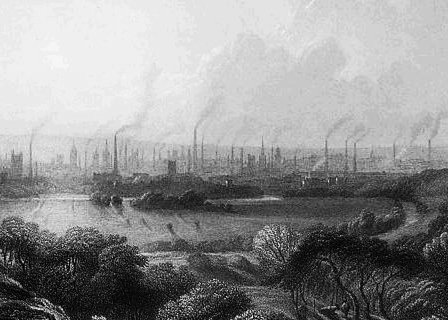
AI in scientific publishing: Slower, worse, and more expensive
There’s a saying in the management world, popularized by NASA administrator Daniel Goldin in the 1990s, that the goal of technological improvements is to make products faster, better, and cheaper. Although this strategy had some success in the aerospace industry, the zealots of artificial intelligence (AI) have been making the same argument regarding how it will transform work, claiming that so little human effort will be required that humanity will enter an era of radical abundance, free from disease, drudgery, and danger, among other benefits, leaving society with more time for creative pursuits. But history tells a different story. When machines began to increase productivity during the second industrial revolution, American engineer Frederick Winslow Taylor’s The Principles of Scientific Management encouraged corporations to use surveillance to get employees to work harder and longer, an approach that exhausted and discouraged workers and led to the transfer of knowledge and any decision-making from workers to management, while enriching the profits for only those at the top. Yet, it remains foundational to the American economic enterprise. Indeed, scientific publishing is starting to experience some Taylorism with the insertion of AI. Rigorous human checking of AI-generated research papers is creating bottlenecks as publishers strive to maintain the integrity of the scientific record. The challenge is requiring even more human effort, making the whole endeavor slower and more expensive.

On AI as model organism for human learning
I've a pretty taste for paradox

AI is not superhuman
What metaphor should drive the field of AI research?