

As the number of artificial satellites in earth orbit increases, the probability of collisions between satellites also increases. Satellite collisions would produce orbiting fragments, each of which would increase the probability of further collisions, leading to the growth of a belt of debris around the earth. This process parallels certain theories concerning the growth of the asteroid belt. The debris flux in such an earth-orbiting belt could exceed the natural meteoroid flux, affecting future spacecraft designs. A mathematical model was used to predict the rate at which such a belt might form. Under certain conditions the belt could begin to form within this century and could be a significant problem during the next century. The possibility that numerous unobserved fragments already exist from spacecraft explosions would decrease this time interval. However, early implementation of specialized launch constraints and operational procedures could significantly delay the formation of the belt.
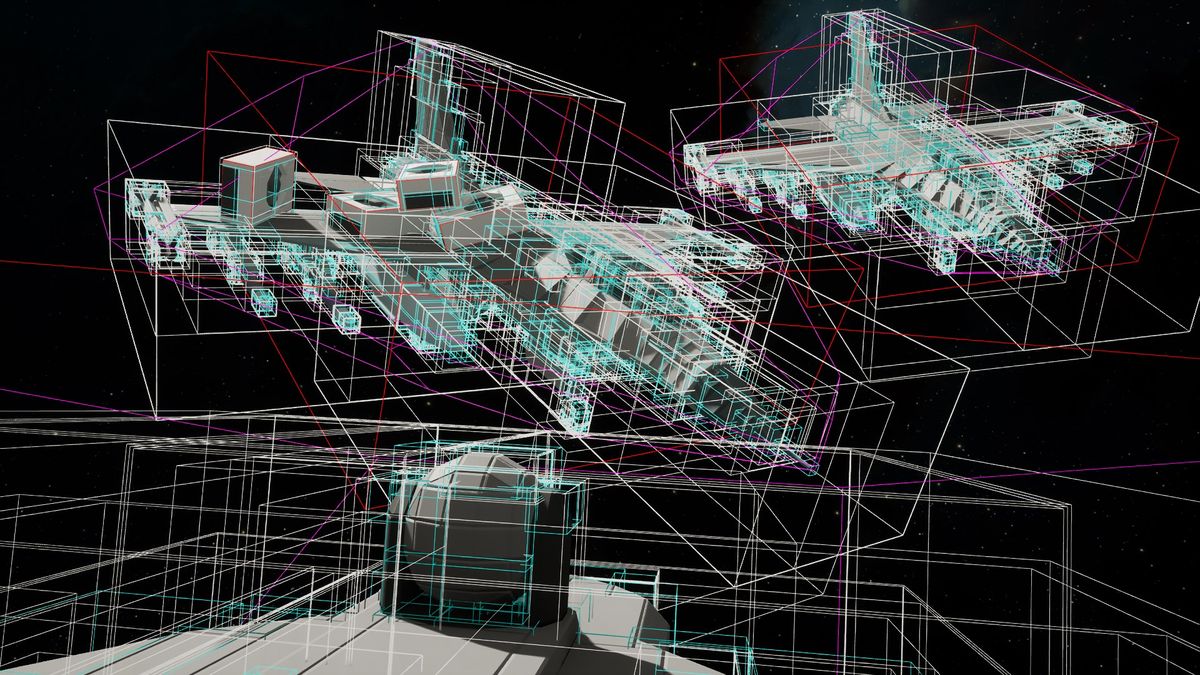
Devlog #4 - Fast Collisions for Large Editable Vehicles
What if you could store cargo in your space ship and fly the space ship inside a rotating space station, which you built using hundreds of thousands of bricks?
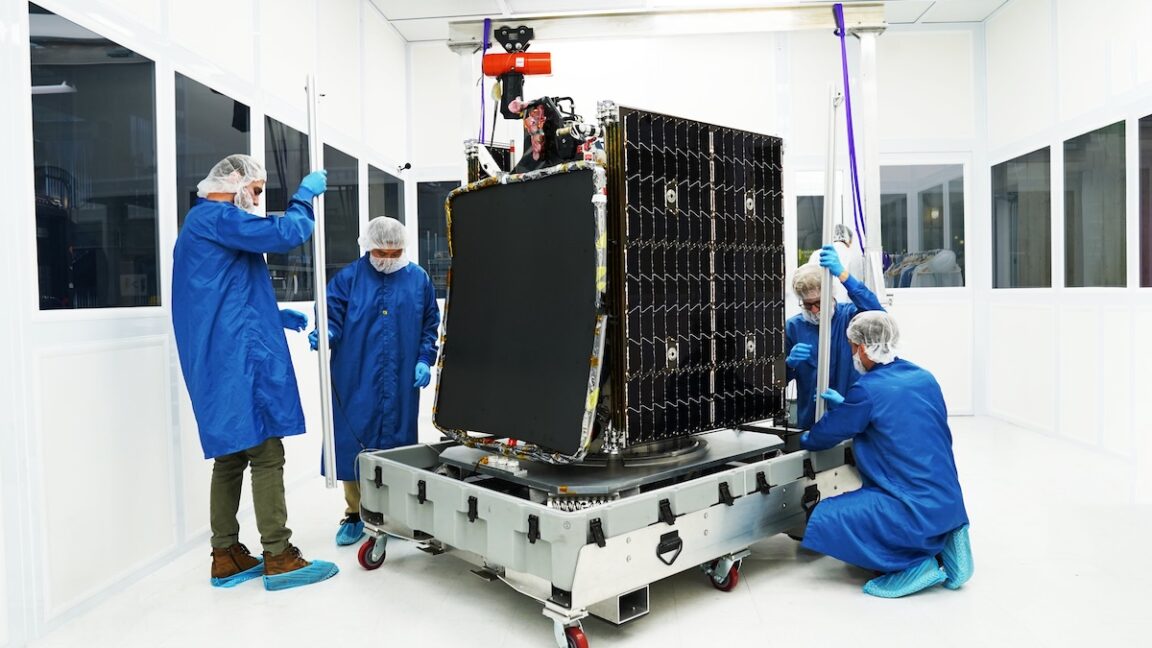
Space Force official: Commercial satellites can do a lot more than we thought
They could shave off about a third of the time and over half the cost."
Astronomers push for global debate on giant satellite swarms
Working with the United Nations, scientists hope to establish standards for satellite ‘megaconstellations’ and reduce disruption of astronomical observations.

Asteroid Threat
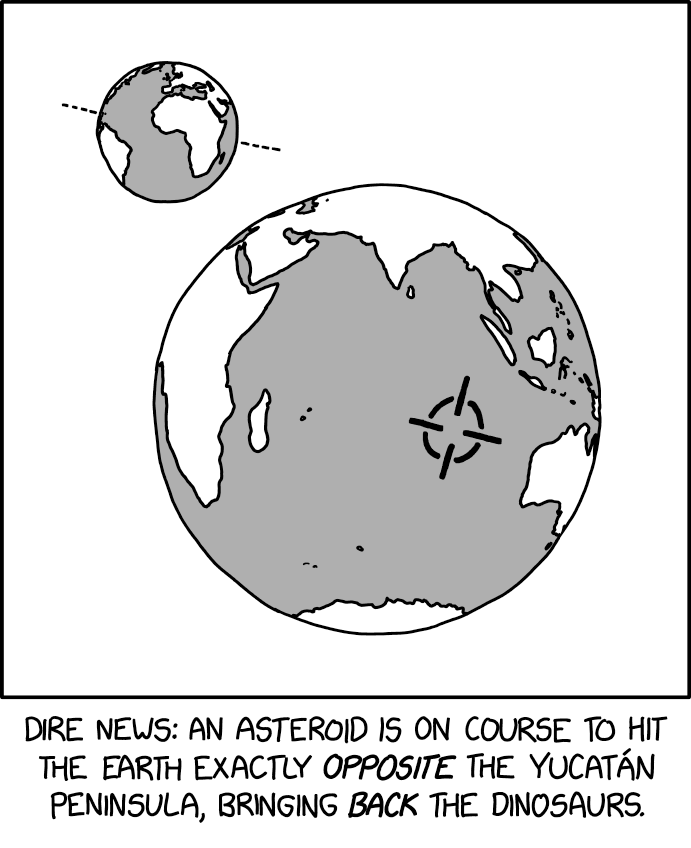
Paleontologists have long worried that the dinosaurs blasted into space 66 million years ago will one day complete their orbits and fall back down.
Universal Density Profile for Cosmic Voids
We present a simple empirical function for the average density profile of cosmic voids, identified via the watershed technique in $Λ$CDM N-body simulations. This function is universal across...

A hierarchy of voids: Much ado about nothing
We present a model for the distribution of void sizes and its evolution in the context of hierarchical scenarios of gravitational structure formation. We find that at any cosmic epoch the voids...
Celestial Forge
36❤ 2.4⭐ | by DeepInTheDen # Celestial Forge An orbit‑driven incremental about building worlds and forging stars. This is my first attempt at making a game so feedback is appreciated! The game autosaves every few seconds but there is a manual save/load and export/import available. #Overview Generators fire balls of mass towards the core, forming a world. Complete celestial bodies, unlock different generator types, discover powerful events, and, once you’re ready, enter the Star Forge to try and forge the largest star while earning the powerful RELICS resource. - MASS: Earned when shots settle on the core. - ORBS: Awarded per full generator orbit. - CELES: Gained by completing bodies. - RELICS: Forged in the Star Forge. # Features -Six generator types: Basic, Burster, Heavy, Critical, Support, and Adaptive, each with their own strengths and weaknesses. - Four events: Solar Flare, Comet Shower, Nebula Bloom, Temporal Distortion. - Achievements: 16 in total to unlock # Credits Design & Development: Solo developer (Me) Music: “Floating in Space” by Danijel Zambo (courtesy of Uppbeat) --- Making games is a passion of mine. If you enjoyed this game and would like to support me, you can do so through Ko-Fi. Buy Me a Coffee at https://ko-fi.com/deepintheden
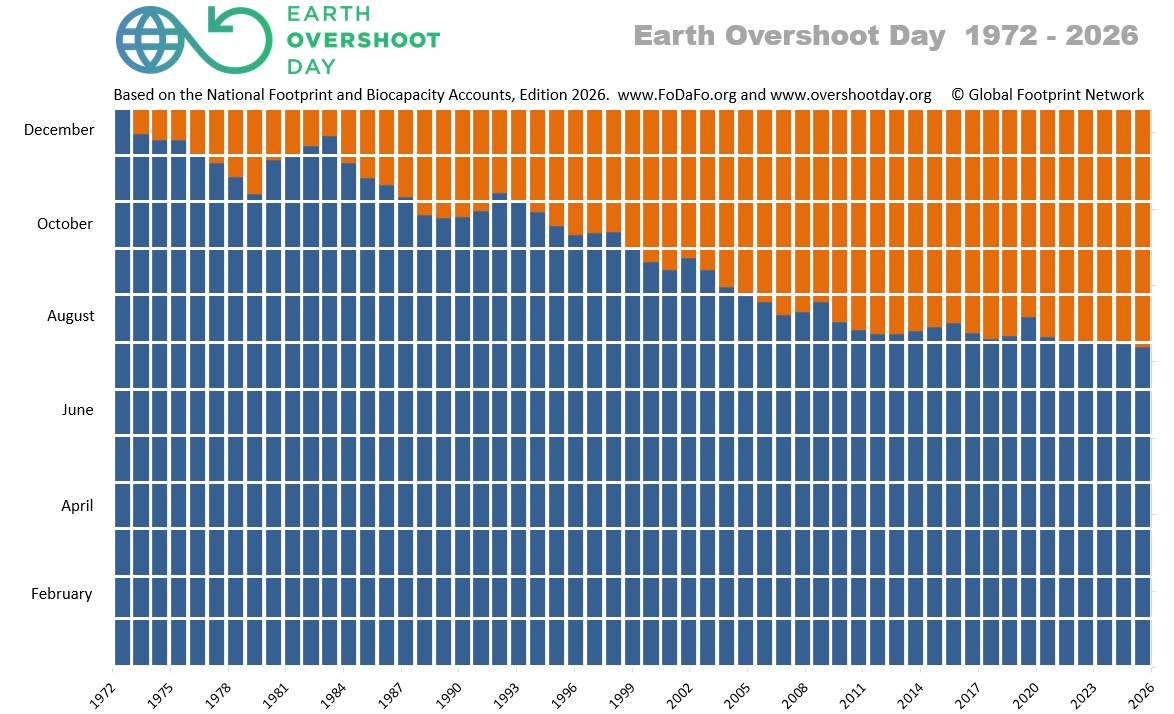
Earth Overshoot Day - when humanity starts to use more than our planet can renew
Overshoot occurs when humanity's demand on nature exceeds Earth's biocapacity. In 2026, Earth Overshoot Day fell on July 30th.
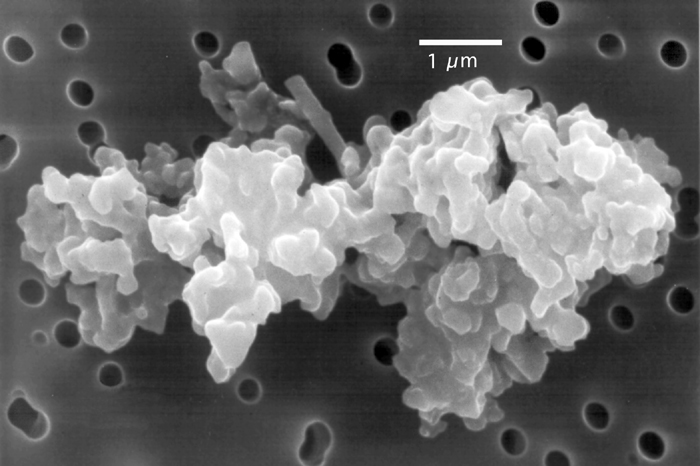
Cosmic dust
Cosmic dust – also called extraterrestrial dust, space dust, or star dust – is dust that occurs in outer space or has fallen onto Earth. Most cosmic dust particles measure between a few molecules and 0.1 mm (100 μm), such as micrometeoroids and meteoroids. Cosmic dust can be further distinguished by its astronomical location: intergalactic dust, interstellar dust, interplanetary dust, and circumplanetary dust. There are several methods to obtain space dust measurement.
The Cosmic Crash That Made the Moon
About 4.5 billion years ago, give or take, a planet the size of Mars slammed into the Earth. The Moon is what was left of the wreckage.

SPACESHIPS
Inverted Asteroids: you are not the ship. Place gravity wells and sling the rocks.

More than half of recent astronomy papers are written with language-model assistance
Language models leave a distinctive vocabulary in the prose they help write, and we measure how much of the astronomy literature now carries it. From the full text of 207,111 astro-ph papers spanning 2015 to mid-2026, we count those words in each paper and model the counts, in proportion to paper length, as a mixture of assisted and unassisted writing in a hierarchical Bayesian model. Papers from before 2020 calibrate the unassisted rate, and the 392 papers that disclose model use calibrate the assisted one. Our answer depends on how often these words would appear today if nobody used a model, a rate that must be modeled rather than observed, so we extend it past 2020 under three assumptions and report all three. For 2025 that gives $54^{+8}_{-8}\,(\mathrm{stat},\,95\%)\,^{+26}_{-0}\,(\mathrm{sys,\ background})$% of papers, the second error being the spread across the three. The estimate stays at or above 36% when we vary that choice, the calibration, and the requirement that adoption only rises. A word list built from the astro-ph corpus, keeping only words that rose across every subfield, leaves 2025 in the same range. Assisted writing is also getting harder to see, since authors adapt to the words that reveal it and the marker excess more than halves between 2023 and 2026. Our model allows for that fading, so it can separate a fainter trace from reduced use. More than half of recent astro-ph papers therefore carry a language-model trace, while only 0.81% of 2025 papers disclose it, one declaration for every $\sim$66 papers with a trace.
Mammals’ Time on Earth Is Half Over, Scientists Predict (Published 2023)
A new model suggests that in 250 million years, all land will collide into a supercontinent that boosts warming and pushes mammals to extinction.

New from 404 Media: Google Earth has introduced an AI feature that lets anyone fabricate completely bullshit satellite images. In our own tests, we added a “bomb blast and crater” to an area of Los Angeles. This is a misinformation time bomb, will 100% be abused 404media.co/google-earths-new-ai-lets-any…
