As the number of artificial satellites in earth orbit increases, the probability of collisions between satellites also increases. Satellite collisions would produce orbiting fragments, each of which would increase the probability of further collisions, leading to the growth of a belt of debris around the earth. This process parallels certain theories concerning the growth of the asteroid belt. The debris flux in such an earth-orbiting belt could exceed the natural meteoroid flux, affecting future spacecraft designs. A mathematical model was used to predict the rate at which such a belt might form. Under certain conditions the belt could begin to form within this century and could be a significant problem during the next century. The possibility that numerous unobserved fragments already exist from spacecraft explosions would decrease this time interval. However, early implementation of specialized launch constraints and operational procedures could significantly delay the formation of the belt.
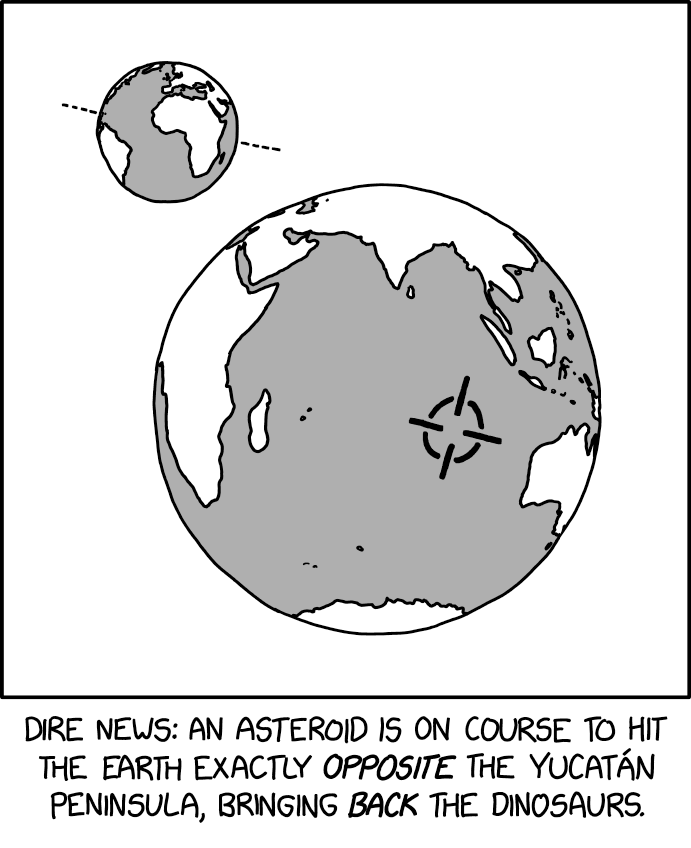
Asteroid Threat
Paleontologists have long worried that the dinosaurs blasted into space 66 million years ago will one day complete their orbits and fall back down.
Universal Density Profile for Cosmic Voids
We present a simple empirical function for the average density profile of cosmic voids, identified via the watershed technique in $Λ$CDM N-body simulations. This function is universal across...

A hierarchy of voids: Much ado about nothing
We present a model for the distribution of void sizes and its evolution in the context of hierarchical scenarios of gravitational structure formation. We find that at any cosmic epoch the voids...
Celestial Forge
36❤ 2.4⭐ | by DeepInTheDen # Celestial Forge An orbit‑driven incremental about building worlds and forging stars. This is my first attempt at making a game so feedback is appreciated! The game autosaves every few seconds but there is a manual save/load and export/import available. #Overview Generators fire balls of mass towards the core, forming a world. Complete celestial bodies, unlock different generator types, discover powerful events, and, once you’re ready, enter the Star Forge to try and forge the largest star while earning the powerful RELICS resource. - MASS: Earned when shots settle on the core. - ORBS: Awarded per full generator orbit. - CELES: Gained by completing bodies. - RELICS: Forged in the Star Forge. # Features -Six generator types: Basic, Burster, Heavy, Critical, Support, and Adaptive, each with their own strengths and weaknesses. - Four events: Solar Flare, Comet Shower, Nebula Bloom, Temporal Distortion. - Achievements: 16 in total to unlock # Credits Design & Development: Solo developer (Me) Music: “Floating in Space” by Danijel Zambo (courtesy of Uppbeat) --- Making games is a passion of mine. If you enjoyed this game and would like to support me, you can do so through Ko-Fi. Buy Me a Coffee at https://ko-fi.com/deepintheden
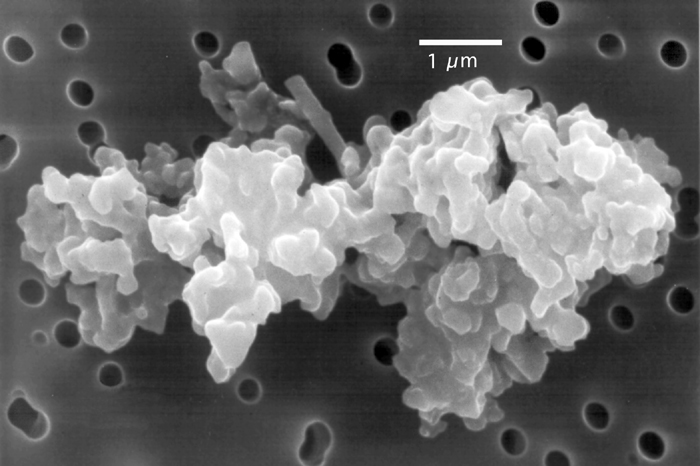
Cosmic dust
Cosmic dust – also called extraterrestrial dust, space dust, or star dust – is dust that occurs in outer space or has fallen onto Earth. Most cosmic dust particles measure between a few molecules and 0.1 mm (100 μm), such as micrometeoroids and meteoroids. Cosmic dust can be further distinguished by its astronomical location: intergalactic dust, interstellar dust, interplanetary dust, and circumplanetary dust. There are several methods to obtain space dust measurement.
The Cosmic Crash That Made the Moon
About 4.5 billion years ago, give or take, a planet the size of Mars slammed into the Earth. The Moon is what was left of the wreckage.

SPACESHIPS
Inverted Asteroids: you are not the ship. Place gravity wells and sling the rocks.

Mammals’ Time on Earth Is Half Over, Scientists Predict (Published 2023)
A new model suggests that in 250 million years, all land will collide into a supercontinent that boosts warming and pushes mammals to extinction.

Peter Plavchan on Twitter / X
Came across this beauty of a Research Note. Looks like it was done by someone at JPL with a HS student. Pulled period and semi-major axis for Kepler and TESS transiting planets from the NASA Exoplanet archive, and verified Kepler's 3rd law. https://t.co/JSIlg6Aw5s— Peter Plavchan (@PlavchanPeter) September 27, 2024
Zhijing Jin on Twitter / X
🚀 Can #AI agents actually do science?Current agents can optimize for predictive fit — but fail at recovering the underlying physical laws.We introduce Stargazer🪐: a scalable benchmark + environment for astronomical discovery🔭Agents must:• propose hypotheses•… pic.twitter.com/hGIjz4KJMT— Zhijing Jin (@ZhijingJin) May 7, 2026

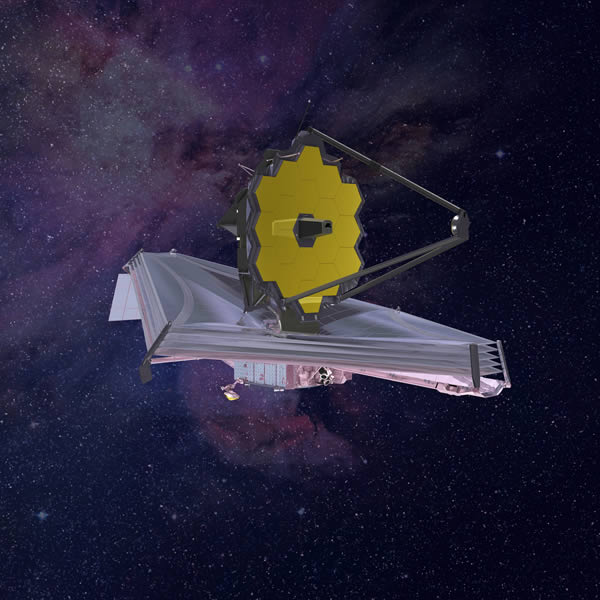
Webb Telescope & The Big Bang - NASA Science
The concept of the Big Bang is both simple and easy to misunderstand. Dr. John Mather, Nobel Laureate and James Webb Space Telescope Senior Project Scientist,
Planetary Sapience & Planetary Stupidity: a Bildungsroman for the Baby Noosphere | Antikythera
That is, the faculty of recollection and foresight? Until recently, I would argue, our planet was amnesiac. That is, no part of it was reflectively aware of the place of the present relative to the established past nor the expected future. But then peculiar animals emerged, capable—no matter how imperfectly—of cooperation, abstraction and invention. In the last blink of geologic time, through the collaboration of these animals with their increasingly cunning artifacts, this state of planetary amnesia has faltering begun being cured. That is, through our artifacts, our planet is becoming aware of its own unfolding biography. In our fallible attempts to model our world—alongside our growing legion of sensors—The Earth system has developed a way of recollecting its deepest past and tracking the changing complexities of its present so as to forecast its furthest future.
Solar System
The Solar System is the gravitationally bound system of the Sun and the masses that orbit it, most prominently its eight planets, of which Earth is one. The system formed about 4.6 billion years ago when a dense region of a molecular cloud collapsed, creating the Sun and a protoplanetary disc from which the orbiting bodies assembled.

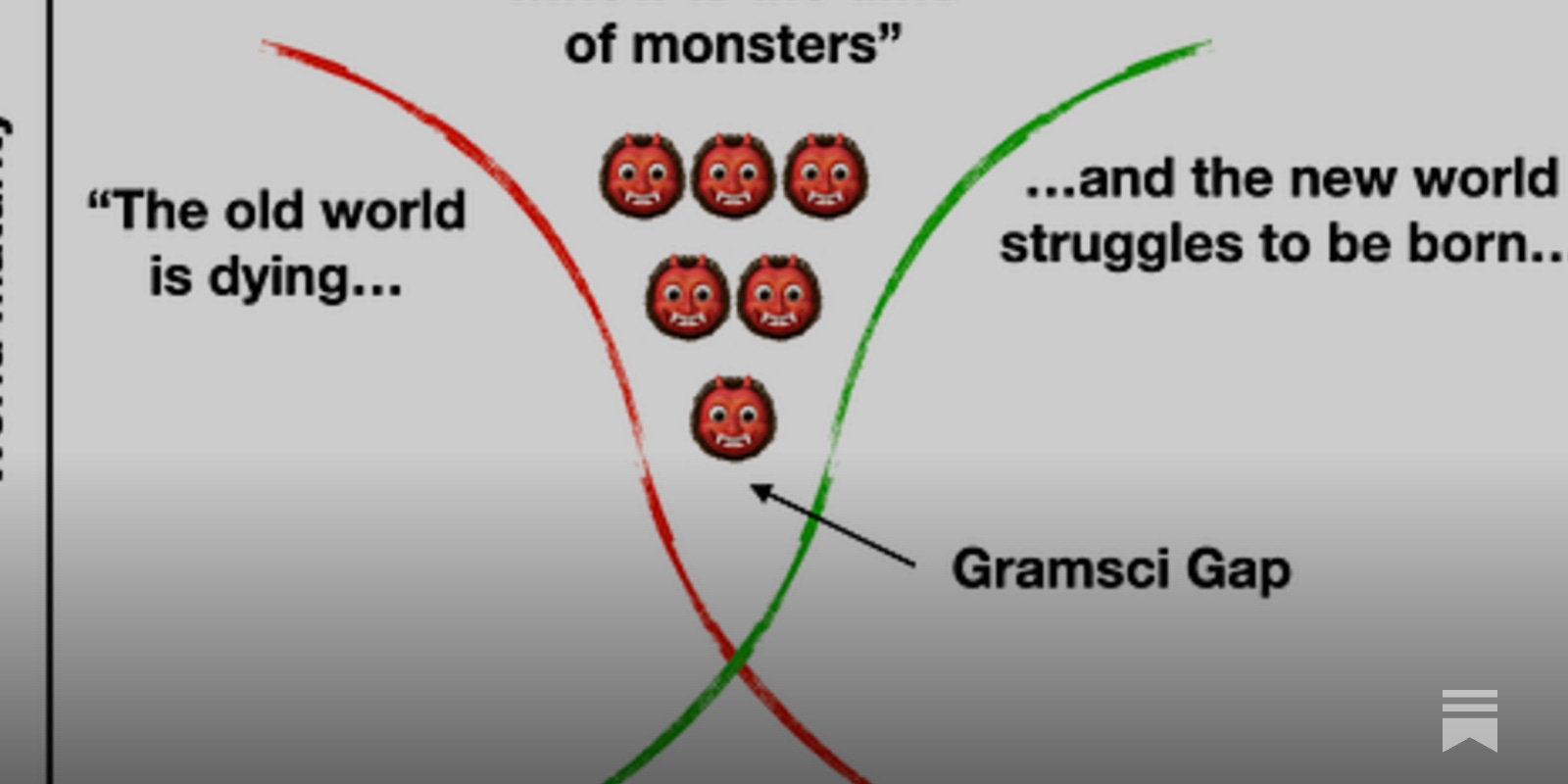
The Gramsci Gap
System emergence in monstrously morbid interregnums between worlds