


Seniors are spending more time than ever on their slop-filled, scam-riddled feeds. It has become their adult children’s job to save them.
Meet the Real Screen Addicts: the Elderly - Slashdot
Britain's National Centre for Gaming Disorders has treated 67 people over the age of 40 since opening in 2019. The oldest patient was a 72-year-old woman with a smartphone gaming obsession. Britons over 65 spent more than three hours a day online on smartphones, computers and tablets last year, acco...

Foodborne pathogens be damned
Plus: elder screen time, internet sobriety and the Barnes & Noble renaissance

Older Adults Learning Computer Programming: Motivations, Frustrations, and Design Opportunities
Online videos are a promising medium for older adults to learn. Yet, few studies have investigated what, how, and why they learn through online videos. In this study, we investigated older adults’ motivation, watching patterns, and difficulties in using ...

Rep. Finke Was Right: Age-Gating Isn’t About Kids, It’s About Control
When Rep. Leigh Finke spoke last month before the Minnesota House Commerce Finance and Policy Committee to testify against HF1434, a broad-sweeping proposal to age-gate the internet,…

Hackers Expose The Massive Surveillance Stack Hiding Inside Your “Age Verification” Check
We’ve been saying this for years now, and we’re going to keep saying it until the message finally sinks in: mandatory age verification creates massive, centralized honeypots of sensitiv…
The SCREEN Act is a Christian Nationalist Nightmare
Mike Lee's SCREEN Act, which heads to Senate Commerce Committee for markup on Wednesday, would expand age verification requirements to a nearly limitless scope of websites, and is supported by the architects of Project 2025.

The digital exiles: Why people are abandoning their smartphones - Coda Story
A growing movement of “former screenagers” is calling for a screen-free, surveillance-free life, for a chance to build a future beyond tech capture

KOSA, the KIDS Act, AI, Bad Internet Bills, and a potential giveaway to big tech (UPDATED)
Just say no to bills that age restrict, censor, and surveil the internet!
Age Assurance Methods Explained
This blog also appears in our Age Verification Resource Hub: our one-stop shop for users seeking to understand what age-gating laws actually do, what’s at stake, how to protect yourself, and why EFF
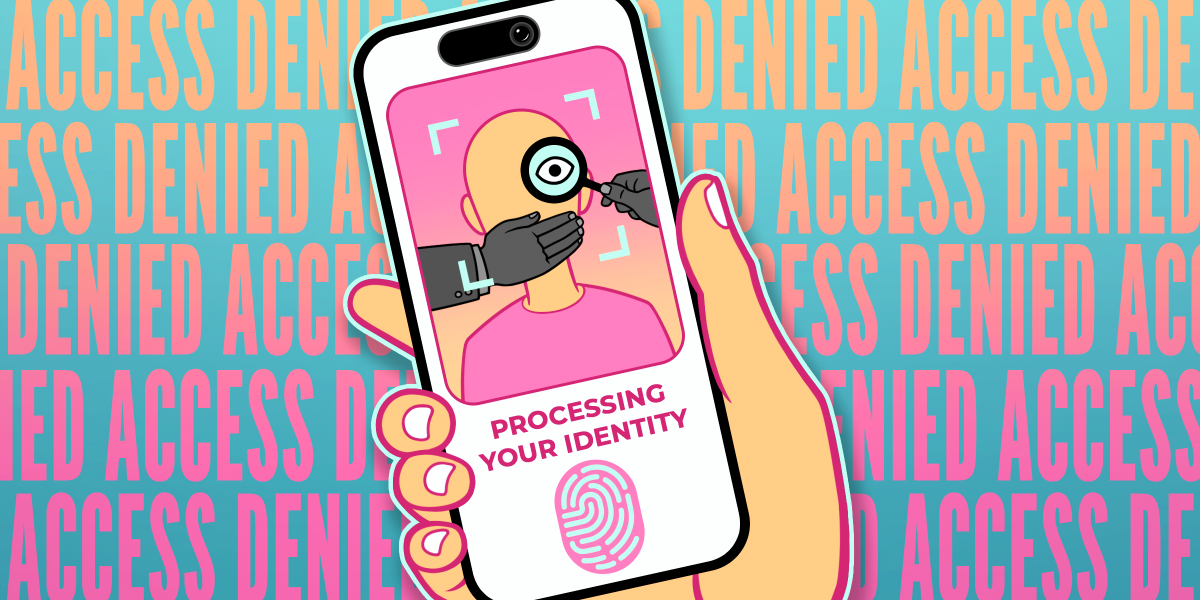
The Age-Verification Trap
Platforms are caught in a dilemma: enforce age restrictions or protect user privacy. How are they navigating this tricky terrain?

#cybersafety #ageverification #privacy #minors #ai | Parry Aftab
Internet Age-Verification Causing More Risks than It’s Worth This is not a new issue. Regulators and policymakers have raised it for the last 28 years as the way the keep kids safer online. They compare it to having to flash an ID to purchase regulated content or items (porn, cigarettes, alcohol, restricted medications, age-restricted movies, amusement rides, etc.) But verification online is very different and vastly riskier than flashing an ID in real life. For one, it’s collecting personally-identifiable information about our kids. For two, it puts that information in the too-often untrustworthy digital hands of tech companies. For three, while porn, alcohol and regulated drugs may be a clear-cut case for restricting access to adults, access to the Internet is very different. Yet, regulations begun in the UK and adopted globally have begun a weighted cybersafety approach that, in my humble opinion, prefers excluding young people from digital technology over teaching the cybersafety and digital life skills. That, in my 32 years of work in the fields of cybersafety and protection of minors online, was and remains a mistake. One of my best known quotes, repeated in Congressional and state legislative testimony and in the media is: “The greatest single risk our children face online is being denied access. We have solutions for everything else.” (my testimony before the FTC) Some proponents of age-verification have opted to denying them access unless they give up confirmable personally-identifiable info, such as selfies, feeding AI with PII, and govt or school credentials. I argue that this gives social networks, game providers and digital app operators a wealth of PII to be used for profiling, marketing and collecting far too much. With their privacy at stake, too often incompetent, malicious and greedy producers and mega-tech industry players, can’t and shouldn’t be trusted with the personal info of our most vulnerable - our kids. And AI will now be tasked with collecting everything it can find about our kids to be able to “age-verify.” (It’s ability to age-verify is less reliable with youth as their data-sets are more limited.) I served on a task force appointed by 49 state attorneys general, charged to research and weigh-in on this issue. We concluded that age-verification wasn’t feasible. While this task force was formed many years ago, with the exception of a fortified AI, not much as changed. Our children’s privacy remains, or should remain, paramount. We have robust filtering and blocking technologies. The adult industry has adopted an age-gated model. And parents can restrict access using device-specific tools. And, many well-intentioned age-verification laws were adopted too quickly for thoughtful discourse. Or by governments more prone to censorship/content restrictions. I fear in our quest to protect our kids we have thrown our babies out with the bath water. #cybersafety #ageverification #privacy #minors #AI

Age Verification and Age Gating: Resource Hub
Age verification (or age-gating) laws generally require online services to check, estimate, or verify all users’ ages—often through invasive tools like ID checks, biometric scans, or other dubious

Adults in Great Britain now spending more time on mobiles than watching TV
Daily average for watching all types of screen is now almost 7.5 hours, annual survey for IPA finds

Childhood and Education #20: Phones and Screens
We have a respite, so I thought I’d tackle various thoughts on children, phones and screens.

Social media companies are fighting the 'age verification trap' as collecting biometrics on kids violates privacy rights | Fortune
Big Social is reaching its Big Tobacco moment as it regulations intensify and social media companies look to implement age verification methods on its platforms.

36 important life and work lessons a top tech executive learned before turning 30
The days are long but the decades are short.