

Winner, 2020 Body and Embodiment Best Publication Award, given by the American Sociological AssociationHonorable Mention, 2020 Sociology of Sex and Gender Di...
You can't "masculinity" your way out of oppression
Skin in the game: hidden asymmetries in daily life
From the New York Times bestselling author of The Black…
The New York Times helped fuel an anti-trans panic in 2022. Will 2023 be any better?
Perhaps no mainstream publication did more in 2022 than the New York Times to shift the mainstream conversation around transgender equality away from obstacles to access in housing, employment, and health care and toward the idea that the most pressing issue facing the trans community is actually too much medical care. The paper’s venerable pages featured profile after profile that platformed anti-trans extremists, fearmongered about the price of transgender acceptance, and framed rising trans identification as a social contagion. A recent article that centers the concerns of parents calling for the forced outing of transgender students shows why in 2023, the Times must improve its coverage.
Who's Afraid of Gender? (A Guide to Judith Butler)
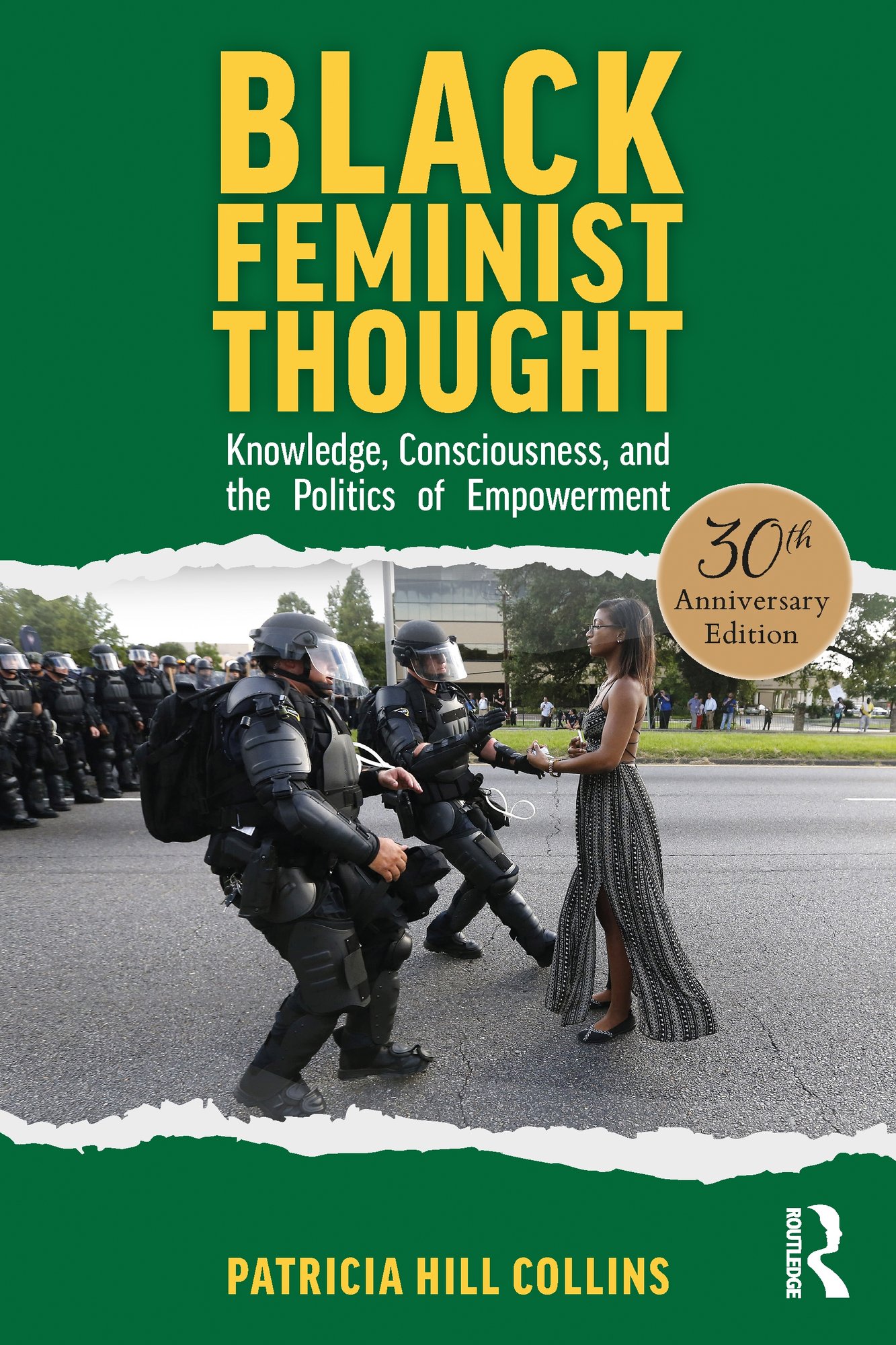
Black Feminist Thought, 30th Anniversary Edition: Knowledge, Consciousness, and the Politics of Empowerment
Knowledge, Consciousness, and the Politics of Empowerment
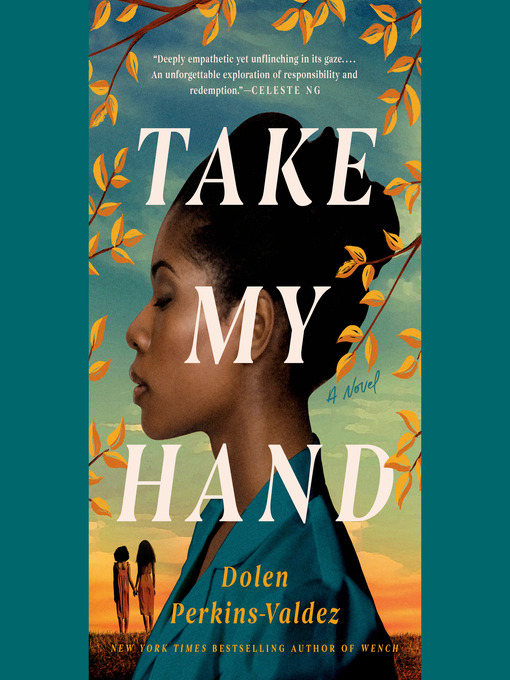
Take My Hand
Winner of the 2023 NAACP Image Award for Outstanding Literary Work - FictionDeeply empathetic yet unflinching in its gaze…an unforgettable exploration of responsibility and redemption. - Celeste NgInspired by true events that rocked the nation, a searing and compassionate new novel about a Black nurse in post-segregation Alabama who blows the whistle on a terrible injustice done to her patients, from the New York ...
Intersectional Antifeminism, or: What is a White Feminist, Anyway?
Regarding the most famous social theory no one has actually read.

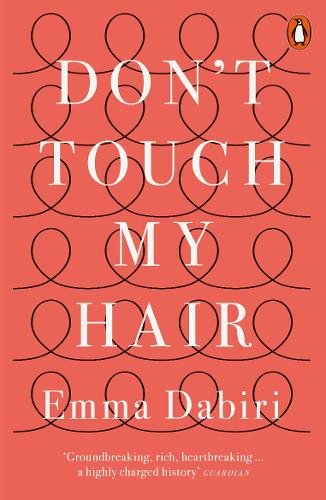
Don't Touch My Hair
Check out Don't Touch My Hair - <p><b>'Groundbreaking <i>. . .</i> a scintillating, intellectual investigation into black women and the very serious business of our hair, as it pertains to race, gender, social codes, tradition, culture, cosmology, maths, politics, philosophy and history' Bernardine Evaristo</b> <br /><br />Straightened. Stigmatized. 'Tamed'. Celebrated. Erased. Managed. Appropriated. Forever misunderstood. Black hair is never 'just hair'.<br /><br />This book is about why black hair matters and how it can be viewed as a blueprint for decolonisation. Over a series of wry, informed essays, Emma Dabiri takes us from pre-colonial Africa, through the Harlem Renaissance, Black Power and on to today's Natural Hair Movement, the Cultural Appropriation Wars and beyond. We look everything from hair capitalists like Madam C.J. Walker in the early 1900s to the rise of Shea Moisture today, from women's solidarity and friendship to 'black people time', forgotten African scholars and the dubious provenance of Kim Kardashian's braids.<br /><br />The scope of black hairstyling ranges from pop culture to cosmology, from prehistoric times to the (afro)futuristic. Uncovering sophisticated indigenous mathematical systems in black hairstyles, alongside styles that served as secret intelligence networks leading enslaved Africans to freedom, <i>Don't Touch My Hair </i>proves that far from being <i>only </i>hair<i>,</i> black hairstyling culture can be understood as an allegory for black oppression and, ultimately, liberation.</p> by Emma Dabiri on Bookshop.org UK!
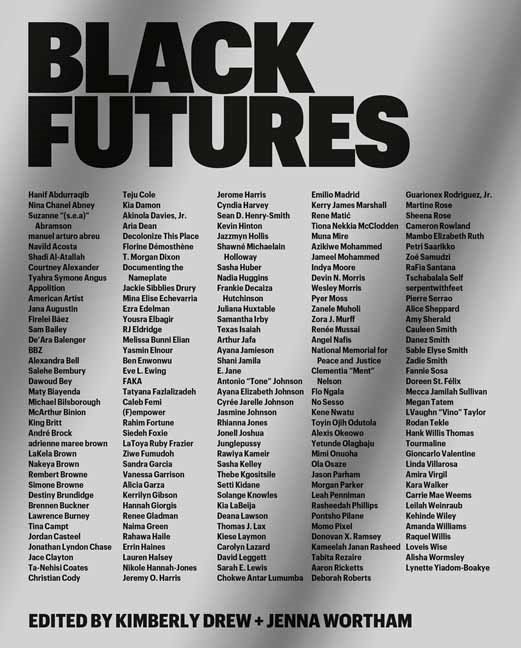
Black Futures
Check out Black Futures - <b><b>“A literary experience unlike any I’ve had in recent memory . . . a blueprint for this moment and the next, for where Black folks have been and where they might be going.”—<i>The New York Times Book Review</i> (Editors’ Choice)</b><br><br></b><i><b>What does it mean to be Black and alive right now?</b></i><br><br>Kimberly Drew and Jenna Wortham have brought together this collection of work—images, photos, essays, memes, dialogues, recipes, tweets, poetry, and more—to tell the story of the radical, imaginative, provocative, and gorgeous world that Black creators are bringing forth today. The book presents a succession of startling and beautiful pieces that generate an entrancing rhythm: Readers will go from conversations with activists and academics to memes and Instagram posts, from powerful essays to dazzling paintings and insightful infographics.<br><br> In answering the question of what it means to be Black and alive, <i>Black Futures</i> opens a prismatic vision of possibility for every reader. by Jenna Wortham and Kimberly Drew on Bookshop.org UK!
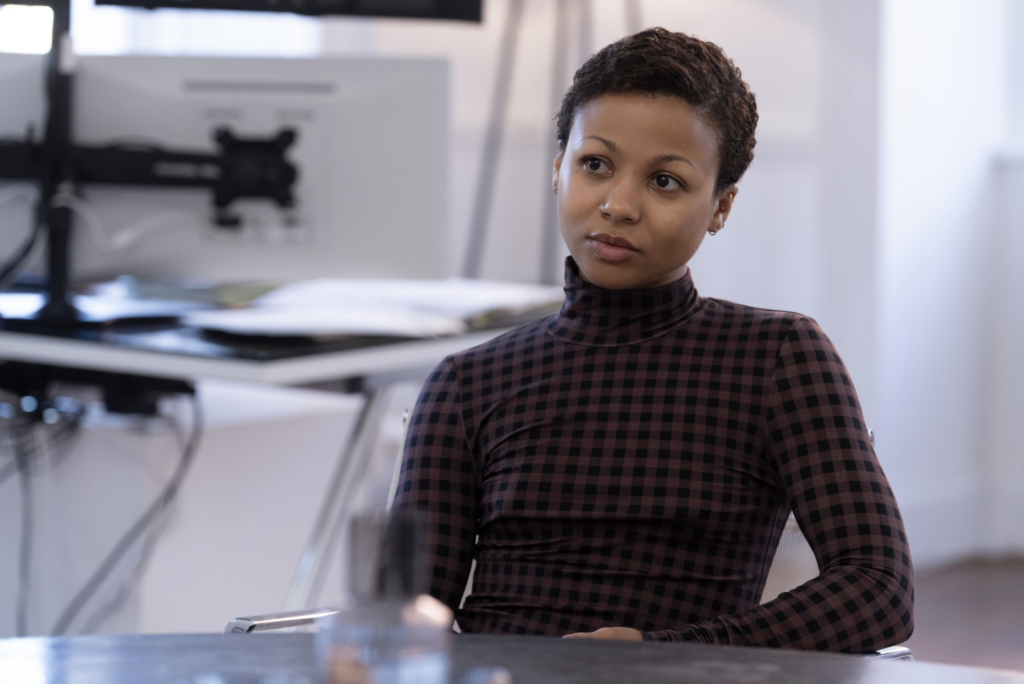
What do we want from Black women on screen?
From Teyana Taylor’s Oscar-nominated turn in One Battle After Another to Industry’s ruthless Harper Stern, Black women are taking on some of the most morally complex roles on screen. But what does “good” representation really mean and must it always be aspirational? Michaela Makusha investigates.
Sharing Knowledge Openly: Author Gender, Race/Ethnicity, and Feminist Science
Open science is an increasingly important movement in contemporary social science. Many funders have begun to mandate open practices, newer journals like Socius are open access, and preprint servers have increased readership of paywalled articles. Feminist scholars have written about the values and pitfalls of open research. In this paper, we put those ideas in conversation with each other and empirical data on open-access publishing to develop a feminist framework for thinking about feminist knowledge, data, publishing, and audience. Using a survey of 19,462 social scientists, linked with their entire Web of Science publication history from 2000 to 2023 and all papers posted to SocArXiv, we replicate past work showing that articles by women are less likely to be some types of open access. We extend these findings to scholars of color and feminist scholarship, while also demonstrating a few surprising null results for all three groups.

A Challenge on Barack Obama & The Black Papers feat Dr. David Johns | Angela Rye SoloPod
Unpacking the Racism of Digital Blackface in the Information Age
Nowhere to Go: The Loss of Third Places
About — NBUF Website
To struggle for self-determination, liberation and power for Black people in the United States.
