

We introduce a method for approximating the signed distance function (SDF) of geometry corrupted by holes, noise, or self-intersections. The method implicitly defines a completed version of the shape, rather than explicitly repairing the given input. Our starting point is a modified version of the heat method for geodesic distance, which diffuses normal vectors rather than a scalar distribution. This formulation provides robustness akin to generalized winding numbers (GWN), but provides distance function rather than just an inside/outside classification. Our formulation also offers several features not common to classic distance algorithms, such as the ability to simultaneously fit multiple level sets, a notion of distance for geometry that does not topologically bound any region, and the ability to mix and match signed and unsigned distance. The method can be applied in any dimension and to any spatial discretization, including triangle meshes, tet meshes, point clouds, polygonal meshes, voxelized surfaces, and regular grids. We evaluate the method on several challenging examples, implementing normal offsets and other morphological operations directly on imperfect curve and surface data. In many cases we also obtain an inside/outside classification dramatically more robust than the one obtained provided by GWN.
Nicole Feng
We describe a method for computing signed distance to point clouds that allows fast pointwise evaluation at arbitrary spatial resolution. As input, our method takes a point cloud with normals; as output, it provides an analytical parameterization that allows queries of signed distance to the approximate underlying surface at arbitrary points — simultaneously providing reconstruction and distance. Our key idea is to reconstruct shapes by locally fitting point clouds with tori, which have closed-form signed distance functions. Tori are fitted in a feed-forward manner, using a pre-trained network to output per-point curvature and shift parameters. Importantly, our method does not require costly global optimization or spatial discretization, and is easily parallelizable. Underlying our method is a new theory that unifies signed distance with the classic reconstruction methods of winding numbers and Poisson surface reconstruction. We use our method to compute signed distance to point clouds arising from photogrammetry, meshes, 3D Gaussians, and neural implicits. Our method allows point clouds to be used directly in applications, without explicit surface reconstruction: as examples, we take offsets of point clouds, apply morphological and Boolean operations, and directly visualize offset surfaces using sphere tracing.
Fast calculation of the distance to cubic Bezier curves on the GPU
Bézier curves are a core building block of text and 2D shapes rendering. There are several approaches to rendering them, but one especially challenging problem, both mathematically and technically, is computing the distance to a Bézier curve. For quadratic curves (one control point), this is fairly accessible, but for cubic (two control points) we're going to see why it is so hard.
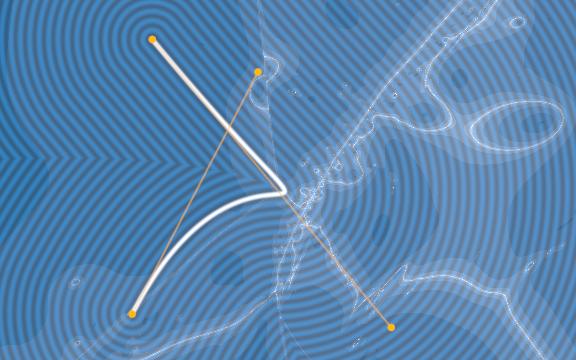
Signed Distance Fields – Render Diagrams
Problems of geometry, sampling, and scale in gridded biodiversity data, and proposed solutions
Grids, and gridded biodiversity data such as regional or country-level atlases, play a prominent role in ecology, particularly in the study of spatial patterns of species occupancy, geographic ranges, biodiversity, and their drivers and temporal dynamics. However, managing, exploring, and analyzing data in grids comes with problems. Here, we review the problems with gridded data, and the existing solutions. We focus on grid-specific problems of sampling (e.g. varying sampling method and effort in space and time, imperfect detection), geometry (e.g. varying grid cell area and shape, positional errors), and scale (e.g. spatial grain and temporal extent). A first group of solutions can be implemented prior to gridding of the data. This includes the selection of an appropriate geographic projection, grid grain, and grid cell shape. The second type of solution involves the manipulation and processing of the gridded data. Examples include aggregating cells to coarser grains or removing cells that fail to meet certain quality criteria. The third type of solution is implemented during the analysis of the data. The most important is the quantification of the problem for use in statistical models or machine learning algorithms as a covariate. We hope to provide guidance particularly to early-career ecologists who may otherwise struggle to make sense of the various solutions scattered through the literature.
Efficient Task-Specific Data Valuation for Nearest Neighbor Algorithms
Discontinuity-Aware 2D Neural Fields
Neural image representations offer the possibility of high fidelity, compact storage, and resolution-independent accuracy, providing an attractive alternative to traditional pixel- and grid-based representations. However, coordinate neural networks fail to capture discontinuities present in the image and tend to blur across them; we aim to address this challenge. In many cases, such as rendered images, vector graphics, diffusion curves, or solutions to partial differential equations, the locations of the discontinuities are known. We take those locations as input, represented as linear, quadratic, or cubic \bez curves, and construct a feature field that is discontinuous across these locations and smooth everywhere else. Finally, we use a shallow multi-layer perceptron to decode the features into the signal value. To construct the feature field, we develop a new data structure based on a curved triangular mesh, with features stored on the vertices and on a subset of the edges that are marked as discontinuous. We show that our method can be used to compress a 100,000^2-pixel rendered image into a 25MB file; can be used as a new diffusion-curve solver by combining with Monte-Carlo-based methods or directly supervised by the diffusion-curve energy; or can be used for compressing 2D physics simulation data.
Precision cosmology with voids in the final BOSS data
We report novel cosmological constraints obtained from cosmic voids in the final BOSS DR12 dataset. They arise from the joint analysis of geometric and dynamic distortions of average void shapes...

Stochastic Barnes-Hut Approximation for Fast Summation on the GPU
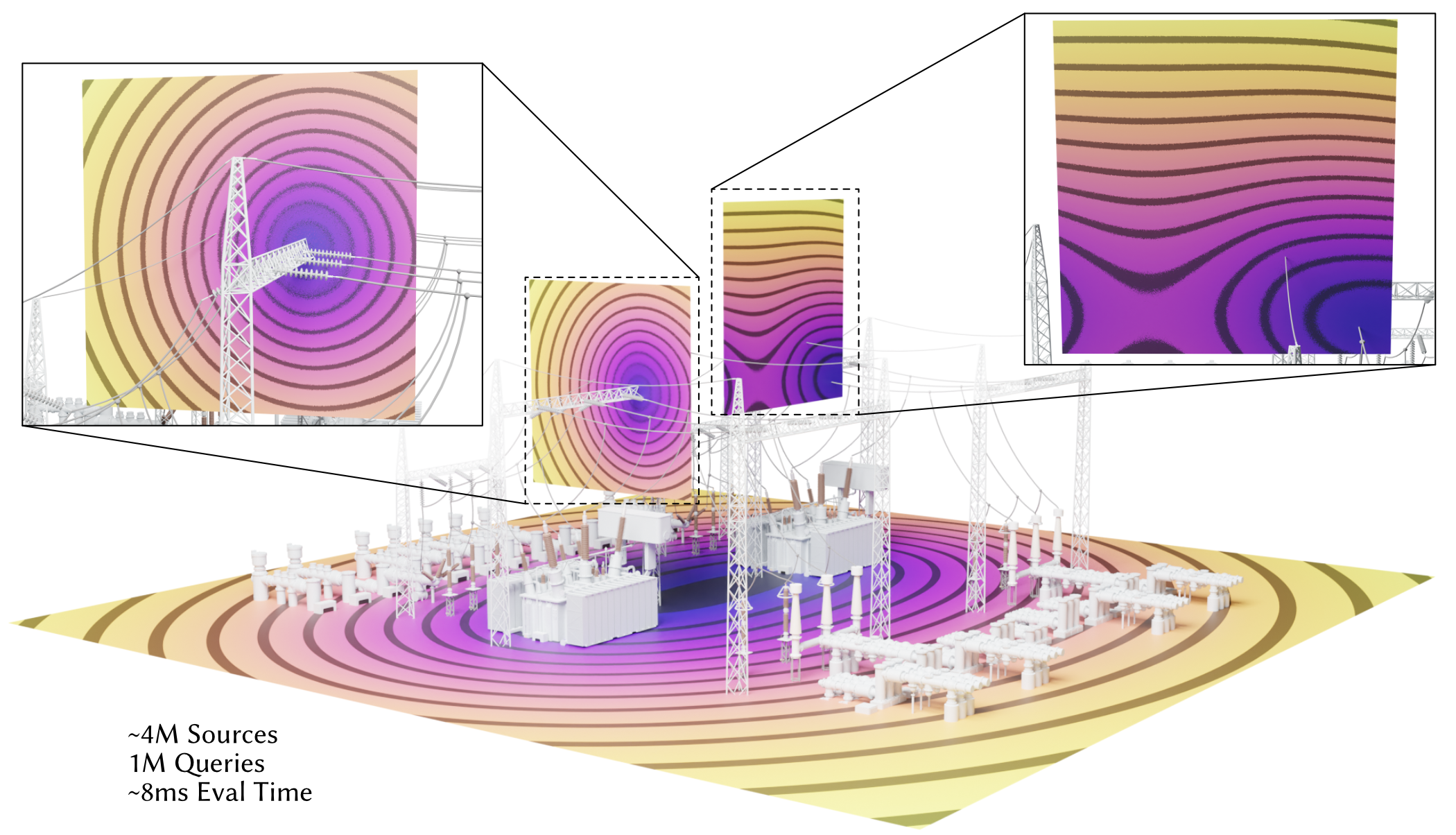
We present a novel stochastic version of the Barnes-Hut approximation. Regarding the level-of-detail (LOD) family of approximations as control variates, we construct an unbiased estimator of the kernel sum being approximated. Through several examples in graphics applications such as winding number computation and smooth distance evaluation, we demonstrate that our method is well-suited for GPU computation, capable of outperforming a GPU-optimized implementation of the deterministic Barnes-Hut approximation by achieving equal median error in up to 9.4x less time.
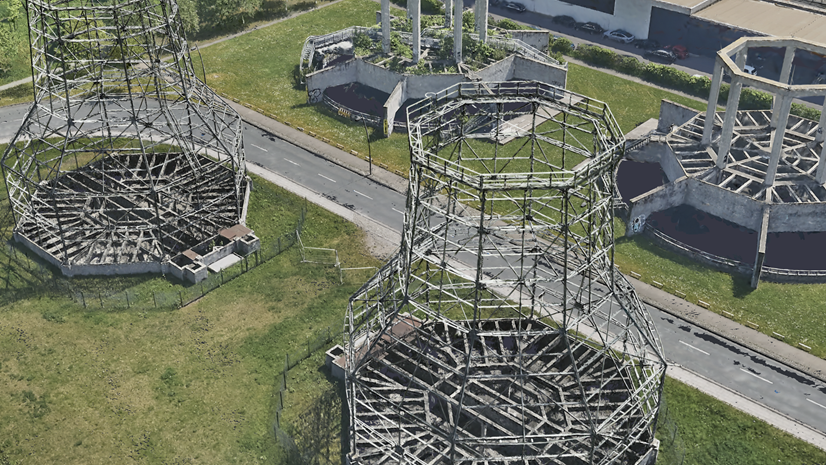
Meshes vs. Gaussian Splats: Which reality representation should you choose?
Learn the differences between meshes and Gaussian splats, how each represents reality, where they excel, and why the most effective reality mapping workflows increasingly leverage both.
SAVA: Scalable Learning-Agnostic Data Valuation
Selecting data for training machine learning models is crucial since large, web-scraped, real datasets contain noisy artifacts that affect the quality and relevance of individual data points. These noisy artifacts will impact model performance. We formulate this problem as a data valuation task, assigning a value to data points in the training set according to how similar or dissimilar they are to a clean and curated validation set. Recently, *LAVA* (Just et al., 2023) demonstrated the use of optimal transport (OT) between a large noisy training dataset and a clean validation set, to value training data efficiently, without the dependency on model performance. However, the *LAVA* algorithm requires the entire dataset as an input, this limits its application to larger datasets. Inspired by the scalability of stochastic (gradient) approaches which carry out computations on *batches* of data points instead of the entire dataset, we analogously propose *SAVA*, a scalable variant of *LAVA* with its computation on batches of data points. Intuitively, *SAVA* follows the same scheme as *LAVA* which leverages the hierarchically defined OT for data valuation. However, while *LAVA* processes the whole dataset, *SAVA* divides the dataset into batches of data points, and carries out the OT problem computation on those batches. Moreover, our theoretical derivations on the trade-off of using entropic regularization for OT problems include refinements of prior work. We perform extensive experiments, to demonstrate that *SAVA* can scale to large datasets with millions of data points and does not trade off data valuation performance. Our Github repository is available at \url{https://github.com/skezle/sava}.
LAVA: Data Valuation without Pre-Specified Learning Algorithms
Traditionally, data valuation is posed as a problem of equitably splitting the validation performance of a learning algorithm among the training data. As a result, the calculated data values depend on many design choices of the underlying learning algorithm. However, this dependence is undesirable for many use cases of data valuation, such as setting priorities over different data sources in a data acquisition process and informing pricing mechanisms in a data marketplace. In these scenarios, data needs to be valued before the actual analysis and the choice of the learning algorithm is still undetermined then. Another side-effect of the dependence is that to assess the value of individual points, one needs to re-run the learning algorithm with and without a point, which incurs a large computation burden. This work leapfrogs over the current limits of data valuation methods by introducing a new framework that can value training data in a way that is oblivious to the downstream learning algorithm. Our main results are as follows. $\textbf{(1)}$ We develop a proxy for the validation performance associated with a training set based on a non-conventional $\textit{class-wise}$ $\textit{Wasserstein distance}$ between the training and the validation set. We show that the distance characterizes the upper bound of the validation performance for any given model under certain Lipschitz conditions. $\textbf{(2)}$ We develop a novel method to value individual data based on the sensitivity analysis of the $\textit{class-wise}$ Wasserstein distance. Importantly, these values can be directly obtained $\textit{for free}$ from the output of off-the-shelf optimization solvers once the Wasserstein distance is computed. $\textbf{(3) }$We evaluate our new data valuation framework over various use cases related to detecting low-quality data and show that, surprisingly, the learning-agnostic feature of our framework enables a $\textit{significant improvement}$ over the state-of-the-art performance while being $\textit{orders of magnitude faster.}$
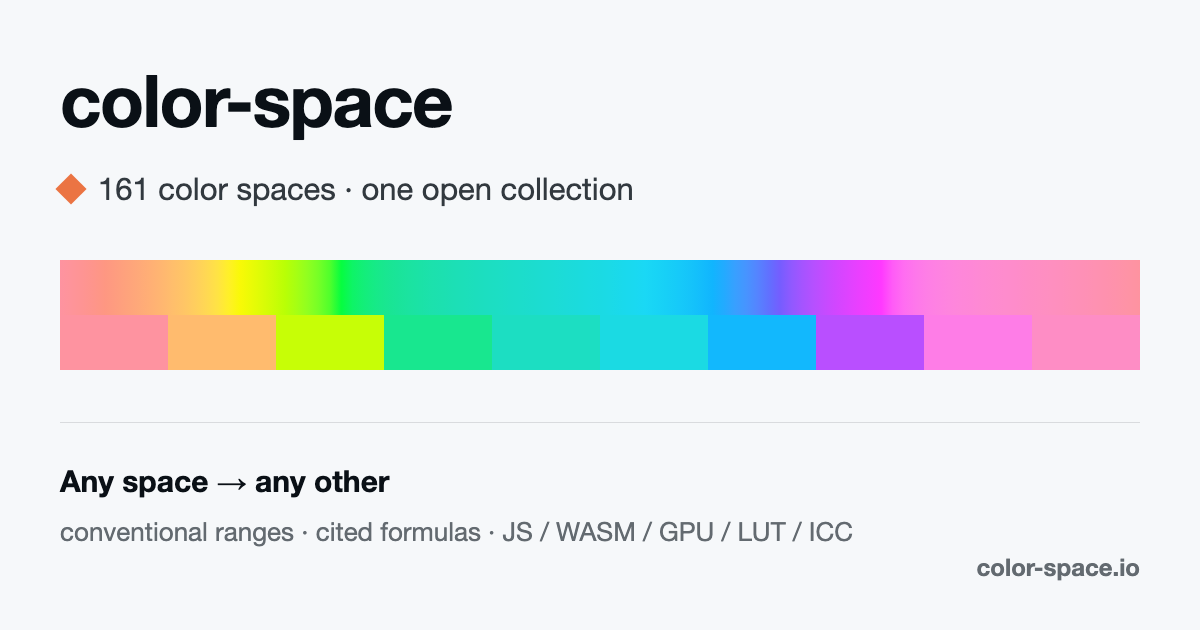
color-space — every color space, one tiny API, verified
An open collection of color spaces. Convert any space to any other with conventional ranges and independently anchored formulas.
Evaluating and Sampling Glinty NDFs in Constant Time
Geometric features between the micro and macro scales produce an expressive family of visual effects grouped under the term 'glints'. Efficiently rendering these effects amounts to finding the highlights caused by the geometry under each pixel. To allow for fast rendering, we represent our faceted geometry as a 4D point process on an implicit multiscale grid, designed to efficiently find the facets most likely to cause a highlight. The facets' normals are generated to match a given micro-facet normal distribution such as Trowbridge-Reitz (GGX) or Beckmann, to which our model converges under increasing surface area. Our method is simple to implement, memory-and-precomputation-free, allows for importance sampling and covers a wide range of different appearances such as anisotropic as well as individually colored particles. We provide a base implementation as a standalone fragment shader.
schildep/verified-3d-mesh-intersection
Formally verified 3D mesh intersection - trust 93 lines of spec, not 1000+ lines of AI-written code
Hash Functions for GPU Rendering – Nathan Reed’s coding blog
Pixels and polygons and shaders, oh my!