The Peraltas — Fibel, Pearl Randolph
East bay heritage : a potpourri of living history | WorldCat.org
The Water’s Edge: Empire, Race, and the Global History of Oakland, California, 1848-1980
Author(s): Klein, Andrew Nelson Carver | Advisor(s): Kelley, Robin D.G. | Abstract: This dissertation explores historical intersections between capitalism, race-making, environmental change, and U.S. foreign relations from the vantage of Oakland’s waterfront. It tracks the evolution of this geostrategic coastline since it emerged as a coal-powered nexus of railroads, steamships, and military installations during American colonization. Revising the story of Oakland’s development from a global perspective, my project documents how local boosters, businessmen, and bureaucrats forged intimate ties with far-flung territories administered by U.S. troops and landowners. Combining social and environmental history with methods from Black studies, I map the transformation of Oakland’s fertile estuary into an infilled hub of postindustrial commerce, a vital node of military logistics, and a focal point for racialized labor migration. Simultaneously, this dissertation reveals how, over the long twentieth century, Black, Indigenous, Chinese, and other working-class Oaklanders found footholds on the harbor, often repurposing its imperial routes for dramatically different ends. Drawing on archives and oral histories in Cuba, Hawai‘i, and across the continental United States, I trace Oakland’s tradition of radical internationalism, most visible in the antiwar and Black Power movements of the sixties, to multi-generational struggles over the governance of coastal land. I argue that Oakland’s waterfront both bridged the continental and overseas expansion of an ascendant world power and came to serve as a proving ground for alternative forms of globalization. “The Water’s Edge” therefore offers a critical reappraisal of the generally place-bound history of North American urbanism and far-reaching lessons for building just cities in a present defined by global environmental crises.

REVIEW: Aztecs, by Inga Clendinnen
Aztecs: An Interpretation, Inga Clendinnen (Cambridge University Press, 1991).

Origins of the Family
The Consanguine Family (The First Stage of the Family) The Punaluan Family The Pairing Family The Monogamous Family
Refusing Settler Domesticity — Oakland Public Library
Refusing Settler Domesticity — Keliiaa, Caitlin, — In the early twentieth century, the Bay Area Outing Program coercively recruited over a thousand Native girls and women from boarding schools to labor as live-in domestic workers across the San Francisco Bay Area. Outing removed Native people from their communities and transferred them to white homes, farms, and businesses to work as menial laborers. In exchange for room, board, and meager pay, Native women and girls as young as twelve cooked, cleaned, and lived in the homes of their employers. Despite oppressive living and working conditions, Native women strategically resisted the worst aspects of outing, including Indian child removal, sexual surveillance, criminalization, and exploitation. Throughout, they forged social connections and navigated relationships to refuse domestication and assert their agency. In this groundbreaking work, Historian Caitlin Keliiaa examines Native women's lived experiences of federal policy and connects outing to the region's longer history of coerced Native labor. The book, as indictment, expands the existing work on Indian boarding schools, urban Indians, and the history of California and the West.
The Black Jacobins: Toussaint L'Ouverture and the San D…
A powerful and impassioned historical account of the la…


Introduction
A multigrade textbook of Spanish through Caribbean music: cumbia, reggaeton, salsa.

The real mystery behind Moana: after 1,700 years, why did Polynesians suddenly sail east?
New evidence suggests a massive centuries-long drought may be part of the answer.

The Second Gold Rush — Oakland Public Library
The Second Gold Rush — Johnson, Marilynn S. — More than any event in the twentieth century World War II marked the coming of age of America's West Coast cities. Almost overnight, new war industries prompted mass urban migration and development, producing social, cultural, and political changes that would persist well beyond 1945. For the San Francisco Bay Area, Marilynn S. Johnson argues, World War II was to the twentieth century what the gold rush was to the nineteenth.<br />Focusing on Oakland, Richmond, and other shipyard boomtowns in the East Bay, The Second Gold Rush chronicles the defense buildup, labor migration from the South and Midwest, the development of federal migrant communities, and the social and racial conflicts that pitted newcomers against longtime Bay Area residents. Johnson follows this story into the postwar era, showing how struggles between conservative and liberal forces over employment, housing, and civil rights shaped the urban political landscape into the 1950s and beyond. Tracing the cultural legacy of war migration, she also explains how Southern religion and music became an integral part of Bay Area life.<br />Urban historians have paid surprisingly little attention to World War II and the social and cultural transformation of wartime cities. In The Second Gold Rush, Johnson places the human drama of the war at center stage, recreating the texture of daily life in the workplace, the home, and the community.<br/>"At last, a close-in account of California during its moment of rebirth, World War II. . . . A book that helps us to understand California's past and also its present."--James N. Gregory, author of <i>American Exodus</i><br/>More than any event in the twentieth century, World War II marked the coming of age of America's West Coast cities. Almost overnight, new war industries prompted the mass urban migration and development that would trigger lasting social, cultural, and political changes. For the San Francisco Bay Area, argues Marilynn Johnson, the changes brought by World War II were as dramatic as those brought by the gold rush a century earlier.<br /><br />Focusing on Oakland, Richmond, and other East Bay shipyard boomtowns, Johnson chronicles the defense buildup, labor migration from the South and Midwest, housing issues, and social and racial conflicts that pitted newcomers against longtime Bay Area residents. She follows this story into the postwar era, when struggles over employment, housing, and civil rights shaped the urban political landscape for the 1950s and beyond. She also traces the cultural legacy of war migration and shows how Southern religion and music became an integral part of Bay Area culture.<br /><br />Johnson's sources are wide-ranging and include shipyard records, labor histories, police reports, and interviews. Her findings place the war's human drama at center stage and effectively recreate the texture of daily life in workplace, home, and community. Enriched by the photographs of Dorothea Lange and others, <i>The Second Gold Rush</i> makes an important contribution to twentieth-century urban studies as well as to California history.
America, América: a new history of the New World
"The story of how the United States' identity was formed is almost invariably told by looking east to Europe. But as Greg Grandin vividly demonstrates, the nation's unique sense of itself was in fact forged facing south-no less than Latin America's was indelibly stamped by the looming colossus to the north. In this stunningly original reinterpretation of the New World Grandin reveals how North and South emerged from a constant, turbulent engagement with each other. America, América traverses half a millennium, from the Spanish Conquest-the greatest mortality event in human history-through the eighteenth-century wars for independence, the Monroe Doctrine, the coups and revolutions of the twentieth century, and beyond. Grandin shows, among other things, how royalist Spanish America, by sending troops and supplies, helped save the republican American Revolution; how in response to U.S. interventions, Latin Americans remade the rules, leading directly to the founding of the United Nations; and how the Good Neighbor Policy allowed FDR to assume the moral authority to lead the fight against world fascism. Grandin's book sheds new light on well-known historical figures like Bartolomé de las Casas, Simón Bolívar, and Woodrow Wilson, as well as lesser-known actors such as the Venezuelan Francisco de Miranda, who almost lost his head in the French Revolution and conspired with Alexander Hamilton to free America from Spain; the Colombian Jorge Gaitán, whose unsolved murder inaugurated the rise of Cold War political terror, death squads, and disappearances; and the radical journalist Ernest Gruening, who in championing non-interventionism in Latin America, helped broker the most spectacularly successful policy reversal in United State history. This is a monumental work of scholarship that will fundamentally change the way we think of slavery and racism, the rise of universal humanism, and the role of social democracy in staving off extremism. At once comprehensive and accessible, America, América shows that centuries of bloodshed and diplomacy not only helped shape the political identities of the United States and Latin America but also the laws, institutions, and ideals that govern the modern world. A culmination of a decades-long engagement with hemispheric history, drawing on a vast array of sources, and told with authority and flair, this is a genuinely new history of the New World"-- Provided by publisher

The Chesapeake Slave Trade:Regional Patterns, African Origins, and Some Implications | History Cooperative
THE movement of peoples from the Old World to the New and the resulting transfers or transformations of homeland cultures in new physical and social environments has been a central theme of early American history. Overwhelmingly, historians have written on the transfers of peoples from sixteenth- through eighteenth-century Europe and sub-Saharan Africa to various American destinations in isolation from one another. When these two contemporary migration flows are considered together, sheer numbers demonstrate that, up to 1776, the majority of men, women, and children transported from the Old World to British North America were, to varying degrees, unfree. And increasingly throughout most of the eighteenth century, those migrants came from Africa and were permanently enslaved.
Chronology and ecology of early islanders in the Philippines: The Mindoro Archaeology Project
The investigation and excavation of caves and rockshelters located at the southern end of Occidental Mindoro produced significant artefacts, data, and information related to the initial arrival and colonization of the Philippine archipelago by anatomically modern humans. The sites provided several indications for the increasing adaptation to maritime environments and delivered evidence for their behavioural and technological complexity. Mindoro lies along a direct route to reach the main islands of the Philippines coming from the Asian mainland via Borneo and Palawan. Since 2010, surveys conducted in the karstic regions of Ilin Island and Sta. Teresa, Magsaysay have mapped and explored over 40 caves and rockshelters. Particularly the sites of Bubog 1, Bubog 2, Cansubong 2 Cave, and Bilat Cave, have delivered cultural and biological materials that chronicle human habitation and adaptation to maritime and coastal environments over a period of 35–40,000 years. Early islanders in the region intensively foraged for molluscs and other marine invertebrates along the coast, employed different techniques to catch a variety of reef and pelagic fish as well as terrestrial animals, and were embedded in maritime networks with access to transfer routes, through which technology, information, and ideologies were disseminated over long distances and across Island Southeast Asia (ISEA) and possibly also reaching the Southeast Asian mainland. The results of the archaeological research in Mindoro contribute to our understanding of the processes of human island adaptation, complement ongoing research on the peopling of Southeast Asia, and enhance current knowledge of prehistoric subsistence strategies across the region.
Guantánamo’s Other History - Boston Review
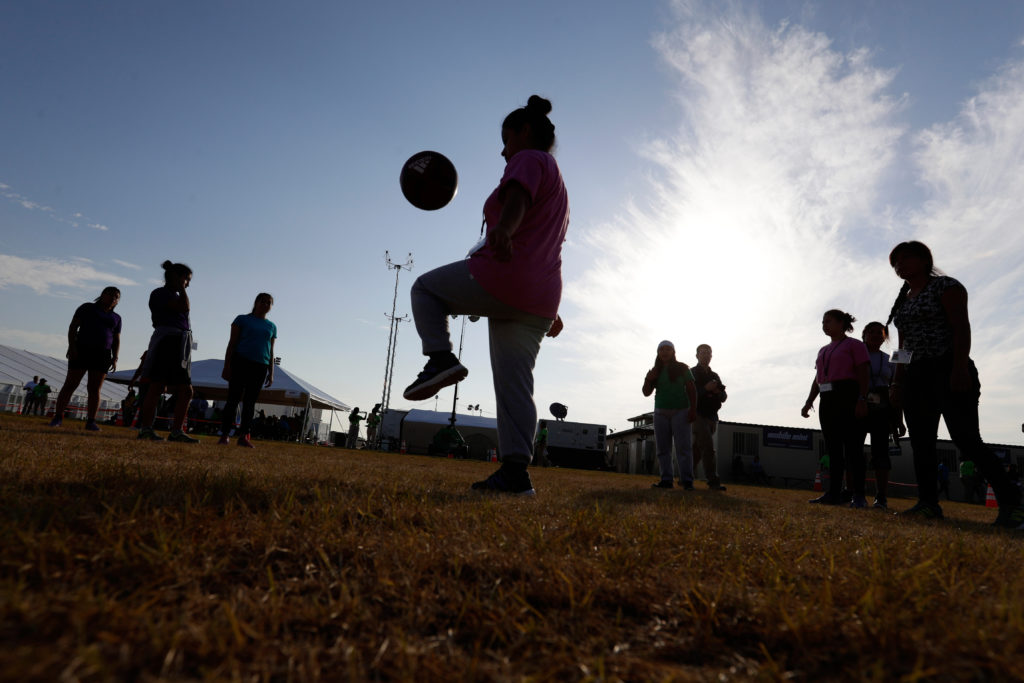
Four months after the first Haitian vessel sailed into Guantánamo Bay, another arrived at Pompano Beach. More followed, showing up in the Keys, Port Everglades, and other sites up and down the South Florida coast. The INS was no more sympathetic to the claims of these Haitians than they were to those at Guantánamo, and they attempted to send virtually all of them back to Haiti after brief and cursory interviews.

East of these golden shores; architecture of the earlier days in Contra Costa and Alameda Counties | WorldCat.org
A History of Menus is a Menu of History
What do America’s earliest restaurant menus teach us about America?