The Second Gold Rush — Johnson, Marilynn S. — More than any event in the twentieth century, World War II marked the coming of age of America's West Coast cities. Almost overnight, new war industries prompted the mass urban migration and development that would trigger lasting social, cultural, and political changes. For the San Francisco Bay Area, argues Marilynn Johnson, the changes brought by World War II were as dramatic as those brought by the gold rush a century earlier.<br /> <br /> <br /> <br /> Focusing on Oakland, Richmond, and other East Bay shipyard boomtowns, Johnson chronicles the defense buildup, labor migration from the South and Midwest, housing issues, and social and racial conflicts that pitted newcomers against longtime Bay Area residents. She follows this story into the postwar era, when struggles over employment, housing, and civil rights shaped the urban political landscape for the 1950s and beyond. She also traces the cultural legacy of war migration and shows how Southern religion and music became an integral part of Bay Area culture.<br /> <br /> <br /> <br /> Johnson's sources are wide-ranging and include shipyard records, labor histories, police reports, and interviews. Her findings place the war's human drama at center stage and effectively recreate the texture of daily life in workplace, home, and community. Enriched by the photographs of Dorothea Lange and others, The Second Gold Rush makes an important contribution to twentieth-century urban studies as well as to California history.
The Water’s Edge: Empire, Race, and the Global History of Oakland, California, 1848-1980
Author(s): Klein, Andrew Nelson Carver | Advisor(s): Kelley, Robin D.G. | Abstract: This dissertation explores historical intersections between capitalism, race-making, environmental change, and U.S. foreign relations from the vantage of Oakland’s waterfront. It tracks the evolution of this geostrategic coastline since it emerged as a coal-powered nexus of railroads, steamships, and military installations during American colonization. Revising the story of Oakland’s development from a global perspective, my project documents how local boosters, businessmen, and bureaucrats forged intimate ties with far-flung territories administered by U.S. troops and landowners. Combining social and environmental history with methods from Black studies, I map the transformation of Oakland’s fertile estuary into an infilled hub of postindustrial commerce, a vital node of military logistics, and a focal point for racialized labor migration. Simultaneously, this dissertation reveals how, over the long twentieth century, Black, Indigenous, Chinese, and other working-class Oaklanders found footholds on the harbor, often repurposing its imperial routes for dramatically different ends. Drawing on archives and oral histories in Cuba, Hawai‘i, and across the continental United States, I trace Oakland’s tradition of radical internationalism, most visible in the antiwar and Black Power movements of the sixties, to multi-generational struggles over the governance of coastal land. I argue that Oakland’s waterfront both bridged the continental and overseas expansion of an ascendant world power and came to serve as a proving ground for alternative forms of globalization. “The Water’s Edge” therefore offers a critical reappraisal of the generally place-bound history of North American urbanism and far-reaching lessons for building just cities in a present defined by global environmental crises.

Crossroads — Oakland Public Library
Crossroads — A collage of drawings, photographs, historical footage, interviews and location shooting, this documentary reconstructs the transformation of West Oakland from a pasture land to a port of entry for African Americans from the South. While job opportunities caused mass migration of ethnic groups to the area around the Second World War, the film also shows the population decline in West Oakland after the building of the Cypress Freeway and, later, BART. Southern Pacific Railroad's contribution to the development of the area is highlighted.
The great vibes divergence
Why does San Francisco feel so weird during this tech boom while Oakland is more or less still Oakland?
Hometown Chinatown: A History of Oakland's Chinese Community, 1852-1995
Focusing on the local history of the Chinese in Oakland, California, this study examines common stereotypes in the early Chinese community and Chinatown organizations.

Bay Area Hip-Hop | That’s My Word | KQED
A Year-Long Exploration of Bay Area Hip-Hop History


How Bay Area Hip-Hop Found Its Sound in the 1980s
Casio keyboards, homemade tapes and the boundless creativity of Bay Area youth flourished in the 1980s hip-hop scene.

The Color of Power — Oakland Public Library
The Color of Power — Douzet, Frédérick — <p></p><p> <i>The Color of Power </i>is a fascinating examination of the changing politics of race in Oakland, California. Oakland has been at the forefront of California’s multicultural changes for decades. Since the 1960s, the city has been a shining example of a fruitful liberal black-and-white political partnership and the successful incorporation of black politicians into the political landscape. But over the past forty years, the balance of power has changed as a consequence of dramatic demographic trends and economic circumstances. The city’s formerly dominant biracial political machine has been challenged by the demands of new multiracial interests.</p><p></p><p>The city, once governed by a succession of black mayors and majority black city councils, must now accommodate rapidly growing Asian and Latino communities. While the black-led coalition still relies on white progressive support, this alliance has weakened due to a shift in the progressives’ agenda and the voting habits of the black community, the rise of a Hispanic-Asian coalition, and a strong demographic decline of the African American population. With similar demographic changes taking place across the nation, Oakland’s experience provides insight in to the multiracial future of other American cities.</p><p></p><p> <i>The Color of Power</i> investigates Oakland’s contemporary racial politics with a detailed study of conflicts over issues like education, elections and political representation, and crime. Trained as a journalist, a political scientist, and a geographer, the author provides a unique perspective supported by numerous maps and extensive interviews.</p><p>Winner of awards from the French Society of Geography and the French National Academy of Sciences</p><br/>Trained as a journalist, a political scientist, and a geographer, the author provides a unique perspective supported by numerous maps and extensive interviews.<p>Winner of awards from the French Society of Geography and the French National Academy of Sciences</p>
Oakland is a Vibe: Blackness, Cultural Framings and Emancipations of The Town
Author(s): Heitz, Kaily | Advisor(s): Scott Lewis, Jovan | Abstract: In this dissertation, I examine the ways that developers and Black community organizers in Oakland, California, utilize a situated concept of Black culture to produce value in the city. This value is constituted by a politics of Blackness rooted both in racial capitalism, shifting structures of community care, and their affective articulations. The affective qualities of Black Oakland – which includes a sense of relationality, creativity, and resistance – are understood colloquially as “vibe.” While representations of vibe are mobilized by both developers and community organizations to respectively advance and resist gentrification, I argue that the vibe of the city is constituted by a Black sense of place that cannot be reproduced through capitalist representations of cultural value alone. This study of vibe presents an opportunity to take seriously the invitation of Black geographic scholarship to work at the intersection of poetics and historical materialism by exploring relationality as a site that coproduces racialized space and experience. Where developers leverage notions of vibe to generate value through private investment, Black organizers utilize such representations in order to reclaim the physical space necessary to the very production of vibe. The latter strategy is, I suggest, an enactment of what I call “emancipatory framing,” in which hegemonic framing is mobilized in order to create alternative spaces for liberatory praxes. This dissertation explores vibe and emancipatory framing at three different scales: the Black body, the independent business, and the grassroots collective. I conclude that vibe as a material and metaphorical asset of Blackness, is at the root of contestations over place, and sometimes contradictory imaginaries of freedom.
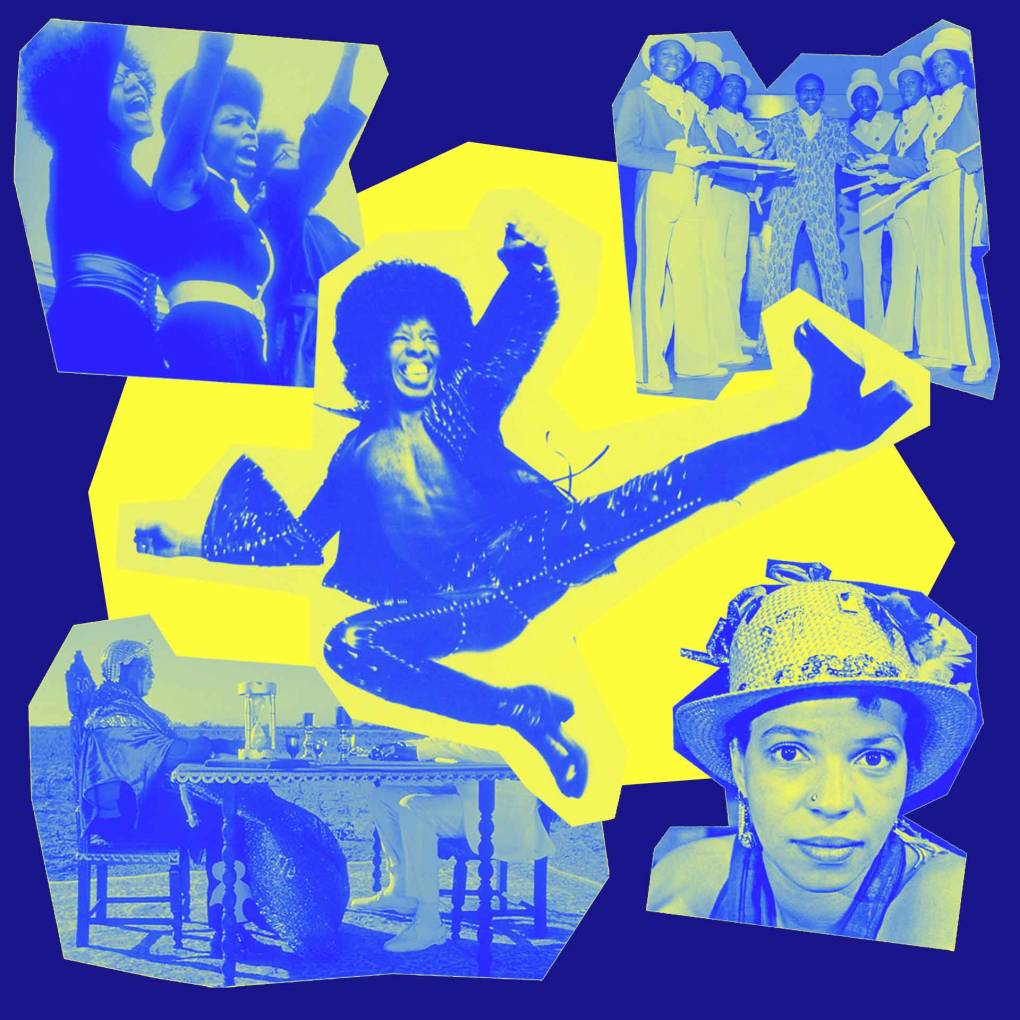
The Bay Area Was Hip-Hop Before There Was Hip-Hop | KQED
In the ’60s and ’70s, the Black Panthers, boogaloo dancers and Sly Stone anticipated the arrival of hip-hop.
A City for Children — Oakland Public Library
A City for Children — Gutman, Marta, — American cities are constantly being built and rebuilt, resulting in ever-changing skylines and neighborhoods. While the dynamic urban landscapes of New York, Boston, and Chicago have been widely studied, there is much to be gleaned from West Coast cities, especially in California, where the migration boom at the end of the nineteenth century permanently changed the urban fabric of these newly diverse, plural metropolises. In A City for Children Marta Gutman focuses on the use and reuse of everyday buildings in Oakland, California, to make the city a better place for children. She introduces us to the women who were determined to mitigate the burdens placed on working-class families by an indifferent industrial capitalist economy. Often without the financial means to build from scratch, women did not tend to conceive of urban land as a blank slate to be wiped clean for development. Gutman shows how, over and over, women instead turned private houses and even a saloon in Oakland into orphanages, kindergartens, settlement houses, and day care centers, and in the process built the charitable landscape--a network of places that was critical for the betterment of children, families, and public life. The industrial landscape of Oakland, riddled with the effects of social inequality and racial prejudice, is not a neutral backdrop in Gutman's story but an active player. Spanning one hundred years of history, A City for Children provides a compelling model for building urban institutions, and it demonstrates that children, women, charity, and reform, along with incremental construction, renovations, alterations, additions, and repurposed structures, are central to the understanding of modern cities.
Refusing Settler Domesticity — Oakland Public Library
Refusing Settler Domesticity — Keliiaa, Caitlin, — In the early twentieth century, the Bay Area Outing Program coercively recruited over a thousand Native girls and women from boarding schools to labor as live-in domestic workers across the San Francisco Bay Area. Outing removed Native people from their communities and transferred them to white homes, farms, and businesses to work as menial laborers. In exchange for room, board, and meager pay, Native women and girls as young as twelve cooked, cleaned, and lived in the homes of their employers. Despite oppressive living and working conditions, Native women strategically resisted the worst aspects of outing, including Indian child removal, sexual surveillance, criminalization, and exploitation. Throughout, they forged social connections and navigated relationships to refuse domestication and assert their agency. In this groundbreaking work, Historian Caitlin Keliiaa examines Native women's lived experiences of federal policy and connects outing to the region's longer history of coerced Native labor. The book, as indictment, expands the existing work on Indian boarding schools, urban Indians, and the history of California and the West.
American Babylon
A gripping portrait of black power politics and the struggle for civil rights in postwar Oakland

Video: Long train running :
Examines taverns and clubs in Oakland, California where a distincitive style of blues music unique to Oakland was developed and performed. Includes interviews with blues musicians in the Oakland area and segments from the San Francisco Blues Festival.
Who Rules Oakland? : Indybay
The Oakland Chamber of Commerce and other business lobbies in the East Bay have recently pressured government officials to crack down on Occupy Oakland. Furthermore, they have popularized a narrative portraying Occupy as "harmful to local business." We critically examine ruling class networks of shared ownership, governance, and political advocacy impacting communities in Oakland by revealing links between the directors and executives of major corporations that are members in the Oakland Chamber of Commerce. In subsequent parts to this series we will provide more detailed information about the directors and executives of these companies, and provide an analysis of their social cohesion, profit-driven collusion, and political influence. More broadly, we will explore networks and institutions of economic and political power in the Bay Area.