Cactus Blood — Corpi, Lucha, 1945- — She's back: Gloria Damasco, the Chicana detective tempered during the civil rights movement. And she's involved in solving another mystery complete with gruesome murders. Is it a serial killer that is leaving the corpses strewn with artifacts from Native American rituals? Does it have something to do with the farm workers' union which the victims had worked for in the seventies? Gloria Damasco and Justin Escobar are the detectives who begin to look into the disappearance and death of the three former activists from the seventies. The trail the sleuths follow leads from the grape vineyards of Delano in 1973 to the old Native American ghost dancing site in the Valley of the Moon. The portentous landscape becomes a fitting site for the surprise denouement foreshadowed by Gloria's mysterious visions.
Blood Meridian, or, the Evening Redness in the West
Blood Meridian, chronicles the brutal world of the Texa…

Caliban and the Witch
Caliban and the Witch: Women, the Body and Primitive Accumulation is a 2004 book by Italian-American intellectual Silvia Federici. Responding to both feminist and Marxist traditions, the book offers a critical alternative to Karl Marx's theory of primitive accumulation.

Here's Every Single Death Linked to Immigration Enforcement Since Trump's Raids Began in 2025 ~ L.A. TACO
We hope this register offers a moment to remember the names and stories of the victims. For each one, we’ve included the backstory we were able to gather alongside the official account from government agencies.

Mystery101 Sleuthers GIF - Mystery101 Sleuthers Jill Wagner - Discover & Share GIFs
Click to view the GIF

Punished by Victor M Rios | East Bay Booksellers
Honorable Mention, 2014 Eduardo Bonilla-Silva Outstanding Book Award presented by the Society for the Study of Social Problems2012 Best Book Award, Latino/a Sociology Section, presented by the American Sociological Association2012 Finalist, C.

REVIEW: Aztecs, by Inga Clendinnen
Aztecs: An Interpretation, Inga Clendinnen (Cambridge University Press, 1991).

Methodology in Research on the Rainbow Body: Anthropological and Psychological Reflections on Death and Dying
The rainbow body research project, engaging claims of spiritual attainment and personal transformation, enables us to examine key features of anthropological research. Engagement with communities of discourse exposed aspects of the artificial emic–etic divide, allowing the anthropological study of religion to advance methods in religious studies. The study of paranormal phenomena cannot be isolated from societal contextualization. In this instance, a study of death and dying, contextualized in a traditional community, required unique features of engagement for the researcher who would be present to the social dynamics surrounding the death of a person of high repute.
“Denying America”: Vivian's Counterstory of Undocumented Status
Abstract. This article provides a counterstory of a formerly undocumented Latina student's experiences navigating school and music education in the United States. Using tenets of undocumented critical theory (UndocuCrit) and counter-storytelling, I share Vivian's journey through secondary and postsecondary education as she encountered systemic barriers in pursuit of a career in music education. Vivian's narrative revealed institutional hindrances that disrupted access to music education at both secondary and postsecondary levels. Notably, shifting policies, misinformation, limited access to funding, and issues with immigration documents interfered with Vivian's aspirations of becoming a certified, full-time music educator. Unwavering familial support and legal assistance from a skilled attorney aided her pursuit of higher education. Eventually, Vivian fashioned a new path in a different field of study and now uses her experiential knowledge to assist others who are undocumented. Possibilities for working with undocumented immigrant students and families are discussed in light of fluid immigration policies and the ongoing sociopolitical climate.
Refusing Settler Domesticity — Oakland Public Library
Refusing Settler Domesticity — Keliiaa, Caitlin, — In the early twentieth century, the Bay Area Outing Program coercively recruited over a thousand Native girls and women from boarding schools to labor as live-in domestic workers across the San Francisco Bay Area. Outing removed Native people from their communities and transferred them to white homes, farms, and businesses to work as menial laborers. In exchange for room, board, and meager pay, Native women and girls as young as twelve cooked, cleaned, and lived in the homes of their employers. Despite oppressive living and working conditions, Native women strategically resisted the worst aspects of outing, including Indian child removal, sexual surveillance, criminalization, and exploitation. Throughout, they forged social connections and navigated relationships to refuse domestication and assert their agency. In this groundbreaking work, Historian Caitlin Keliiaa examines Native women's lived experiences of federal policy and connects outing to the region's longer history of coerced Native labor. The book, as indictment, expands the existing work on Indian boarding schools, urban Indians, and the history of California and the West.
The roots of justice : crime and punishment in Alameda County, California, 1870-1910 | WorldCat.org

Who killed Canadian Venture?
We might have an economic serial killer on our hands...

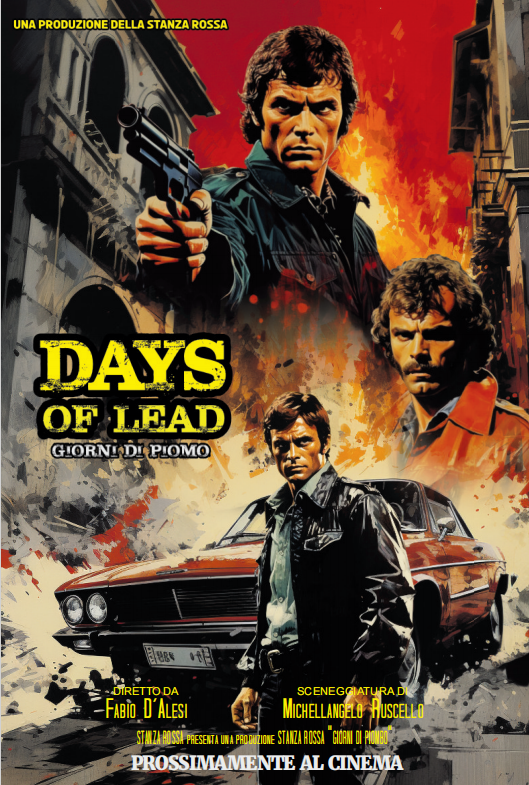
Days of Lead
Descend into the shadows of 1970s Italy in this gritty Wretched setting. In the fictional city of Cittaferra, political terrorism, organised crime, and institutional corruption threaten to tear society apart. Face off against dangerous extremists like the neo-fascist Alba Dorata or the militant Marxists of Mano Rossa. Match wits with cunning mafia bosses and their shadow networks bleeding the city dry. Or defy power itself as an activist, rogue cop, or underground journalist.
Lavie Tidhar
The Three Coffin Problem is officially out today! Follow the adventures of vampire Judge Dee and his human assistant, Jonathan, as they travel across medieval Europe solving fiendishly-complicated mysteries! I’ve enjoyed writing these so much over the last few years, and delighted to have the tales collected into this novel-shaped book! My thanks to Jonathan Strahan, my very patient editor at Reactor who is the only reason Judge Dee wasn’t a one-off; to Cinthya Alvarez, cover artist extraordinaire; and everyone at Jabberwocky for putting this one together!

Introduction
A multigrade textbook of Spanish through Caribbean music: cumbia, reggaeton, salsa.