


Key System Streetcars — Sappers, Vernon J.
Toronto's slow streetcars — and the search for silver bullets
City Hall Watcher #393: Damien Moule returns with a look at Toronto's seriously slow streetcars, plus notes on budgets, Bike Share and basketball
BART: The Dramatic History of the Bay Area Rapid Transit System by John King, Michael C. Healy
When BART opened in the San Francisco Bay Area in 1972, it became a catalyst for a renaissance in modern rail transit, both nationally and
Transportation Map of Atlanta Showing Street Car Trackless Trolley and Bus Lines of the Georgia Power Company, circa 1950s

The 57 Bus by Dashka Slater | East Bay Booksellers
A NEW YORK TIMES BestsellerStonewall Book Award WinnerA Kirkus Reviews Best Book of the 21st Century (So Far) The riveting New York Times bestseller and Stonewall Book Award winner that will make you rethink all you know about race, class, gender, crime, and punishment.
Designing a wayfinding concept for Vancouver's Skytrain system.
I wasn’t always a big fan of public transport.

Transit System Route Map, 1979

Yosemite Area Regional Transportation System

Intranational International Boulevard: A Street's Atlas - Oakland - LocalWiki
The Intranational International Boulevard: A Street's Atlas is a cool mapping project done by students in the UC Berkeley’s Cartography and GIS Education (CAGE) Lab. It maps International Blvd. in a variety of hyper-local ways.
Transit push in Montreal could generate more GDP than vehicular focus: study - Montreal | Globalnews.ca
A new study released by the Metropolitan Community of Montreal (MMC) finds the economic benefits of public transit are far greater than personal automobiles.

A Modest Proposal for Funding Transit Instead of AI
In the ’60s, the Bay Area almost got a high-speed train from Marin to San Jose. What could happen if we dreamed big again?

Weekend Transit Hacking: Peninsula to Oakland | Offprint
I have close friends who live in Oakland which is across the Bay from me. We generally meet in the city to hang out...

497 days car-free in the South Bay | Offprint
Reflections on car-free living in the South Bay and why I finally gave in,

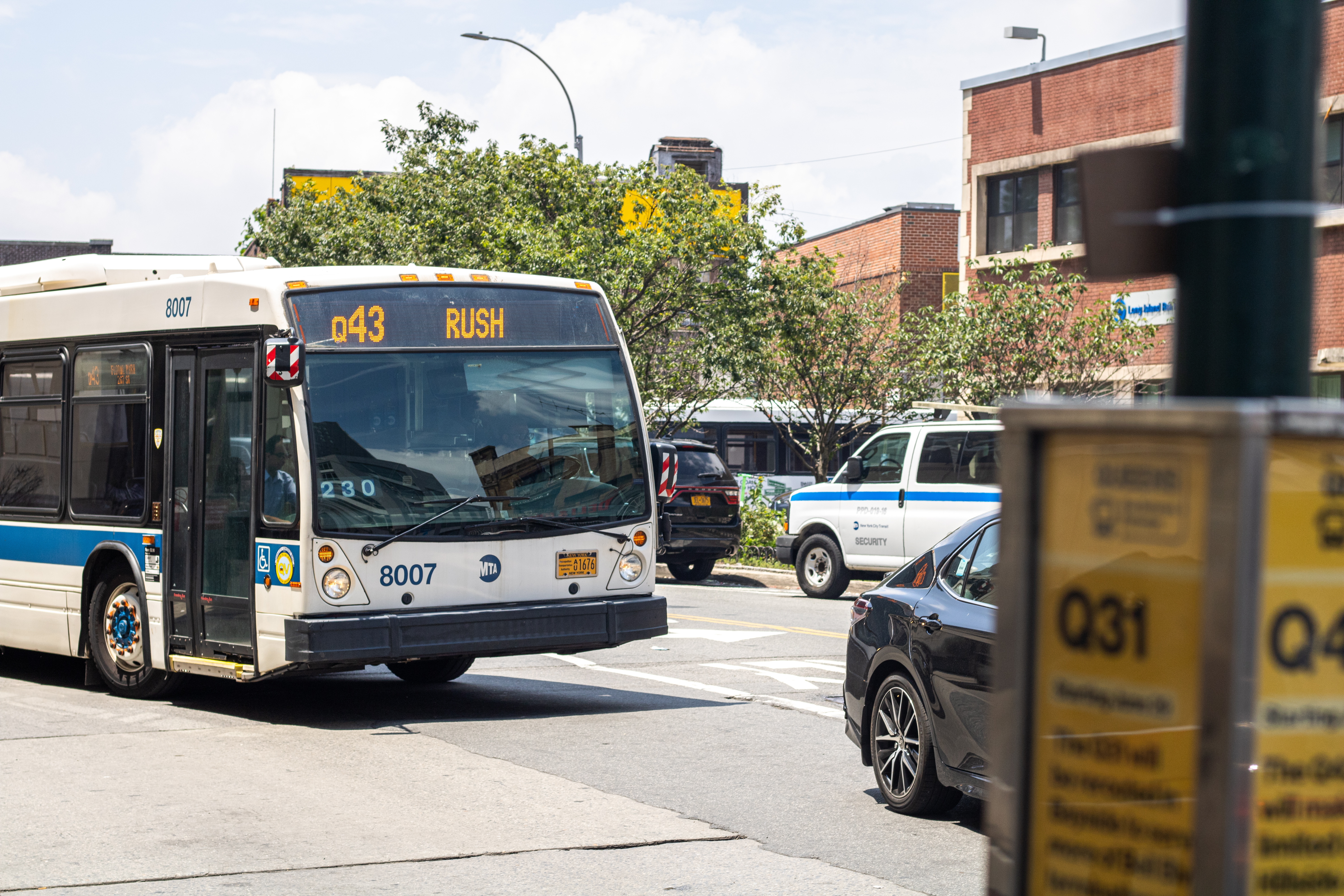
Wheels Up: City Bus Speeds Hit Four-Year High Under Mayor Mamdani - Streetsblog New York City
Citywide bus speeds hit 8.5 mph in August, which is the quickest buses have moved through the city in four years
A City for Children — Oakland Public Library
A City for Children — Gutman, Marta, — American cities are constantly being built and rebuilt, resulting in ever-changing skylines and neighborhoods. While the dynamic urban landscapes of New York, Boston, and Chicago have been widely studied, there is much to be gleaned from West Coast cities, especially in California, where the migration boom at the end of the nineteenth century permanently changed the urban fabric of these newly diverse, plural metropolises. In A City for Children Marta Gutman focuses on the use and reuse of everyday buildings in Oakland, California, to make the city a better place for children. She introduces us to the women who were determined to mitigate the burdens placed on working-class families by an indifferent industrial capitalist economy. Often without the financial means to build from scratch, women did not tend to conceive of urban land as a blank slate to be wiped clean for development. Gutman shows how, over and over, women instead turned private houses and even a saloon in Oakland into orphanages, kindergartens, settlement houses, and day care centers, and in the process built the charitable landscape--a network of places that was critical for the betterment of children, families, and public life. The industrial landscape of Oakland, riddled with the effects of social inequality and racial prejudice, is not a neutral backdrop in Gutman's story but an active player. Spanning one hundred years of history, A City for Children provides a compelling model for building urban institutions, and it demonstrates that children, women, charity, and reform, along with incremental construction, renovations, alterations, additions, and repurposed structures, are central to the understanding of modern cities.
Replication Data for: Public Infrastructure and Economic Development: Evidence from Postal Systems
While postal systems have been central to statebuilding efforts around the globe, their contributions to development are largely unclear. We argue that the post office affected economic development in both the short and long terms. To test our argument, we combine original data on the cross-national distribution of postal systems from 1875 to 2007 with granular county-level data in the U.S. from 1850 to 2000. In both country- and county-level analyses, we show that the spread of postal systems affected economic outcomes and persisted over the long term. The results are robust across dependent variables, model specifications, and estimation strategies. We provide additional evidence that suggests these effects were generated by reducing transaction costs and strengthening social capital. Our findings highlight the role of public infrastructure in promoting economic growth, documenting a channel through which state institutions precede growth, and suggest that statebuilding efforts have longstanding effects on relevant communities.
Community Wealth Building — Urban Affairs Review
Scholars of urban politics have long debated the issue of what cities can and should do to promote the economic well-being of their residents. As the of election Zohran Mamdani illustrates, urban residents are increasingly demanding that city governments do more to address the increasingly exorbitant costs of housing, childcare, and transportation. One obvious solution is to raise taxes on the private holders of wealth. By the same token, his election has prompted handwringing on the right about the “inevitable” flight of capital out of New York City. Scholarship that runs the gamut from the public choice school associated with the “city limits” perspective (Peterson 1981) through to Marxian accounts (Logan and Molotch 1987) all recognize that the private ownership of wealth and the mobility of capital puts cities in a bind, especially in a context of highly circumscribed levels of federal urban spending. Though several scholars (Logan and Swanstrom 1990; Kantor and Savitch 1993; Schragger 2016) have demonstrated that cities have greater latitude to promote egalitarian public policies than these perspective allow, few would argue that the deep structural problems of economic and social inequality can be fully resolved by tax-and-spend liberalism (Imbroscio 2010).