


In Home Field Advantage, historian Paul Brekke-Miesner examines why one relatively small American city produced not only an amazing number of professional athletes but individuals who changed the landscape of sports in America.--back cover
The great vibes divergence
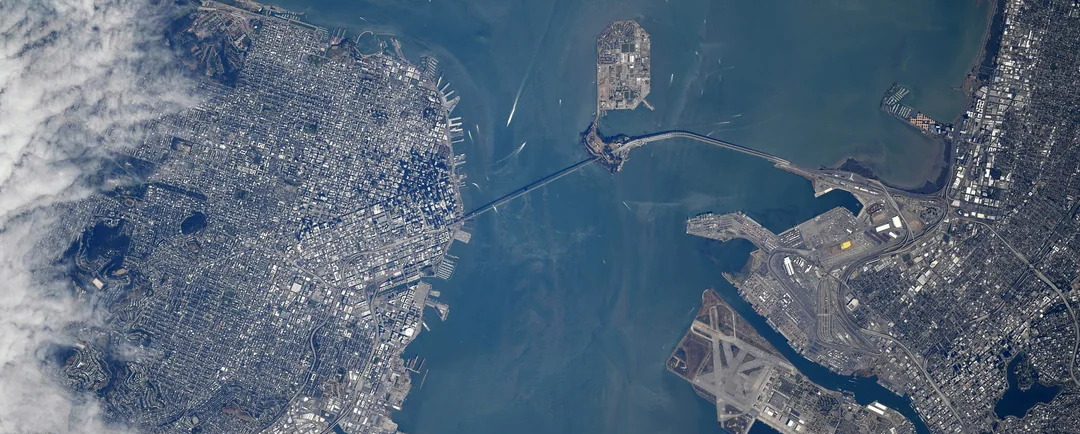
Why does San Francisco feel so weird during this tech boom while Oakland is more or less still Oakland?
Moneyball: the art of winning an unfair game ; [with a new afterword]
Billy Beane, general manager of MLB's Oakland A's and p…

A City for Children — Oakland Public Library
A City for Children — Gutman, Marta, — American cities are constantly being built and rebuilt, resulting in ever-changing skylines and neighborhoods. While the dynamic urban landscapes of New York, Boston, and Chicago have been widely studied, there is much to be gleaned from West Coast cities, especially in California, where the migration boom at the end of the nineteenth century permanently changed the urban fabric of these newly diverse, plural metropolises. In A City for Children Marta Gutman focuses on the use and reuse of everyday buildings in Oakland, California, to make the city a better place for children. She introduces us to the women who were determined to mitigate the burdens placed on working-class families by an indifferent industrial capitalist economy. Often without the financial means to build from scratch, women did not tend to conceive of urban land as a blank slate to be wiped clean for development. Gutman shows how, over and over, women instead turned private houses and even a saloon in Oakland into orphanages, kindergartens, settlement houses, and day care centers, and in the process built the charitable landscape--a network of places that was critical for the betterment of children, families, and public life. The industrial landscape of Oakland, riddled with the effects of social inequality and racial prejudice, is not a neutral backdrop in Gutman's story but an active player. Spanning one hundred years of history, A City for Children provides a compelling model for building urban institutions, and it demonstrates that children, women, charity, and reform, along with incremental construction, renovations, alterations, additions, and repurposed structures, are central to the understanding of modern cities.
Hometown Chinatown: A History of Oakland's Chinese Community, 1852-1995
Focusing on the local history of the Chinese in Oakland, California, this study examines common stereotypes in the early Chinese community and Chinatown organizations.

Who Rules Oakland? : Indybay
The Oakland Chamber of Commerce and other business lobbies in the East Bay have recently pressured government officials to crack down on Occupy Oakland. Furthermore, they have popularized a narrative portraying Occupy as "harmful to local business." We critically examine ruling class networks of shared ownership, governance, and political advocacy impacting communities in Oakland by revealing links between the directors and executives of major corporations that are members in the Oakland Chamber of Commerce. In subsequent parts to this series we will provide more detailed information about the directors and executives of these companies, and provide an analysis of their social cohesion, profit-driven collusion, and political influence. More broadly, we will explore networks and institutions of economic and political power in the Bay Area.

Temescal Legacies
Temescal Legacies examines five historically significant changes to the Temescal district and surrounding neighborhoods of North Oakland and the impacts these changes have had on the community. Temescal Legacies features interviews with long-time Oakland residents and includes over 200 previously unpublished photographs.
Introducing DAVIES: A framework for Identifying Talent Across the Globe — American Soccer Analysis
In the world of sports, the search for an all-encompassing player evaluation metric is never-ending. Baseball was the first to develop its metric with Wins Above Replacement. Basketball followed suit with Player Efficiency Rating, and Hockey WAR has come into the fold within the past year. The US So

The Water’s Edge: Empire, Race, and the Global History of Oakland, California, 1848-1980
Author(s): Klein, Andrew Nelson Carver | Advisor(s): Kelley, Robin D.G. | Abstract: This dissertation explores historical intersections between capitalism, race-making, environmental change, and U.S. foreign relations from the vantage of Oakland’s waterfront. It tracks the evolution of this geostrategic coastline since it emerged as a coal-powered nexus of railroads, steamships, and military installations during American colonization. Revising the story of Oakland’s development from a global perspective, my project documents how local boosters, businessmen, and bureaucrats forged intimate ties with far-flung territories administered by U.S. troops and landowners. Combining social and environmental history with methods from Black studies, I map the transformation of Oakland’s fertile estuary into an infilled hub of postindustrial commerce, a vital node of military logistics, and a focal point for racialized labor migration. Simultaneously, this dissertation reveals how, over the long twentieth century, Black, Indigenous, Chinese, and other working-class Oaklanders found footholds on the harbor, often repurposing its imperial routes for dramatically different ends. Drawing on archives and oral histories in Cuba, Hawai‘i, and across the continental United States, I trace Oakland’s tradition of radical internationalism, most visible in the antiwar and Black Power movements of the sixties, to multi-generational struggles over the governance of coastal land. I argue that Oakland’s waterfront both bridged the continental and overseas expansion of an ascendant world power and came to serve as a proving ground for alternative forms of globalization. “The Water’s Edge” therefore offers a critical reappraisal of the generally place-bound history of North American urbanism and far-reaching lessons for building just cities in a present defined by global environmental crises.

The First Map of Oakland, California: An Historical Speculation as Solution to an Enigma on JSTOR
Jack J. Studer, The First Map of Oakland, California: An Historical Speculation as Solution to an Enigma, California Historical Society Quarterly, Vol. 48, No. 1 (Mar., 1969), pp. 59-71
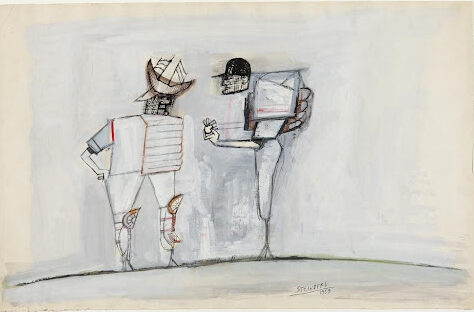
A Philosophical Game: An Interview with Saul Steinberg by Lauren Kane
November 4, 2021 – Steinberg and George Plimpton discuss how the form of sports reflects on nationhood.
How Video Games Are Changing the Way Soccer Is Played (Published 2016)
Games like FIFA that were designed to reflect the sport’s reality have helped alter it, influencing professional players and front offices.

Moneyball
Michael Lewis’s instant classic may be 'the most influential book on sports ever written' (<em>People</em>), but 'you need know absolutely nothing about baseball to appreciate the wit, snap, economy and incisiveness of [Lewis’s] thoughts about it' (Janet Maslin, <em>New York Times</em>).<br /><br />One of <em>GQ</em>'s 50 Best Books of Literary Journalism of the 21st Century • A <em>Kirkus Review</em> Best Book of the 21st Century (So Far), Moneyball, The Art of Winning an Unfair Game, Michael Lewis, 9780393324815

Out of Oakland by Sean L Malloy | East Bay Booksellers
Out of Oakland offers a wonderful case study in the possibilities and limitations of transnational organizing. â? Diplomatic HistoryIn Out of Oakland, Sean L.
Weekend Transit Hacking: Peninsula to Oakland | Offprint
I have close friends who live in Oakland which is across the Bay from me. We generally meet in the city to hang out...

When Riot Cops Are Not Enough
In When Riot Cops Are Not Enough, sociologist Mike King examines the policing, and broader political repression, of the Occupy Oakland movement. King’s active and daily participation in that movement provides a unique insider perspective to illustrate how the Oakland police and city administrators lost the ability to effectively control the movement.

