In the early twentieth century, the Bay Area Outing Program coercively recruited over a thousand Native girls and women from boarding schools to labor as live-in domestic workers across the San Francisco Bay Area. Outing removed Native people from their communities and transferred them to white homes, farms, and businesses to work as menial laborers. In exchange for room, board, and meager pay, Native women and girls as young as twelve cooked, cleaned, and lived in the homes of their employers. Despite oppressive living and working conditions, Native women strategically resisted the worst aspects of outing, including Indian child removal, sexual surveillance, criminalization, and exploitation. Throughout, they forged social connections and navigated relationships to refuse domestication and assert their agency. In this groundbreaking work, Historian Caitlin Keliiaa examines Native women's lived experiences of federal policy and connects outing to the region's longer history of coerced Native labor. The book, as indictment, expands the existing work on Indian boarding schools, urban Indians, and the history of California and the West
The Water’s Edge: Empire, Race, and the Global History of Oakland, California, 1848-1980
Author(s): Klein, Andrew Nelson Carver | Advisor(s): Kelley, Robin D.G. | Abstract: This dissertation explores historical intersections between capitalism, race-making, environmental change, and U.S. foreign relations from the vantage of Oakland’s waterfront. It tracks the evolution of this geostrategic coastline since it emerged as a coal-powered nexus of railroads, steamships, and military installations during American colonization. Revising the story of Oakland’s development from a global perspective, my project documents how local boosters, businessmen, and bureaucrats forged intimate ties with far-flung territories administered by U.S. troops and landowners. Combining social and environmental history with methods from Black studies, I map the transformation of Oakland’s fertile estuary into an infilled hub of postindustrial commerce, a vital node of military logistics, and a focal point for racialized labor migration. Simultaneously, this dissertation reveals how, over the long twentieth century, Black, Indigenous, Chinese, and other working-class Oaklanders found footholds on the harbor, often repurposing its imperial routes for dramatically different ends. Drawing on archives and oral histories in Cuba, Hawai‘i, and across the continental United States, I trace Oakland’s tradition of radical internationalism, most visible in the antiwar and Black Power movements of the sixties, to multi-generational struggles over the governance of coastal land. I argue that Oakland’s waterfront both bridged the continental and overseas expansion of an ascendant world power and came to serve as a proving ground for alternative forms of globalization. “The Water’s Edge” therefore offers a critical reappraisal of the generally place-bound history of North American urbanism and far-reaching lessons for building just cities in a present defined by global environmental crises.

Somebody Blew up Oakland: Dispossession as a Praxis of Racial Ordering
Author(s): Jones, Stephanie Delise | Advisor(s): Hironaka, Ann; Sojoyner, Damien | Abstract: In this dissertation, I investigate the relationship between underdevelopment and Black geographies. I then explore the consequences of this relationship on the city of Oakland. From 2019 to 2021, I conducted 68 in-depth field interviews of Black Oakland residents who detailed the processes and mechanisms by which California housing policy contributed to the displacement of Black subjects. Building on the work of scholars of Black geographies, I have interrogated the myth of development and the relationship to the dispossession of Black geographies. I theorize how racial capitalism produces vulnerable populations through housing in urban areas. The empirical contribution of my research is to provide a framework for Black geographies as people are being displaced. The theoretical contribution is to provide a conceptualization for Black geographies existing through abjections and placelessness as understood through residents of Oakland.I argue that the relationship between dispossession and refusal creates a distinct politic. In chapter two, I theorize the work of Moms for Housing to further understand Black knowledges of resistance to dispossession. Moms for Housing is used as a case study to highlight the many theoretical implications of dispossession occurring in Oakland. In chapter 3, I use two interviews from developers to demonstrate the contradictions in what I call the mythology of development. In chapter 4, I walk through the geographic stories of 2nd and 3rd generation Oakland residents and demonstrate each of the ways they feel locked out of the city as a result of the urban changes. In chapter 5, I demonstrate how communities resist dispossession and disposability. The city of Oakland lacks proactive implementation of equitable housing policy. The lack of action by the city of Oakland puts the onus on everyday residents to organize against their landlords, employers and the state.
RESPONSES TO THE CALIFORNIAN IDEOLOGY BY CELIA PEARCE
The publication of 'The Californian Ideology' has inspired an impassioned debate over the issues raised by the article. Here is a selection of some of the most interesting responses to the piece:
The roots of justice : crime and punishment in Alameda County, California, 1870-1910 | WorldCat.org

A City for Children — Oakland Public Library
A City for Children — Gutman, Marta, — American cities are constantly being built and rebuilt, resulting in ever-changing skylines and neighborhoods. While the dynamic urban landscapes of New York, Boston, and Chicago have been widely studied, there is much to be gleaned from West Coast cities, especially in California, where the migration boom at the end of the nineteenth century permanently changed the urban fabric of these newly diverse, plural metropolises. In A City for Children Marta Gutman focuses on the use and reuse of everyday buildings in Oakland, California, to make the city a better place for children. She introduces us to the women who were determined to mitigate the burdens placed on working-class families by an indifferent industrial capitalist economy. Often without the financial means to build from scratch, women did not tend to conceive of urban land as a blank slate to be wiped clean for development. Gutman shows how, over and over, women instead turned private houses and even a saloon in Oakland into orphanages, kindergartens, settlement houses, and day care centers, and in the process built the charitable landscape--a network of places that was critical for the betterment of children, families, and public life. The industrial landscape of Oakland, riddled with the effects of social inequality and racial prejudice, is not a neutral backdrop in Gutman's story but an active player. Spanning one hundred years of history, A City for Children provides a compelling model for building urban institutions, and it demonstrates that children, women, charity, and reform, along with incremental construction, renovations, alterations, additions, and repurposed structures, are central to the understanding of modern cities.
Hometown Chinatown: A History of Oakland's Chinese Community, 1852-1995
Focusing on the local history of the Chinese in Oakland, California, this study examines common stereotypes in the early Chinese community and Chinatown organizations.

Oakland is a Vibe: Blackness, Cultural Framings and Emancipations of The Town
Author(s): Heitz, Kaily | Advisor(s): Scott Lewis, Jovan | Abstract: In this dissertation, I examine the ways that developers and Black community organizers in Oakland, California, utilize a situated concept of Black culture to produce value in the city. This value is constituted by a politics of Blackness rooted both in racial capitalism, shifting structures of community care, and their affective articulations. The affective qualities of Black Oakland – which includes a sense of relationality, creativity, and resistance – are understood colloquially as “vibe.” While representations of vibe are mobilized by both developers and community organizations to respectively advance and resist gentrification, I argue that the vibe of the city is constituted by a Black sense of place that cannot be reproduced through capitalist representations of cultural value alone. This study of vibe presents an opportunity to take seriously the invitation of Black geographic scholarship to work at the intersection of poetics and historical materialism by exploring relationality as a site that coproduces racialized space and experience. Where developers leverage notions of vibe to generate value through private investment, Black organizers utilize such representations in order to reclaim the physical space necessary to the very production of vibe. The latter strategy is, I suggest, an enactment of what I call “emancipatory framing,” in which hegemonic framing is mobilized in order to create alternative spaces for liberatory praxes. This dissertation explores vibe and emancipatory framing at three different scales: the Black body, the independent business, and the grassroots collective. I conclude that vibe as a material and metaphorical asset of Blackness, is at the root of contestations over place, and sometimes contradictory imaginaries of freedom.
American Babylon
A gripping portrait of black power politics and the struggle for civil rights in postwar Oakland

Latinxs in <i>La Migra</i> : Why They Join and Why It Matters
Once an exclusively white enterprise, the last forty-five years have witnessed the emergence of a disproportionately Latinx immigration law enforcement workforce. This article addresses the question of why Latinxs elect to work for agencies that have systematically targeted the ethnic communities to which they belong. Where existing scholarship has often implied Latinxs may self-select into immigration law enforcement due to a lack of identification with the immigrant-experience, a dissociation with ethnic identity, and generally restrictionist immigration attitudes, this article finds little empirical evidence to support such an assumption. Analysis of interviews with sixty-one Latinx Immigration and Customs Enforcement (ICE) agents across Arizona, California, and Texas reveals, instead, Latinxs elect to work in immigration law enforcement in service of economic self-interest and survival, with “money,” “a good job,” and “benefits” cited as the primary motivation(s) behind applying for and accepting a job in immigration. This pattern holds irrespective of individual agents’ levels of identification with the immigrant-experience and particular attitudes toward immigration, and suggests a diversity in the demographics of immigration law enforcement agencies that extends beyond mere race and ethnicity, to include a diversity of perspective and potential for empathy.

Latinxs in <i>La Migra</i> : Why They Join and Why It Matters
Once an exclusively white enterprise, the last forty-five years have witnessed the emergence of a disproportionately Latinx immigration law enforcement workforce. This article addresses the question of why Latinxs elect to work for agencies that have systematically targeted the ethnic communities to which they belong. Where existing scholarship has often implied Latinxs may self-select into immigration law enforcement due to a lack of identification with the immigrant-experience, a dissociation with ethnic identity, and generally restrictionist immigration attitudes, this article finds little empirical evidence to support such an assumption. Analysis of interviews with sixty-one Latinx Immigration and Customs Enforcement (ICE) agents across Arizona, California, and Texas reveals, instead, Latinxs elect to work in immigration law enforcement in service of economic self-interest and survival, with “money,” “a good job,” and “benefits” cited as the primary motivation(s) behind applying for and accepting a job in immigration. This pattern holds irrespective of individual agents’ levels of identification with the immigrant-experience and particular attitudes toward immigration, and suggests a diversity in the demographics of immigration law enforcement agencies that extends beyond mere race and ethnicity, to include a diversity of perspective and potential for empathy.
Out of Oakland by Sean L Malloy | East Bay Booksellers
Out of Oakland offers a wonderful case study in the possibilities and limitations of transnational organizing. â? Diplomatic HistoryIn Out of Oakland, Sean L.
Domestication Gone Wild: Politics and Practices of Multispecies Relations
“What do Pacific salmon, British falcons, pine trees everywhere, Ifugao pigs and spirits, and Norwegian apples have in common? They perform ‘domestication’ in ways certain to change the narratives and politics of domestication for scholars of whatever discipline and for critter people all over the earth. Read this book for up-to-the-minute, deeply researched, very smart, contentious takes on the shapes of conjoined humans and nonhumans living and dying together in diverse histories of civilization, colonialism, capitalism, times-past, and times-yet-to-come. Perhaps what opens up in this book are real possibilities for caring more materially in urgent times.” - Donna J. Haraway, author of Staying with the Trouble: Making Kin in the Chthulucene

“Denying America”: Vivian's Counterstory of Undocumented Status
Abstract. This article provides a counterstory of a formerly undocumented Latina student's experiences navigating school and music education in the United States. Using tenets of undocumented critical theory (UndocuCrit) and counter-storytelling, I share Vivian's journey through secondary and postsecondary education as she encountered systemic barriers in pursuit of a career in music education. Vivian's narrative revealed institutional hindrances that disrupted access to music education at both secondary and postsecondary levels. Notably, shifting policies, misinformation, limited access to funding, and issues with immigration documents interfered with Vivian's aspirations of becoming a certified, full-time music educator. Unwavering familial support and legal assistance from a skilled attorney aided her pursuit of higher education. Eventually, Vivian fashioned a new path in a different field of study and now uses her experiential knowledge to assist others who are undocumented. Possibilities for working with undocumented immigrant students and families are discussed in light of fluid immigration policies and the ongoing sociopolitical climate.
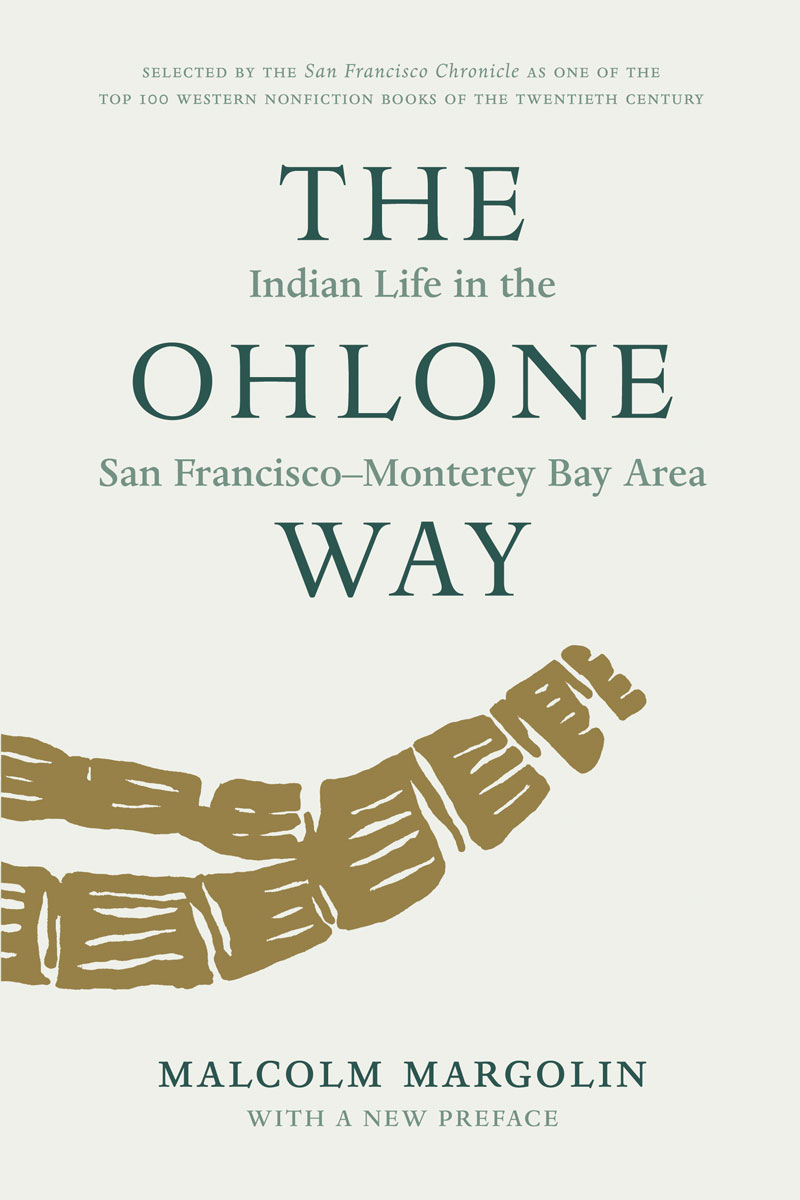
The Ohlone Way: Indian Life in the San Francisco-Monterey Bay Area by Malcolm Margolin
Two hundred years ago, herds of elk and antelope dotted the hills of the San Francisco–Monterey Bay area. Grizzly bears lumbered down to the creeks to
Native Land Pod
Unauthorized Immigration Effects on Local Labor Markets
The large increase and subsequent decline of unauthorized immigrant workers in recent years have raised questions about the impact of these changes on local labor markets across the United States. New analysis linking immigration data with employment data for specific areas suggests that the rapid rise in unauthorized immigrant worker flows increased local employment roughly one-for-one. Extending the analysis to the industry level further suggests that the slowdown of net immigration had a large negative impact on local employment, particularly for construction and manufacturing.