


An overview of Reddit's adversarial and seemingly counter-productive changes.
Storming Reddit's Moat
A Guide to Reddit, Its Key Competitive Advantages, and How to Unbundle It
The Reddit Protest Is a Battle for the Soul of the Human Internet
An esoteric battle over API fees and access is highlighting a power struggle between corporate overlords and unpaid moderators. It's worth understanding, and it's worth fighting for.

‘I Believe My Time at Reddit Made the World a Worse Place’
A conversation with former Reddit product head Dan McComas on the problems with Reddit, Twitter, and the rest of the web.

Reddit holds the secret to fixing Facebook
News discussion site Reddit offers a model for a fairer internet - if it can overcome its flaws.

When online commenters 'detect' my art as AI
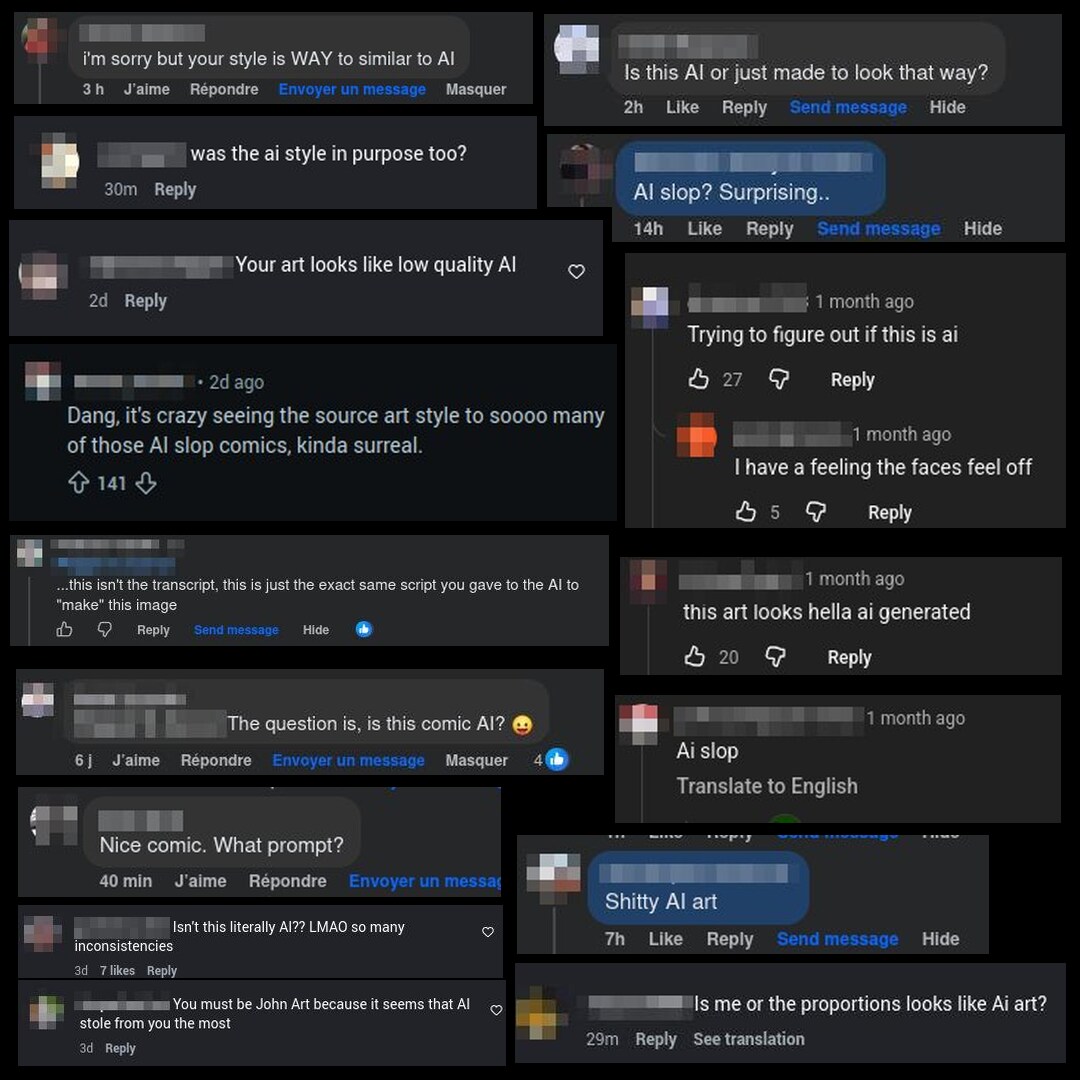
Here is a collection of screenshots (obfuscated) of dozens and dozens of online comments from many platforms (Reddit, YouTube, Instagram, Facebook) containing accusations or confusion that my artworks and comics are AI-generated. Despite creating every piece by hand, despite sharing timelapses, the comments keep coming, and they're getting stronger.
Agency Among Agents: Designing with Hypertextual Friction in the Algorithmic Web
Today's algorithm-driven interfaces, from recommendation feeds to GenAI tools, often prioritize engagement and efficiency at the expense of user agency. As systems take on more decision-making, users have less control over what they see and how meaning or relationships between content are constructed. This paper introduces "Hypertextual Friction," a conceptual design stance that repositions classical hypertext principles--friction, traceability, and structure--as actionable values for reclaiming agency in algorithmically mediated environments. Through a comparative analysis of real-world interfaces--Wikipedia vs. Instagram Explore, and Are.na vs. GenAI image tools--we examine how different systems structure user experience, navigation, and authorship. We show that hypertext systems emphasize provenance, associative thinking, and user-driven meaning-making, while algorithmic systems tend to obscure process and flatten participation. We contribute: (1) a comparative analysis of how interface structures shape agency in user-driven versus agent-driven systems, and (2) a conceptual stance that offers hypertextual values as design commitments for reclaiming agency in an increasingly algorithmic web.

Agency Among Agents: Designing with Hypertextual Friction in the Algorithmic Web
Today's algorithm-driven interfaces, from recommendation feeds to GenAI tools, often prioritize engagement and efficiency at the expense of user agency. As systems take on more decision-making, users have less control over what they see and how meaning or relationships between content are constructed. This paper introduces "Hypertextual Friction," a conceptual design stance that repositions classical hypertext principles--friction, traceability, and structure--as actionable values for reclaiming agency in algorithmically mediated environments. Through a comparative analysis of real-world interfaces--Wikipedia vs. Instagram Explore, and Are.na vs. GenAI image tools--we examine how different systems structure user experience, navigation, and authorship. We show that hypertext systems emphasize provenance, associative thinking, and user-driven meaning-making, while algorithmic systems tend to obscure process and flatten participation. We contribute: (1) a comparative analysis of how interface structures shape agency in user-driven versus agent-driven systems, and (2) a conceptual stance that offers hypertextual values as design commitments for reclaiming agency in an increasingly algorithmic web.
The Alt-Right Playbook: Why Don't You Respond to Criticism?
The case against efficiency: friction in social media
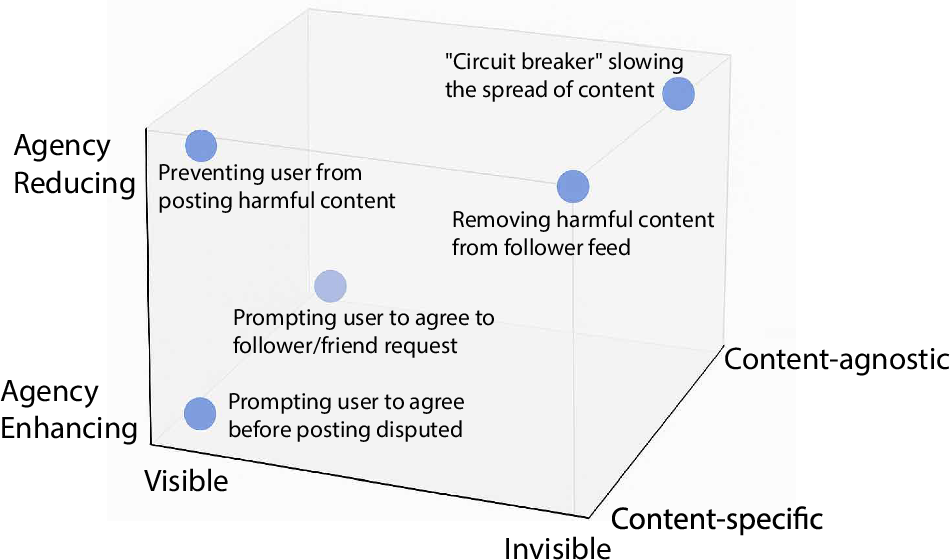
Social media platforms frequently prioritize efficiency to maximize ad revenue and user engagement, often sacrificing deliberation, trust, and reflective, purposeful cognitive engagement in the process. This manuscript examines the potential of friction—design choices that intentionally slow user interactions—as an alternate approach. We present a case against efficiency as the dominant paradigm on social media and advocate for a complex systems approach to understanding and analyzing friction. Drawing from interdisciplinary literature, real-world examples, and industry experiments, we highlight the potential for friction to mitigate issues like polarization, disinformation, and toxic content without resorting to censorship. We propose a state space representation of friction to establish a multidimensional framework and language for analyzing the diverse forms and functions through which friction can be implemented. Additionally, we propose several experimental designs to examine the impact of friction on system dynamics, user behavior, and information ecosystems, each designed with complex systems solutions and perspectives in mind. Our case against efficiency underscores the critical role of friction in shaping digital spaces, challenging the relentless pursuit of efficiency and exploring the potential of thoughtful slowing.
The Subversive Hyperlink
Writing about the big beautiful mess that is making things for the world wide web.
It’s Like Reddit, Without the Trolls
Imzy, started by two former Reddit employees, wants to be a kinder, gentler version of the controversial discussion site.
The governance & behavioral challenges of generative artificial intelligence’s hypercustomization capabilities
Generative artificial intelligence (GenAI) is changing human–machine interactions and the broader information ecosystem. Much as social media algorithms personalize online experiences, GenAI applications can align with user preferences to customize the way individuals interact with information. However, through training, fine-tuning, and prompting, GenAI applications can introduce a new level of customization: hypercustomization. By dynamically tailoring responses to an individual’s explicit and implicit preferences, hypercustomization can reinforce biases, false beliefs, or misconceptions. As a result, it can heighten significant societal challenges, such as the spread of misinformation and political and social polarization. In this article, we explore the risks associated with hypercustomization and the governance and behavioral challenges that might impede effective risk mitigation. These challenges include a lack of transparency in GenAI applications, opacity of the nature of their interactions with users, users’ overreliance on these systems, and the inefficacy of warning messages. We also provide recommendations for overcoming these challenges.

Trust: Foundation of Human Knowledge yet online Platforms won't allow | David Karger | TEDxMIT Salon
Art or tool?
The Internet spaces I tend to inhabit have more polarisation than at many other recent times, and little explication of the worldviews that lead to different premises for discussion, that in turn...

Bias, Skew, and Search Engines Are Sufficient to Explain Online Toxicity
U.S. political discourse seems to have fissioned into discrete bubbles, each reflecting its own distorted image of the world. Many blame machine-learning algorithms that purportedly maximize “engagement”—serving up content that keeps YouTube or Facebook users watching videos or scrolling through their feeds—for radicalizing users or strengthening their partisanship. Sociologist Shoshana Zuboff15 even argues that “surveillance capitalism” uses optimized algorithmic feedback for “automated behavioral modification” at scale, writing the “music” that users then “dance” to.
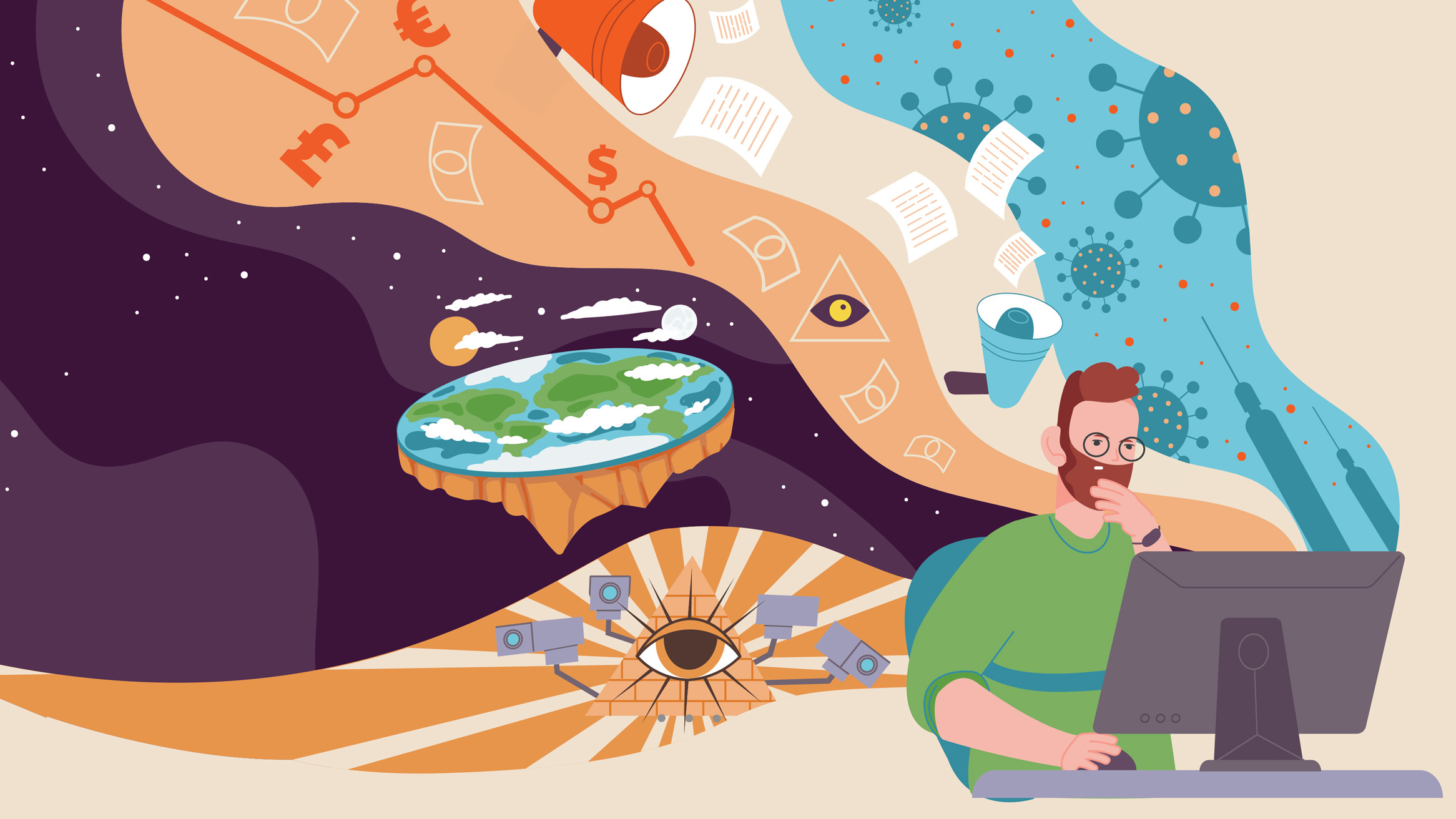
Bias, Skew, and Search Engines Are Sufficient to Explain Online Toxicity
U.S. political discourse seems to have fissioned into discrete bubbles, each reflecting its own distorted image of the world. Many blame machine-learning algorithms that purportedly maximize “engagement”—serving up content that keeps YouTube or Facebook users watching videos or scrolling through their feeds—for radicalizing users or strengthening their partisanship. Sociologist Shoshana Zuboff15 even argues that “surveillance capitalism” uses optimized algorithmic feedback for “automated behavioral modification” at scale, writing the “music” that users then “dance” to.