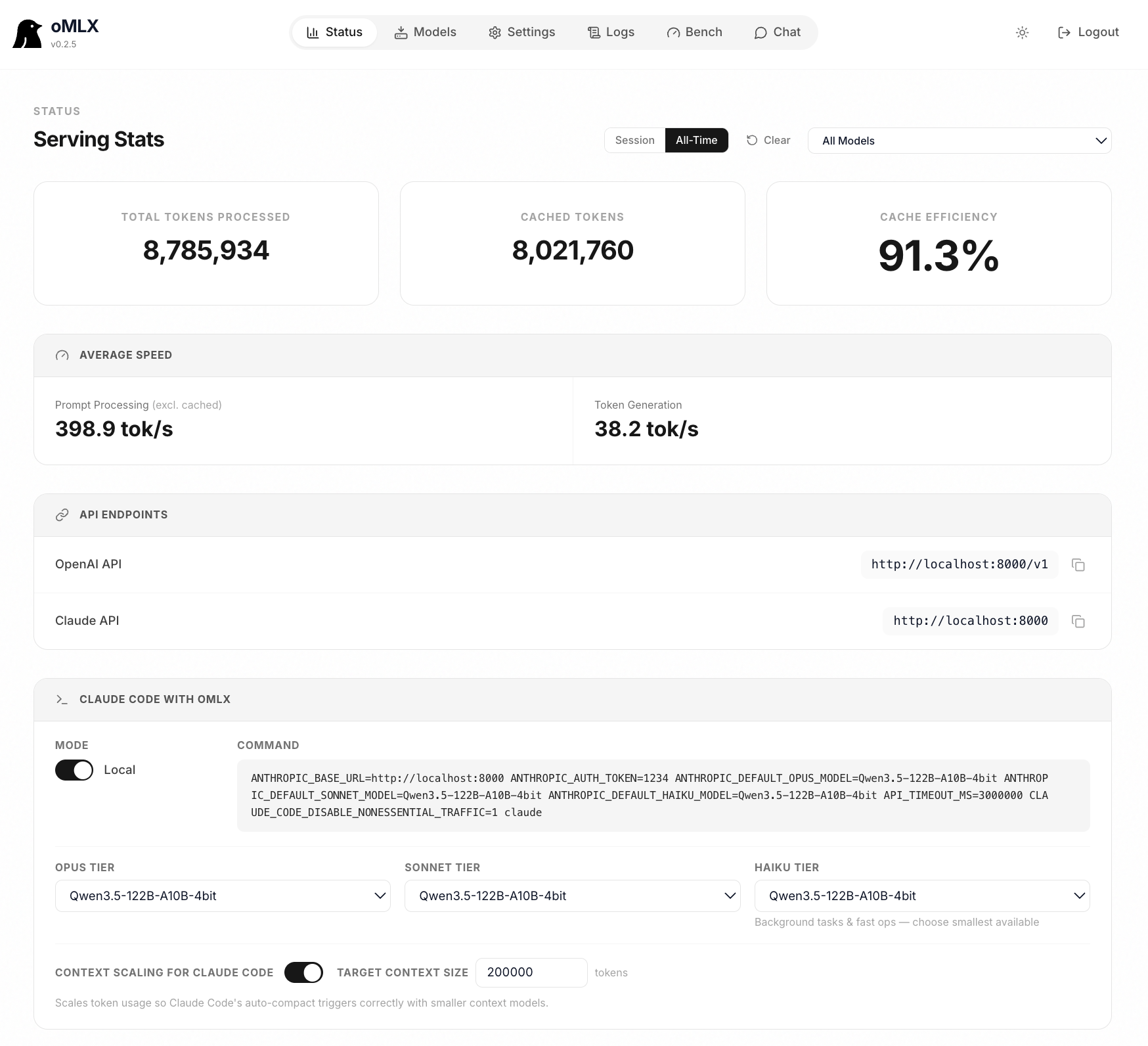
Compare model performance across context lengths with community benchmark data.
Epoch Capabilities Index
The Epoch Capabilities Index combines many benchmarks into a single capability scale for comparing models over time.

Model Performance Evaluation to SubQ 1.1 Small Preview Performance Evaluation | Appen
A third-party benchmark assessment of Subquadratic's preview models, conducted by Appen across long-context retrieval, code generation, business-workflow automation, and graduate-level reasoning benchmarks.
Wolfram LLM Benchmarking Project
Results from Wolfram's ongoing tracking of LLM performance. The benchmark is based on a Wolfram Language code generation task.

Latency optimization | OpenAI API
Improve latency across a wide variety of LLM-related use cases.
Speed Comparison - Programming Languages
Benchmarks run on GitHub Actions. Results may vary based on runner hardware.

Model Leaderboard | Letta
Context-Bench measures an agent's ability to perform context engineering with:
Designing Data-Intensive Applications
Data is at the center of many challenges in system design today. Difficult issues need to be figured out, such as scalability, consistency, reliability, efficiency, and... - Selection from Designing Data-Intensive Applications [Book]
Benchmarks | EXO
Transparent benchmarks for LLMs tested on real hardware. Coming soon.
Dremel: interactive analysis of web-scale datasets: Proceedings of the VLDB Endowment: Vol 3, No 1-2
Dremel is a scalable, interactive ad-hoc query system for analysis of read-only nested data. By combining multi-level execution trees and columnar data layout, it is capable of running aggregation queries over trillion-row tables in seconds. The system ...

NeuralBench: A Unifying Framework to Benchmark NeuroAI Models | Hubert Banville
🧠 NeuralBench is now open source. Today we're releasing NeuralBench, a unified framework for benchmarking foundation models of brain activity, developed by the Brain & AI team at FAIR, Meta. 💻 Code: https://lnkd.in/dNJsgBgM 📄 White paper: https://lnkd.in/dvWMg7rx Brain foundation models are starting to show positive transfer to a range of downstream tasks, from brain-computer interfacing to clinical classification. But systematically evaluating them is hard: heterogeneous preprocessing pipelines, input structures, and adaptation methodologies make results difficult to compare. Most prior work also focuses on a narrow set of downstream tasks. NeuralBench addresses this by defining each task end-to-end with config files (data source, preprocessing, splits, optimiser, metrics, architecture) so all models can be evaluated on the same footing. What's in our first release, NeuralBench-EEG v1.0: ⚡ 36 EEG tasks across 94 public datasets, spanning motor imagery, clinical classification, cognitive decoding, and phenotype prediction. 🤖 Task-specific deep learning architectures (EEGNet, Deep4, EEGConformer, CTNet, ...) benchmarked side-by-side with recent EEG foundation models (BENDR, LaBraM, BIOT, CBraMod, LUNA, REVE). 🧩 Extensible to other neuroimaging modalities: the framework already runs MEG and fMRI tasks, leveraging our NeuralSet ecosystem for accessing brain imaging data and the broader neuroscientific software stack. 📜 Released under the MIT license. Help us make it better. Through our white paper, we invite the community to contribute new tasks, datasets, and models, especially for fMRI, MEG, and iEEG. The long-term goal is a fully unified benchmark across neuroimaging tasks and modalities. 🙏🙏🙏 This was a big team effort with Stéphane d'Ascoli, Simon Dahan, Jérémy RAPIN, Marlène Careil, Yohann Benchetrit, Jarod Lévy, Saarang P., Antoine Ratouchniak, Lucy (Mingfang) Zhang, Elisa Cascardi, Katie Begany, Teon Brooks, and Jean-Rémi King. Special thanks to Alexandre Gramfort, Thomas Moreau, Arnaud Delorme, Bruno A. and Pierre Guetschel for feedback and support. #Neuroscience #AI #NeuroAI #Python #OpenSource

SpeedCurve by Embrace | Website Performance Monitoring
User focused observability for mobile and web. See how people experience the speed of your website, then identify and fix performance issues.

ToolSandbox: A Stateful, Conversational, Interactive Evaluation Benchmark for LLM Tool Use Capabilities
Recent large language models (LLMs) advancements sparked a growing research interest in tool assisted LLMs solving real-world challenges…