
Toward a Networked Theory of Value
Pain of Paying? — A Metaphor Gone Literal: Evidence from Neural and Behavioral Science
How do individuals consider the price of a good when making purchase decisions? Standard economic theories assume an analytical process: Individuals consider th

CMV: The labor theory of value is flawed
72 votes, 407 comments. This might be an obscure topic, however, in some—largely Marxist circles— the approach seems to motivate much of the dialogue…
“Objective Economics” Isn’t.
Some time ago, in a Facebook argument, I encountered someone who repeated the old “exchange of unequals” argument (i.e., that people never exchange equivalents because each party values what they got more than what they traded for it). I responded that this argument confuses exchange value with use value and that, regardless of subjective valuation,...
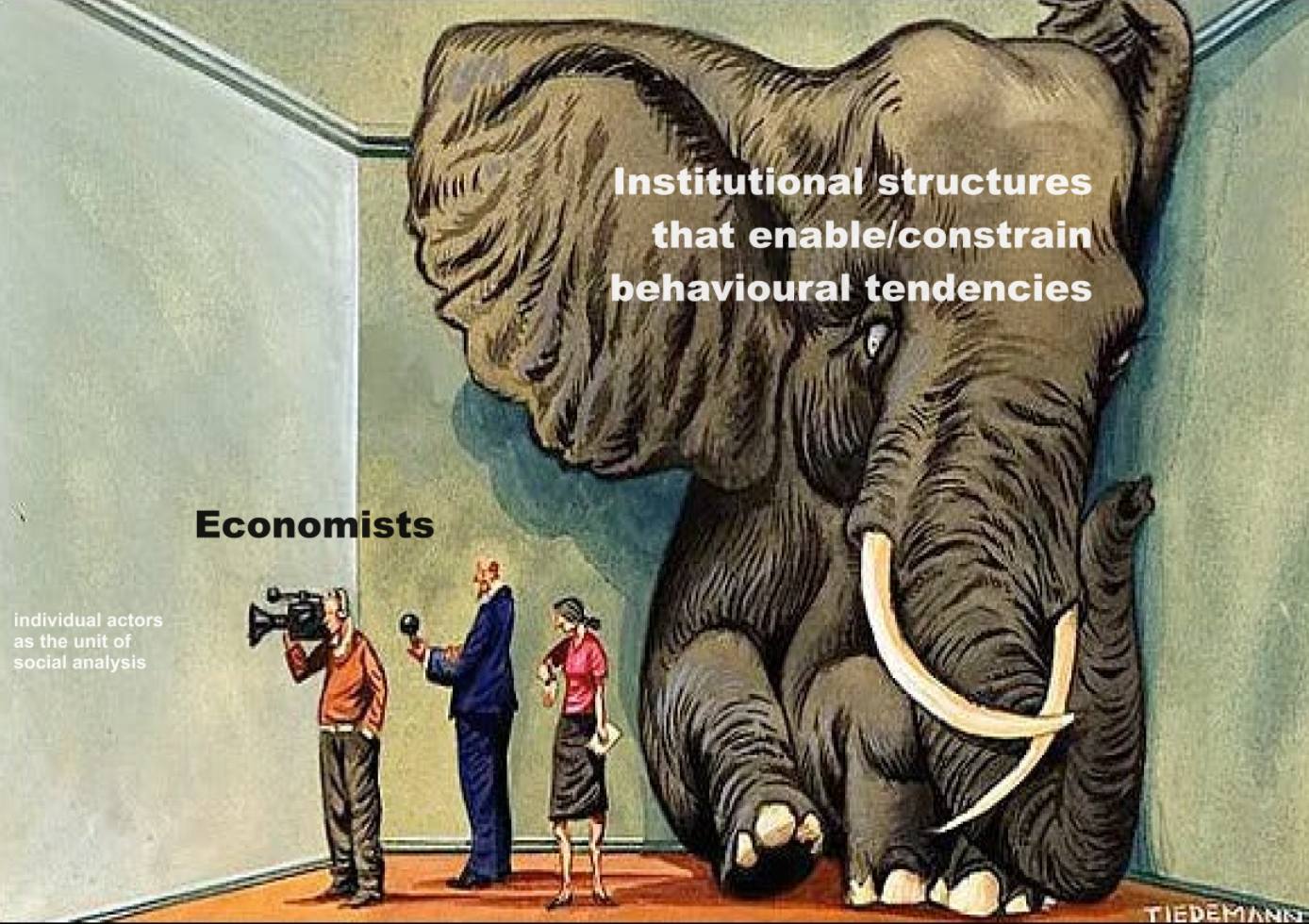
Economics for the future – Beyond the superorganism
Our environment and economy are at a crossroads. This paper attempts a cohesive narrative on how human evolved behavior, money, energy, economy and th…
The Wealth of Networks
The Wealth of Networks: How Social Production Transforms Markets and Freedom is a book by Harvard Law School professor Yochai Benkler published by Yale University Press on April 3, 2006. The book has been recognized as one of the most influential works of its time concerning the rise and impact of the Internet on the society, particularly in the sphere of economics. It also helped popularize the term Benkler coined few years earlier, the commons-based peer production (CBPP).
Cognitive Capitalism - Public Seminar
There are broadly three ways of thinking historically about capitalism. One draws on Marx’s value theory and pretty much treats...Read More

On the Impact of the Utility in Semivalue-based Data Valuation
Semivalue–based data valuation uses cooperative‐game theory intuitions to assign each data point a value reflecting its contribution to a downstream task. Still, those values depend on the...
White Paper — the FIRST PERSON NETWORK
Part Seven: The four trust network effects in a two-sided market for trust.
Modelling the viability of opportunity networks
How big should a peer-to-peer network be before it generates a steady stream of deals?

Deconstructing the Machine Learning Value Chain
This essay offers a materialist analysis of machine learning in the form of a critical intervention that deconstructs the value chain of this technological para
The marketplace of rationalizations
Recent work in economics has rediscovered the importance of belief-based utility for understanding human behaviour. Belief ‘choice’ is subject to an important constraint, however: people can only bring themselves to believe things for which they can find rationalizations. When preferences for similar beliefs are widespread, this constraint generates rationalization markets, social structures in which agents compete to produce rationalizations in exchange for money and social rewards. I explore the nature of such markets, I draw on political media to illustrate their characteristics and behaviour, and I highlight their implications for understanding motivated cognition and misinformation.

The Unsolvable Dilemma: Open Networks vs. Economic Sustainability - Nightflight
A conversation with a Fediverse core developer revealed the structural problem: donation models fail, and even specialized contributors can't make a living.…
Reflect nature’s ‘true value’ in economic policies and decisions, UN chief urges
Nations must start weighing up the cost of economic profit against damage to the environment if they are to have a chance at a sustainable future, UN Secretary-General António Guterres said on Tuesday.