


Approaching the Qur’an presents brilliant translations of the short, hymnic chapters, or suras, associated with the first revelations to the Prophet Muhammad. These early suras contain some of the most powerful, prophetic and revelatory passages in religious history, offering the vision of a meaningful and just life that anchors the faith of one fifth of the world’s inhabitants. In addition to these translations, Michael Sells provides an introduction to the Qur’an, commentaries on the suras, a glossary of technical terms and discussion of the auditory nature and gender aspects of the Arabic text. An ideal resource for students and interested lay readers, the work is enriched by free audio downloads of Qur’anic reciters chanting several of the early suras, allowing readers to hear the Qur’an in its original form. This third edition also includes a new full sura and associated commentary, a new preface and a thoroughly updated bibliography.
Surah Ali 'Imran — Full Surah, Read, Listen and Study - Quran.com
Read and listen to Surah Ali 'Imran in full, chapter 3 of the Quran with 200 verses. Explore translation, tafsir and word-by-word meaning.
The Quran
A resource for anyone looking to understand the Sacred Text of Islam; the world's leading online source of Quran translation and commentary. Explore, read and search publications in many languages.

A New Introduction to Islam, 4th Edition
A globally expanded, critically engaged introduction to Islam thoroughly updated Now in its Fourth Edition, A New Introduction to Islam combines...
International Quranic Studies Association
The International Qur’anic Studies Association (IQSA) is the first learned society dedicated to the study of the Qur’an. We hold conferences around the world and publish cutting-edge research and scholarship. The IQSA community and its partners include scholars, students, publishers, and members of the public.
The Quranic Arabic Corpus - Word by Word Grammar, Syntax and Morphology of the Holy Quran
Welcome to the Quranic Arabic Corpus, an annotated linguistic resource which shows the Arabic grammar, syntax and morphology for each word in the Holy Quran. The corpus provides three levels of analysis: morphological annotation, a syntactic treebank and a semantic ontology.
Shari Lowin - International Quranic Studies Association
Shari L. Lowin is Professor of Islamic and Jewish Studies in the Religious Studies Department of Stonehill College. Her research centers on the interplay between Islamic and Jewish texts in the early and early medieval Islamic periods, focusing mainly on exegetical narratives. She is the author of The Making of a Forefather: Abraham in Islamic

Remote Origins: Translation, Genealogy, and Alterity in Medieval Castile (1252-circa 1390)
This dissertation analyzes selected examples of thirteenth- and fourteenth-century written culture to show their engagement with the religious alterity of Islam as an integral part of the origins of the kingdom of Castile. Following an interdisciplinary methodology, it addresses how medieval ideas about astrology, geography, history, medicine, race, and religion participated in creating discourses about origins that recognized the intellectual and political authority of al-Andalus. It argues that early Castilian vernacular texts conceptualized the translation of Arabic sources as an instrument for creating, transforming, and superseding the alterity of Islam while recognizing the cultural and political authority of Andalusi traditions. The first chapter serves as an introduction explaining the historical and theoretical framework of the dissertation. To do so, it provides an overview of Castilian ideas about genealogy, historiography, authority, and translatio, and translation. Then, through close reading and ample historicization, chapters two, three, and four analyze the impact of Andalusi textual traditions, cultural practices, and human population in three interrelated fields of medieval science, literature, and history. Chapter 2 explores the political implications of King Alfonso X’s (r. 1252-1284) dedication to the translation of Arabic sciences by focusing on the translation of a treatise of astrology titled Libro de las cruzes (1259). The chapter traces the cultural and political context that accompanied the transmission of the book in al-Andalus alongside the content of its Arabic and Castilian prologues. In light of ideas about the transference of knowledge (translatio studii) shared by Christian and Muslim scholars, I conclude that deployment of a twofold origin in the Libro de las cruzes illustrates the strategies and motivations of Alfonso X’s broader engagement with Arabic sources. The third chapter turns to the early fourteenth-century romance Libro del caballero Zifar with a double focus on its forged origin as a translation from caldeo (Chaldean) and the prominence of cursed lineages. Regarding lineage, the chapter explores the representation of exemplary virtues by the protagonists of the romance as enacting ideas about the transformable character of lineage and the capabilities of the individual to unmake inherited negative traits. Likewise, the textual strategy of the forged translation enables the inclusion of Arabic and Asian referents at the origin of a profoundly Christian text. In chapter 4, literature meets historiography in the analysis of the Crónica de Flores y Blancaflor. Being the result of intertwining a Castilian chronicle—Alfonso X’s Estoria de Espanna—and a French romance, this text narrates the love story between an Andalusi Muslim prince and the daughter of a captive Christian noble. The chapter focuses on Berta, the captive woman, to show the implications of her decision to nurture Flores and Blancaflor with her milk. Considering Christian and Muslim ideas about milk and wet nursing along with the tenets of Castilian historiography, the chapter shows the limits of dominant ideas about dynastic origins among the Christian elites of Castile while evidencing the existence of an alternative discourse that—coming from within Castilian historiography—incorporates maternal and non-Christian kinship as an essential part of the origins and possibilities of the kingdom. A short final chapter serves as a conclusion, suggesting paths for expanding the results of this dissertation within and the thirteenth and fourteenth centuries covered by its contents.
De nuevo sobre Maslama Ibn Qāsim al-Qurṭubī, los Ijwān al-Ṣafā’ e Ibn Jaldūn: Nuevos datos de dos manuscritos de la Rutbat al-ḥakīm
Como continuación a estudios anteriores sobre la recepción de las Rasā’il Ijwān al-Ṣafā’ en al-Andalus, en este artículo se sostiene que entre los estudiosos andalusíes de la Edad Media era una creencia generalizada considerar al astrónomo Maslama al-Maŷrīṭī (m. 395/1004 o poco después) como el autor no solo de la Rutbat al-ḥakīm y la Gāyat al-ḥakīm – hoy ambas correctamente atribuidas a Maslama Ibn Qasīm al-Qurṭubī (m. 353/964) – sino también de todo el corpus enciclopédico de las Rasā’il. La primera parte del artículo trata de explicar a través de qué serie de sucesivas confusiones estas tres obras llegaron a ser identificadas como los tres escalones de una escalera filosófica y cómo esta trilogía acabó siendo después asignada al científico Maslama al-Maŷrīṭī. La otra parte se centra en dos anotaciones de carácter biográfico que aparecen en las portadas de dos manuscritos de la Rutbat al-ḥakīm, aún inédita. Además de proporcionarnos evidencias adicionales sobre la difusión de esta concepción entre los eruditos medievales, esos documentos también nos ofrecen información interesante y a veces sin igual sobre los dos Maslamas, sus respectivos escritos y seguidores, así como sobre la amplia circulación de las Rasā’il por toda la Península. La edición, traducción y comentario de estas dos anotaciones biográficas son ofrecidas aquí por primera vez.
Zellentin Holger, Prof. Dr.
Holger Zellentin is an award-winning scholar of Late Antiquity, with a focus on Talmudic and Qur’anic studies. He combines literary, legal and historical approaches in order to understand shared and diverging patterns within Jewish, Christian and early Islamic cultural traditions.He has received funding from the European Research Council, the British Academy, and the Arts and Humanities Research Council (UK). He has been awarded a Philip Leverhulme Prize (2014), an ERC Consolidator Grant, The Quran as a Source for Late Antiquity (2020-2026) as well as an Opus Magnum grant of the Volkswagen Foundation, Jesus and the Original Law in Judaism, Christianity and Islam (2026-2028). From 2020 to 2025, he served as the chair of the board of directors of the International Qur’anic Studies Association (IQSA), and from 2012-2019, he was a member of the steering committee of the British and Irish Association for Jewish Studies (BIAJS). In 2019, he joined the University of Tübingen, where he now works, climbs and cycles.

Blood, terror and bass: the heavy return of dub poetry
It was the insurrectionist sound of the turbulent 70s – and now it’s back, thanks to Moor Mother and King Midas Sound
Opinion | The limits of the ‘Islamic’ label
Why the Islamic State exists, and who joins.

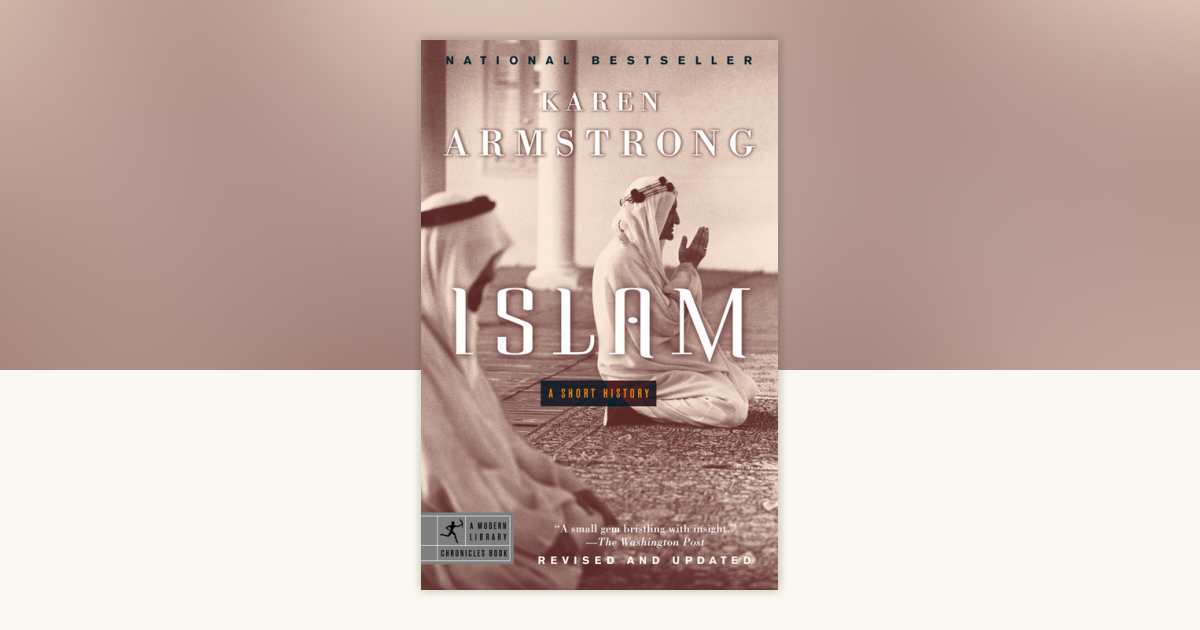
Islam by Karen Armstrong: 9780812966183 | PenguinRandomHouse.com: Books
No religion in the modern world is as feared and misunderstood as Islam. It haunts the popular imagination as an extreme faith that promotes terrorism, authoritarian government, female oppression,...
Collections: Teaching Paradox, Crusader Kings III, Part IIb: Cracks in the House of Islam
This is the back half of the second part of a four part series (I, IIa, IIb, III, IV) examining the historical assumptions behind the popular medieval grand strategy game Crusader Kings III, made b…

‘Islamic State’ mystery: The anti-history of a historic phenomenon
The IS phenomenon is ahistorical and raises questions about its rapid geopolitical expansion despite lack of enthusiasm for its cause among ordinary people
