


Click on the article title to read more.
Toward a theory of network gatekeeping: A framework for exploring information control
Abstract Gatekeeping theories have been a popular heuristic for describing information control for years, but none have attained a full theoretical status in the context of networks. This article aims to propose a theory of network gatekeeping comprised of two components: identification and salience . Network gatekeeping identification lays out vocabulary and naming foundations through the identification of gatekeepers, gatekeeping, and gatekeeping mechanisms. Network gatekeeping salience , which is built on the bases of the network identification theory, utilizes this infrastructure to understand relationships among gatekeepers and between gatekeepers and gated, the entity subjected to a gatekeeping process. Network gatekeeping salience 1 Salience refers to the degree to which gatekeepers give priority to competing gated claims. proposes identifying gated and their salience to gatekeepers by four attributes: (a) their political power in relation to the gatekeeper, (b) their information production ability , (c) their relationship with the gatekeeper, and (d) their alternatives in the context of gatekeeping.

Loss of Oversight: How AI systems may become harder to audit, monitor, and investigate
The safety of advanced AI systems increasingly depends on the ability to oversee them: to audit models for concerning behaviours before deployment, monitor their activity during operation, and investigate incidents after they occur. This report maps the landscape of AI oversight and assesses how it is likely to change. Drawing on 25 expert interviews across frontier AI developers, government, NGOs, and academia, together with a literature review and internal analysis, we examine five sources of oversight signal: model behaviour, chain-of-thought reasoning, internals activations and circuits, memory architectures, and honesty training. For each source, we identify the properties that current oversight relies on, the pathways by which these properties could degrade, and the technical levers available to preserve them. Our central finding is that literature and expert opinion support the conclusion that current oversight rests on foundations that are likely to erode, absent effective intervention. We recommend that developers track and report shifts in oversight-relevant properties, preserve oversight affordances by design, and invest in emerging oversight techniques as fallbacks against continued degradation of current methods.
Note-Taking and Personal Knowledge Management
My article critically examining Brennan Kenneth Brown’s Not-taking/PKM article. This was longer and more critical than intended.

DHH Nazism Funded by 1Password VP Who Wrote “Honest Security”
Jason Meller wrote a security rulebook. I read it. He is in direct violation of it.
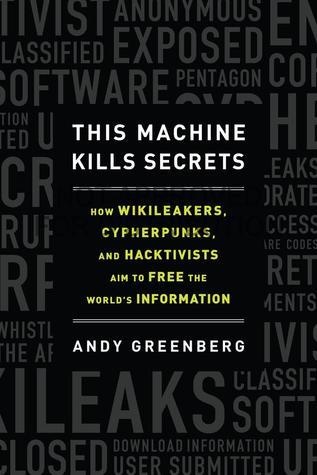
This machine kills secrets: how WikiLeakers, cypherpunks and hacktivists aim to free the world's information
The barbarians aren't at the gates. They're inside. Thi…
So maybe now we can agree that having an unchecked research integrity militia who unfortunately has the ear of the press and increasingly that of the the publishers, but who fiercely rejects any… | Ioana A. Cristea
So maybe now we can agree that having an unchecked research integrity militia who unfortunately has the ear of the press and increasingly that of the the publishers, but who fiercely rejects any minimal ethics or code of conduct, is a (growing) problem? Also, that 1. problems have to be investigated before deciding they are are legitimate and serious; 2. this investigation is not social media, blogs and the press; 3. this investigation should not be on the front page of journals and Retraction Watch; 4. there are degrees of seriousness and some things can just be corrected or are simply not very consequential (no, it's not a house of bricks where we have to check every brick, that's a dumb analogy), so being absolutely hysterical and overdramatic about any lie, inaccuracy or mistake is purposeful at worse and should be ignored at best and 5. it is not only unnecessary, but harmful, to also go into other, non-academic things the person did or does to complete "investigations" that you (press, sleuth, blogger, etc) do not have the tools and information to do completely and accurately (this fixation would be called harassment in the before times). Others will justly write about what the institutions did or did not do, but what I want to say is that we really should end it with the blank credit we give to any and all allegations that come from the establish research integrity truth fighters.

Four Functional Quadrants for Trust & Safety Tools: Detection, Investigation, Review & Enforcement (DIRE) <div> <br> </div>
Public discourse and regulatory debates about online trust and safety have long been dominated by a focus on rules, not tools: preoccupied mostly by the questio

Paranoia: A Beginner's Guide — LessWrong
People sometimes make mistakes. (Citation Needed) …
The Unaccountability Machine, by Dan Davies
I read an online excerpt of this book and was immediately intrigued by the idea of an “accountability sink”, which is a mechanism by which “The communication between the decision-maker and the decided-upon has been broken – they have created a handy sink into which negative feedback can be poured without any danger of it affecting anything.” This lack of accountability where people shrug their shoulders and ask “What else could we do?” really frustrates me, as I believe that we should take responsibility for our actions and their consequences. So I bought the book and inhaled it in a few days.
When Nature Calls: The Enshittification of Science and Its Enablers
Proof-of-work papers, policy laundering, and the collapse of self-correction

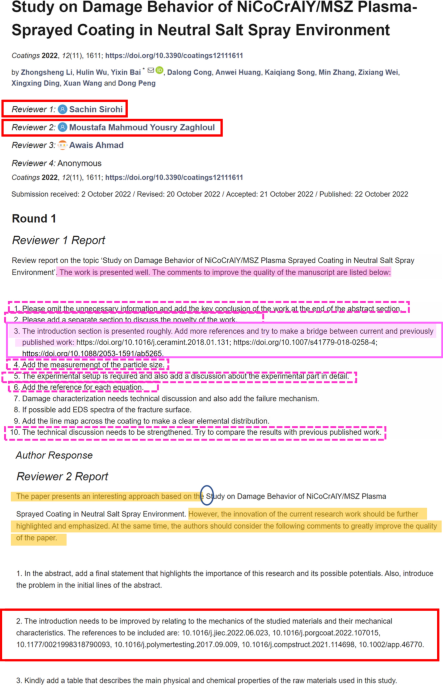
The review mills, not just (self-)plagiarism in review reports, but a step further
Review mills sum up a new category of reviewer misconduct that flies in the face of reviewer ethics and integrity. A pattern of generic, vague, and repeated affirmations (identical or very similar boilerplate phrasing) is noted in the analysis of 263 review reports, regardless of the scientific content of the papers under review, coupled with coercive citation (perhaps among the main reasons for such behavior), which when combined produce fake reviews. The misconduct associated with review mills is unlike mere plagiarism (self-plagiarism) of reviewer comments. It is important to quantify the problem and to take urgent measures: (a) to identify the review millers; (b) to rectify the published literature; and (c) to determine procedures for journals and publishers on procedures to counter this new type of misconduct.
Guide to Incrementals/Navigating Criticism | The Paper Pilot
The Paper Pilot's digital garden of thoughts on philosophy, politics, and sociology
At World’s Largest Hedge Fund, Sex, Fear and Video Surveillance (Published 2016)
One employee’s complaint, as well as interviews with people who have worked for Bridgewater, describe an atmosphere of surveillance that silences those who don’t fit the mold.

Recently I’ve been thinking a lot about this 2015 observatio...
Recently I’ve been thinking a lot about this 2015 observation on Tumblr about the dangerous conflation of respect of personhood and the respect of authority.
Something I keep thinking about is whether/how it would be possible to construct something like "trusted reviewing circles" without (1) destroying peer review's egalitarian goals, (2) accidentally enabling collusion rings, (3) recreating the same system with same issues over time.

Maria Antoniak
We are caught in such a trap. Asking good-faith community members to volunteer more when we can plainly see so much bad-faith behavior without consequences... IDK where it ends. Probably not central source of the problem, but NO ONE should be listed as an "author" on 20, let alone 40, submissions.