ABSTRACT Objectives Communities of Practice (CoPs) offer staff an opportunity to learn with and from one another, and to explore and advance practice. This study aimed to identify the frameworks that underpin the development, operation and evaluation of CoPs, and barriers and enablers to implementing this social learning approach in long term care (LTC). Methods This systematic review comprehensively searched four databases (MEDLINE, CINAHL, PsycInfo and Embase) from inception to August 2025, identifying studies focused on supporting LTC staff implementing evidence‐based practice, best practice or quality improvement. Inclusion screening, data extraction and quality assessment using the Quality Assessment with Diverse Studies tool (QuADS) were completed independently. Findings were mapped to the Values Creation Framework. Results Fifteen papers represented eight CoP programs ranging from small, standalone groups to large national collaboratives. Frameworks or specific CoP definitions underpinned planning for seven programs. Two programs drew on stakeholder input in development; however, none described formal co‐design. Seven programs were multidisciplinary. Evaluation was qualitative ( n = 8), mixed methods ( n = 4) or quantitative ( n = 3), with limited application of evaluation frameworks. A wide range of enablers and barriers was identified, with structural and cultural challenges affecting sustained CoP engagement and implementation of CoP learning outcomes. Conclusions Despite 20 years of CoP implementation in LTC, there are few comprehensive evaluations to guide practice. Community of Practice participation delivers individual learning and peer support; however, system and organisational barriers affect sustained staff participation and translation. Consistent application of existing frameworks and enhanced CoP reporting will better support future CoP development and implementation in LTC. , Practice Impact Residential aged care organisations and their staff could benefit from the peer support and learning opportunities offered by participation in well‐facilitated and effective Communities of Practice (CoPs). Consistent application of existing planning and evaluation frameworks and enhanced CoP reporting will better support future CoP development and implementation. Policy Impact This systematic review suggests that Communities of Practice (CoPs) with residential aged care staff do deliver individual benefits; however, there are ongoing systemic challenges that influence CoPs' potential for wider impact on practice change. To realise the value of this social learning approach, we need to address these systemic barriers.
A Department of Methodology: A feasible framework to integrate the applied practice of multidisciplinary support teams
High performance sport organisations employ multidisciplinary sport science teams to develop athlete preparation and performance. However, challenges have been identified with respect to cohesion, communication, integration, ineffective knowledge translation, role clarity, confusing language, and conflicting methodologies. A Department of Methodology (DoM) has been proposed as a conceptual framework seeking to address these issues. To move the DoM beyond conceptualisation towards professional practice, this study aimed to establish expert consensus for the implementation of a DoM within applied high performance contexts. Eighty professionals with expertise in multidisciplinary teams completed a three-round, online Delphi survey. In Round One, participants answered 16, open-ended questions across four categories: (1) Coordinating activity through shared principles and language; (2) Communicating coherent ideas; (3) Designing practice landscapes; and (4), General questions of feasibility. Results highlight the importance of building a shared language, establishing common principles, working collaboratively, facilitating continuous knowledge exchange, and designing practice tasks collaboratively. New knowledge is contributed for advancing conceptualisation of a DoM framework by exploring consensus on a range of theoretical- and practitioner-informed recommendations for the successful implementation of a DoM in high-performance sports organisations.

Evidence appraisal: a scoping review, conceptual framework, and research agenda
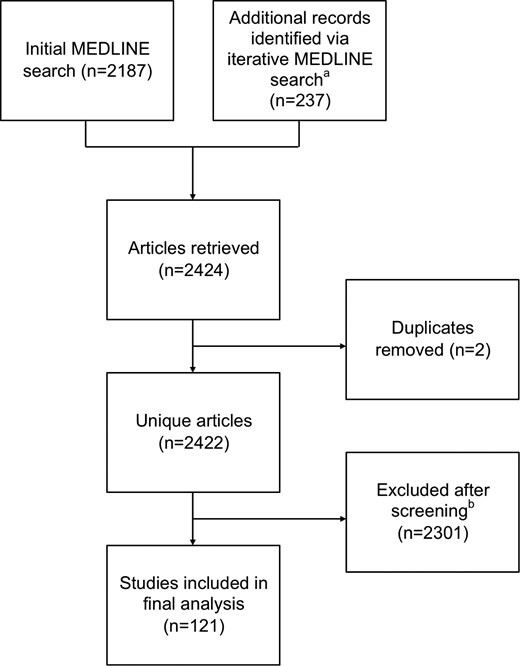
Abstract Objective Critical appraisal of clinical evidence promises to help prevent, detect, and address flaws related to study importance, ethics, validity, applicability, and reporting. These research issues are of growing concern. The purpose of this scoping review is to survey the current literature on evidence appraisal to develop a conceptual framework and an informatics research agenda. Methods We conducted an iterative literature search of Medline for discussion or research on the critical appraisal of clinical evidence. After title and abstract review, 121 articles were included in the analysis. We performed qualitative thematic analysis to describe the evidence appraisal architecture and its issues and opportunities. From this analysis, we derived a conceptual framework and an informatics research agenda. Results We identified 68 themes in 10 categories. This analysis revealed that the practice of evidence appraisal is quite common but is rarely subjected to documentation, organization, validation, integration, or uptake. This is related to underdeveloped tools, scant incentives, and insufficient acquisition of appraisal data and transformation of the data into usable knowledge. Discussion The gaps in acquiring appraisal data, transforming the data into actionable information and knowledge, and ensuring its dissemination and adoption can be addressed with proven informatics approaches. Conclusions Evidence appraisal faces several challenges, but implementing an informatics research agenda would likely help realize the potential of evidence appraisal for improving the rigor and value of clinical evidence.
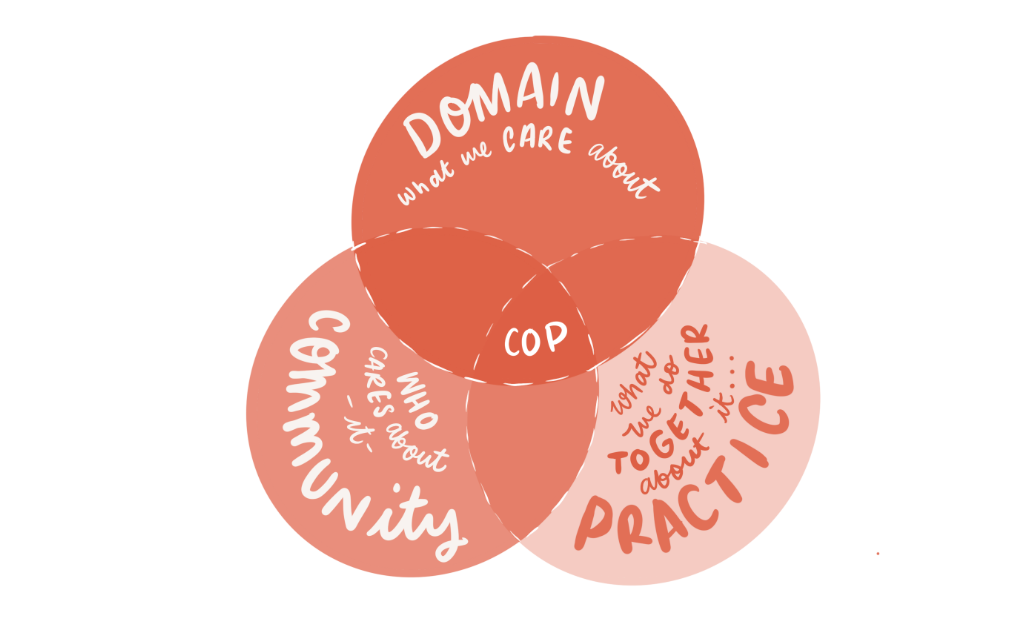
Wait… whats a Community of Practice?
“Learning is not merely the acquisition of knowledge by individuals. It is a process of social participation.” A slightly bastardised…
Citizen involvement in research on technological innovations for health, care or well-being: a scoping review
Citizen science can be a powerful approach to foster the successful implementation of technological innovations in health, care or well-being. Involving experience experts as co-researchers or co-designers of technological innovations facilitates mutual learning, community building, and empowerment. By utilizing the expert knowledge of the intended users, innovations have a better chance to get adopted and solve complex health-related problems. As citizen science is still a relatively new practice for health and well-being, little is known about effective methods and guidelines for successful collaboration. This scoping review aims to provide insight in (1) the levels of citizen involvement in current research on technological innovations for health, care or well-being, (2) the used participatory methodologies, and (3) lesson’s learned by the researchers., A scoping review was conducted and reported in accordance with the PRISMA-ScR guidelines. The search was performed in SCOPUS in January 2021 and included peer-reviewed journal and conference papers published between 2016 and 2020. The final selection (N = 83) was limited to empirical studies that had a clear focus on technological innovations for health, care or well-being and involved citizens at the level of collaboration or higher. Our results show a growing interest in citizens science as an inclusive research approach. Citizens are predominantly involved in the design phase of innovations and less in the preparation, data-analyses or reporting phase. Eight records had citizens in the lead in one of the research phases., Researcher use different terms to describe their methodological approach including participatory design, co-design, community based participatory research, co-creation, public and patient involvement, partcipatory action research, user-centred design and citizen science. Our selection of cases shows that succesful citizen science projects develop a structural and longitudinal partnership with their collaborators, use a situated and adaptive research approach, and have researchers that are willing to abandon traditional power dynamics and engage in a mutual learning experience.

A model for nesting connected groups with communities of practice
In the new edition of my book, Building Successful Communities of Practice, I share insights into community size and interactions. I've been using this theory with clients to create nested layers that include communities of practice that serve as a model for their organisation.

A Cognitive View of Policing
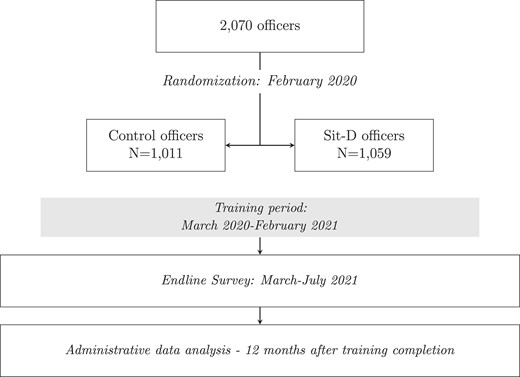
Abstract What causes adverse policing outcomes, such as excessive uses of force and unnecessary arrests? Prevailing explanations focus on problematic officers or deficient regulations and oversight. We introduce an overlooked perspective. We suggest that the cognitive demands inherent in policing can undermine officer decision making. Unless officers are prepared for these demands, they may jump to conclusions too quickly without fully considering alternative ways of seeing a situation. This can lead to adverse policing outcomes. To test this perspective, we created a new training that teaches officers to consider different ways of interpreting the situations they encounter. We evaluated this training using a randomized controlled trial with 2,070 officers from the Chicago Police Department. In a series of lab assessments, we find that treated officers were significantly more likely to consider a wider range of evidence and develop more explanations for subjects’ actions. Critically, we also find that training affected officer performance in the field, leading to reductions in uses of force, discretionary arrests, and arrests of Black civilians. Meanwhile, officer activity levels remained unchanged, and trained officers were less likely to be injured on duty. Our results highlight the value of considering the cognitive aspects of policing and demonstrate the power of using behaviorally informed approaches to improve officer decision making and policing outcomes.
(PDF) Building a Conceptual Framework: Philosophy, Definitions, and Procedure
PDF | In this paper the author proposes a new qualitative method for building conceptual frameworks for phenomena that are linked to multidisciplinary... | Find, read and cite all the research you need on ResearchGate
Community-driven informal adult environmental learning: Using theory as a lens to identify steps toward concientización
This article examines community-driven adult environmental learning in a volunteer watershed stewards program. We look for evidence of elements that portray steps toward “concientización”—the proce...

How LLM Counselors Violate Ethical Standards in Mental Health Practice: A Practitioner-Informed Framework
Large language models (LLMs) were not designed to replace healthcare workers, but they are being used in ways that can lead users to overestimate the types of roles that these systems can assume. While prompt engineering has been shown to improve LLMs' clinical effectiveness in mental health applications, little is known about whether such strategies help models adhere to ethical principles for real-world deployment. In this study, we conducted an 18-month ethnographic collaboration with mental health practitioners (three clinically licensed psychologists and seven trained peer counselors) to map LLM counselors' behavior during a session to professional codes of conduct established by organizations like the American Psychological Association (APA). Through qualitative analysis and expert evaluation of N=137 sessions (110 self-counseling; 27 simulated), we outline a framework of 15 ethical violations mapped to 5 major themes. These include: Lack of Contextual Understanding, where the counselor fails to account for users' lived experiences, leading to oversimplified, contextually irrelevant, and one-size-fits-all intervention; Poor Therapeutic Collaboration, where the counselor's low turn-taking behavior and invalidating outputs limit users' agency over their therapeutic experience; Deceptive Empathy, where the counselor's simulated anthropomorphic responses (``I hear you'', ``I understand'') create a false sense of emotional connection; Unfair Discrimination, where the counselor's responses exhibit algorithmic bias and cultural insensitivity toward marginalized populations; and Lack of Safety & Crisis Management, where individuals who are ``knowledgeable enough'' to correct LLM outputs are at an advantage, while others, due to lack of clinical knowledge and digital literacy, are more likely to suffer from clinically inappropriate responses. Reflecting on these findings through a practitioner-informed lens, we argue that reducing psychotherapy—a deeply meaningful and relational process—to a language generation task can have serious and harmful implications in practice. We conclude by discussing policy-oriented accountability mechanisms for emerging LLM counselors.
How LLM Counselors Violate Ethical Standards in Mental Health Practice: A Practitioner-Informed Framework
Large language models (LLMs) were not designed to replace healthcare workers, but they are being used in ways that can lead users to overestimate the types of roles that these systems can assume. While prompt engineering has been shown to improve LLMs' clinical effectiveness in mental health applications, little is known about whether such strategies help models adhere to ethical principles for real-world deployment. In this study, we conducted an 18-month ethnographic collaboration with mental health practitioners (three clinically licensed psychologists and seven trained peer counselors) to map LLM counselors' behavior during a session to professional codes of conduct established by organizations like the American Psychological Association (APA). Through qualitative analysis and expert evaluation of N=137 sessions (110 self-counseling; 27 simulated), we outline a framework of 15 ethical violations mapped to 5 major themes. These include: Lack of Contextual Understanding, where the counselor fails to account for users' lived experiences, leading to oversimplified, contextually irrelevant, and one-size-fits-all intervention; Poor Therapeutic Collaboration, where the counselor's low turn-taking behavior and invalidating outputs limit users' agency over their therapeutic experience; Deceptive Empathy, where the counselor's simulated anthropomorphic responses (``I hear you'', ``I understand'') create a false sense of emotional connection; Unfair Discrimination, where the counselor's responses exhibit algorithmic bias and cultural insensitivity toward marginalized populations; and Lack of Safety & Crisis Management, where individuals who are ``knowledgeable enough'' to correct LLM outputs are at an advantage, while others, due to lack of clinical knowledge and digital literacy, are more likely to suffer from clinically inappropriate responses. Reflecting on these findings through a practitioner-informed lens, we argue that reducing psychotherapy—a deeply meaningful and relational process—to a language generation task can have serious and harmful implications in practice. We conclude by discussing policy-oriented accountability mechanisms for emerging LLM counselors.
Document analysis in health policy research: the READ approach
Abstract. Document analysis is one of the most commonly used and powerful methods in health policy research. While existing qualitative research manuals of
New Project to Tackle the Challenge of Scaling Democratic Innovations | CoP CC on Participatory and Deliberative Democracy
The “Missing Link” between Research and Society
Qualitative research: standards, challenges, and guidelines
Qualitative research methods could help us to improve our understanding of medicine. Rather than thinking of qualitative and quantitative strategies as incompatible, they should be seen as complementary. Although procedures for textual interpretation differ from those of statistical analysis, because of the different type of data used and questions to be answered, the underlying principles are much the same. In this article I propose relevance, validity, and reflexivity as overall standards for qualitative inquiry.

Civic Innovation Fellowship Program - BetaNYC
About BetaNYC’s Civic Innovation Fellowship (CIF) is fostering the next generation of community leaders by developing digital and data literacy practices that are appropriate for the communities they serve. CIF is the first comprehensive program dedicated to training the next generation of civic leaders while improving open data and public interest technology within public spaces,

A Digitized New Haven Police: Investigating Axon’s Draft One
Interviews have been lightly edited for clarity. The first image of a police officer that comes to mind is probably of one in action. Few imagine the cop spending hours behind their desk, writing r…

Expert consensus on skill acquisition in sport: A Delphi study
Skill acquisition is a rapidly evolving field in sport, but its definitions, roles and professional practices remain inconsistently articulated. Despite growing recognition of its importance, there...